Print Story
X




Identifying the missing stories in Pakistani media
Agriculture -- What about the hinterland
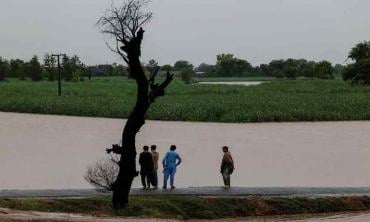
Stories from rural areas -- about agriculture and rural life -- find little time on TV channels and short space in the print media. Only big crime stories from rural areas make it to small headlines in newspapers. After reading a national newspaper, one wonders if all the issues related to health, education and sanitation have been resolved in the rural areas.
In fact, the mainstream urban media has little time for covering rural problems. A few days ago, there was a report in a newspaper saying that agriculture scientists have introduced two new sugarcane varieties for commercial cultivation in Sindh, which possess high cane yield and sugar recovery potential.
This single column report leaves many readers and farmers wondering what impact this scientific development will have on the lives of farmers and consumers. Has the government educated the sugarcane growers about these new varieties? Are these new varieties more cost-effective and less water-consuming? What impact will it have on the market and sugar industry?
Some reports in the local Sindhi press say that at least 22 camels have so far died in different villages in Kachho and other areas. (Money Matters The News, May 16, 2016). Dr Pershotam Khatri, Associate Professor and Chairman Department of Animal Reproduction at Sindh Agriculture University, Tandojam, confirmed that in Kachho and other districts of Sindh, the Middle East Respiratory Syndrome (MERS), commonly known as camel flu, has been reported.
Again, this report should have sent the officials concerned running on toes to save the livestock and the community dependent on camels. The media should have followed the story extensively to find the causes of and remedy for this disaster. Stories like these galore in remote areas, but find no place in the media. Why?
Climate change has forced the governments the world over to find new ways to cope with erratic weather and introduce new technologies to bring about sustainable shift in cropping patterns. Why a country like Pakistan is forced to import raw cotton? Why has it failed to meet the mango export targets despite producing the world’s sweetest mango? Why is it lagging behind in race to capture the rice market despite having the best rice to sell? These questions need answers.
In an agricultural country like Pakistan, the media cannot afford to ignore the issues facing farmers and new scientific research in the field of agriculture.
-- Mazhar Khan Jadoon
National interest -- Rather unreported
When some Pakistani journalists tried to establish Ajmal Kasab as a Pakistani in 2008 after the Mumbai attacks people came out on the streets and demanded registration of treason cases against journalists. The journalists claimed they had done nothing wrong.
Though the government eventually confirmed that Kasab belonged to a village Faridkot near Okara, the ‘adventurism’ of these journalists was perceived as an act against the national interest. They were accused of "increasing" tensions between the two rival countries.
There are either editorial policies that limit the coverage of these issues or journalists resort to self-censorship and avoid writing about them. Even if they do that, the message is delivered in a subtle way to avoid backlash.
Topics such as security of nuclear assets, escalation in defence budget, military operations, forced disappearances and extrajudicial killings, alleged involvement of some Muslim countries in terrorist funding, conflicts involving Pakistan’s friendly nations, etc, are tricky ones. Most journalists refrain from writing critically on these national interest subjects.
One can recall how Gen (retd) Musharraf criticised the media for writing the term ‘national interest’ in inverted commas. Of late, Pemra has started directly intervening. It did ask media houses to avoid reporting on the Mina accident and accusing Saudi Arabia of mismanagement, be cautious while covering Yemen crises, and not take sides while covering the Saudi Arabia-Iran conflict.
-- Shahzada Irfan Ahmed
Malnutrition -- Hungry for attention
Malnutrition is the cause of more than one third of all child deaths in the world. Sadly, in Pakistan, malnutrition is reported only when children die of starvation in Thar. It is reported or talked about in the media only when something terrible happens.
Lack of access to nutritious foods, especially in the present context of rising food prices, is a common cause of malnutrition.
Nearly half of all deaths in children under 5 are attributable to under-nutrition in the world, according to a Unicef report. This translates into loss of about 3 million young lives a year.
Under-reporting on malnutrition also puts children at a greater risk of dying from common infections, increases the frequency and severity of such infections, and contributes to delayed recovery. In addition, the interaction between malnutrition and infection can create a potentially lethal cycle of worsening illness and deteriorating nutritional status.
There are hardly any stories in our media which highlight that poor nutrition in the first 1,000 days of a child’s life can also lead to stunted growth, which is irreversible and associated with impaired cognitive ability and reduced school and work performance. 37 per cent of children in the urban population and 46 per cent in rural population of Pakistan have stunted growth, according to Unicef. Stunting is slightly higher in male children (48 pc).
The situation calls for highlighting these issues in the media. It is evident that the percentage of stunting is much higher among children whose mothers are illiterate versus those whose mothers have completed at least 10 years of education. This has a big impact in Pakistan, where the proportion of illiterate mothers is almost double in rural areas than urban areas (36.6 per cent in urban and 69.4 per cent in rural respectively).
-- Saadia Salahuddin