Print Story
X




The much-awaited auto policy is finally there. What does it offer to consumers, existing players and new entrants?
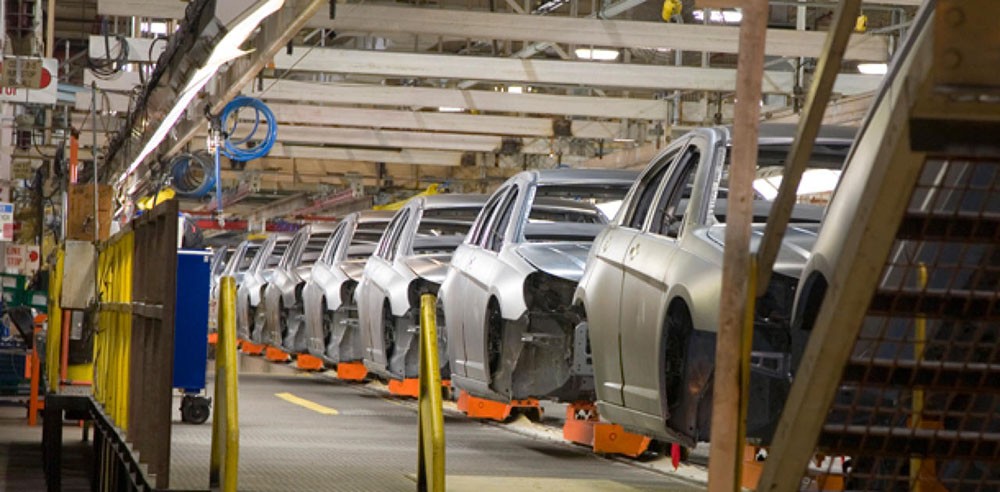
After considerable delay, the government finally announced its new 5-year automobile policy in March 2016. The policy offers tax incentives to new entrants to help them establish manufacturing units in the country and compete with the existing three players -- all of Japanese origin.
The used cars’ import policy remains intact under the new policy though the Federal Board of Revenue (FBR) had proposed that import of up to five years old used cars should be allowed instead of the condition of importing three years old cars. It also suggested that commercial import of used cars be allowed which are being imported under personal gift and transfer of residence schemes. However, the government did not alter the policy that is already in place. Furthermore, incentives have also been announced for the revival of sick units.
The government claims the policy is aimed at enhancing consumers’ welfare and boosting competition besides attracting new players. There is also an emphasis on bringing in investors from countries such as those in the European Union, China etc and make them invest in Pakistan’s growing auto market, especially in small cars segment. Special efforts are underway to convince Fiat, Audi and Volkswagen to establish their plants in the country.
The policymakers believe that a huge market exists in the country, a proof of which is that prospective buyers have to wait for months to buy cars of their choice or buy them from the black market on a premium price. Furthermore, there are complaints from consumers about the high prices of locally assembled cars and the quality issues they face when they buy these automobiles.
The News on Sunday (TNS) talked to different stakeholders to know about the salient features of the new auto policy and its impacts, both positive and negative, on the existing market and benefits, if any, for the consumers.
Aamir Allawala, former chairman, Pakistan Association of Automobile Parts & Accessories Manufacturers (PAAPAM), believes arrival of new entrants will help expand the market size and provide business to auto parts manufacturers but has reservations over the incentives given only to the new entrants. He says it is quite sad that no incentives are provided to investments by Auto Parts Manufacturers (APMs) or existing Original Equipment Manufacturers (OEMs).
He tells TNS that Pak Suzuki had pledged to invest $430 million to set up new plants and introduce new models within two years. But because of discriminatory auto policy towards existing players and the government not giving them incentives at par with new entrants, this investment is in danger.
S. M. Ishtiaq, CEO SM Engineering, a company that produces auto spare parts and accessories, says Pakistan is among the 40 automobile making countries in the world and its auto industry is certainly not unusual in the protection that it receives. Other most established countries, both in the region and globally, also protect their auto industries heavily as it is considered to be the launching pad of economic growth.
Recently, he says, a regional competitiveness study report on Pakistan’s auto sector released by the Institute of Development and Economic Alternatives (IDEAS), LUMS and funded by The World Bank revealed that motor vehicle industry is the second most protected industry on the basis of effective protection globally. The fact is that Thailand and India are more protected than Pakistan, even though they produce 1.8 million and 4.0 million cars as compared to less than 200,000 cars produced in Pakistan.
Ishtiaq says interest of international car makers to come in Pakistan is a good omen but there is a need to provide them stable and predictable environment to ensure they stand by their decision. Factors like used cars’ imports and irrational duty structures can serve as barriers to the entry of new players, he adds. "We must not forget that new markets like Iran (after lifting of sanctions) are in competition with us to attract new investment."
Ishtiaq explains that commercial import of used cars i.e import with an aim to sell is not allowed in Pakistan, so that faction is completely illegal and unethical. "As it is not allowed, there is no regulation. Importers are making the most of it. With an already suppressed duty structure of around 30 per cent, they are under-invoicing, illegally using a single passport to bring multiple cars, giving no assurance of after sales services and exploiting customers by putting whatever price tag they want." Having said that, he says, one must make a fair comparison that cars are expensive even globally. However, after being used for 3 years in the country of origin the cars imported on discounted duties are sold even on higher prices than brand new cars made in Pakistan."
Aamir Allawala says that it is a myth that locally assembled cars are expensive as compared to those sold in other countries of the region. In our country tax constitutes around 33 per cent of a car’s price that pushes up the cost that a buyer has to ultimately pay.
He says the price comparison of Toyota Corolla in the region shows that it is cheaper in Pakistan than in India, China and Thailand. Altis is available in $22000 and Altis Grande’s price is $24,000 while Altis 1.8G is available in $29000 in India. "Altis 1.8E and 1.8G are available in $24,000 and $27000, respectively, in Thailand. Similar is the case with other auto brands."
SM Ishtiaq dispels the impression that locally assembled cars do not have security features and the suspension, seats, body etc are not as good as those of vehicles manufactured and assembled abroad. He says locally-produced parts are manufactured as per latest digital drawing issued by designer of parent companies (Honda, Toyota and Suzuki). Sample parts and test reports are physically submitted to the OEM’s Global Quality Assurance Centers in Japan or Thailand.
Ali Asghar Jamali, Chief Operating Officer (COO) Indus Motor Company (IMC), states it is a baseless allegation that local APMs are not producing sufficient auto parts locally. The quantum of local parts usage, he says, is up to 70 per cent of total parts used. Only Toyota is procuring local parts worth over Rs124 million every working day, he shares. On the other hand, Jamali points out, Pakistan is losing over US$ 300 million worth of foreign exchange through illegitimate import of used vehicles through Transfer of Residence and Personal Baggage Scheme under SRO577.
Iqbal Shah, Chairman Pakistan Automobile Assemblers Dealers Association (PAMADA), insists Pakistan must ensure measures like India to stop misuse of used car schemes, as India uses a tariff of 100 per cent on vehicles imported into India. There is no custom duty discount provided on import of used cars. Maximum 3 years old car can be imported into India. Commercial import of used vehicles is also not allowed in India as well. It is allowed for expatriate Indians under Transfer of Residence schemes and vehicle registration has to be in the name of the importer for one year.
A question quite relevant at the moment is that why car makers are not producing smaller cars despite huge demand. Is there any incentive by the government to motivate existing players or potential entrants to produce small cars? Even in case of hybrid vehicles which were talk of the town a few years back when fuel prices were over Rs100 per litre, the government offered reduced duty on import only and did nothing to promote local manufacturing.
There is a feeling that until and unless the government comes up with predictable and supportive long term policies and overcomes threats like free import of used car, no one will enter into small cars segment because it is not viable for them, be it existing players or new entrants. It is pertinent to mention that India and China reduced their sales taxes on automobiles by half and that gave impetus to the small car segment.
The industry and consumers wait anxiously to reap the benefit of new auto policy in shape of cheaper and smaller cars.