

Print Story
X




Lahore was recently witness to as many as nine protests in a matter of a single day, in different parts of the city. Here is a look at the dynamics of these protests and why the state, despite its authority, failed to control them
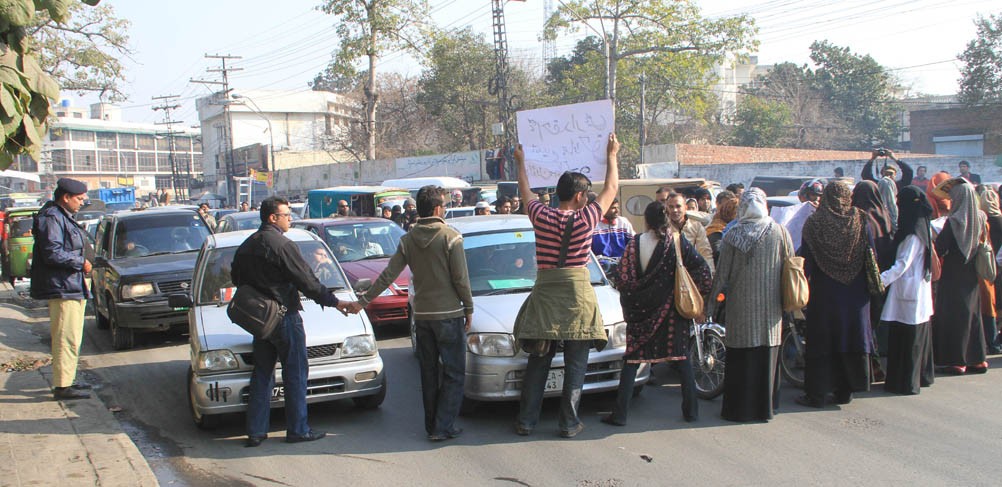
You take any road of the city and you run the risk of being stuck in heavy traffic.
You cannot seem to exit the choked lanes, especially along the signal-free roads that are without any u-turns. Even if you succeed at it, there is an equally high chance of getting stuck on the road.
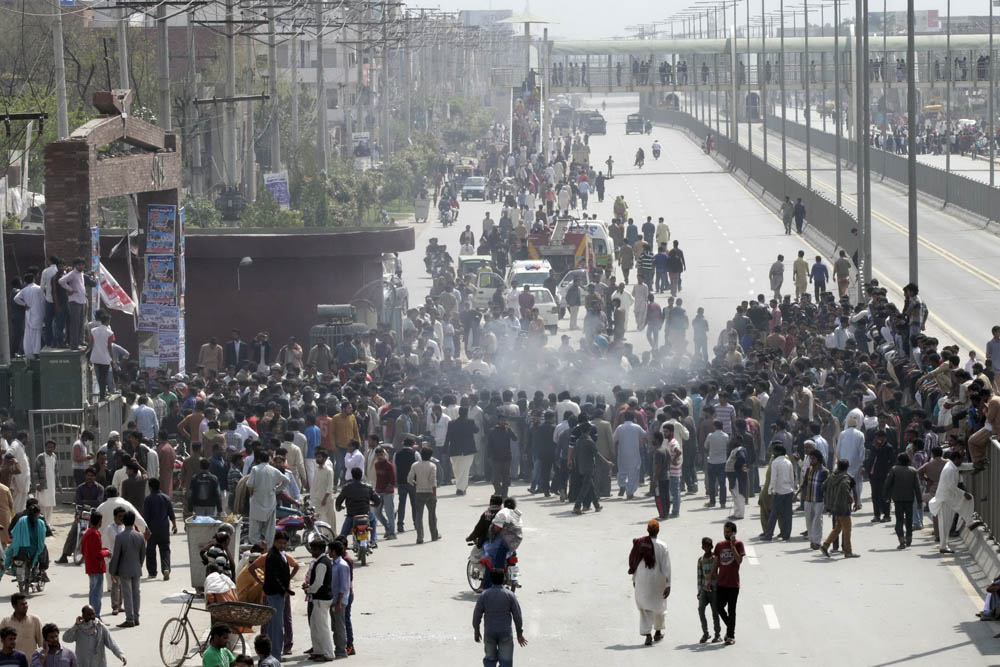
Very recently, Lahore saw as many as nine protests in a matter of a single day. And, all these were scattered across the city. Even the canal road was a mess, due to a protest by the residents of the railway colony against prolonged suspension of water and electricity. The nuisance created by young doctors who had organised protests outside five different hospitals instead of a central one, was the worst that day.
TNS looked into the dynamics of these protests and the reasons why the state, despite all its authority, failed to control them.
According to Farooq Tariq, General Secretary, Awami Worker Party (AWP), the protestors often "resort to such tactics because the media craves something ‘extraordinary’ to cover. Peaceful protests at isolated places would catch nobody’s attention."
Tariq insists his party is for peaceful protests and has "never obstructed traffic or blocked a road.
"Recently, the AWP held a protest demo in favour of Anjuman Mazarieen Punjab and chose to gather at the small park near Lahore Press Club (LPC)."
Tariq holds the administration as being partly responsible for the protests organised at scattered places because it never gives permission to people to hold protests. His point is that if there are designated spots where people can hold protests with the permission of the government, their anger will vent out and they will not resort to violence.
"What happens is that they block the roads and become violent so that their voice is heard. They succeed, as media gives them ample time in this situation."
Abdullah Malik, President, Civil Society Network, Pakistan believes the discriminatory treatment given to different groups is the reason why the current situation has cropped up. "When the protesters are strong, for instance the influential religious groups or they are in large numbers, like the young doctors, the state machinery steps back. But when the situation is the opposite, the weaker groups are dealt with with a heavy hand."
Malik believes the NGOs are criticised needlessly. "Can anybody quote a single incident where they blocked roads and created a law-and-order situation?"
He says the protests have increased over time and it seems the government is not interested in addressing the people’s woes. "When their genuine grievances are overlooked and the public do not get relief they take this course."
In Malik’s view, the traffic wardens do not have the capacity to control the mess thus created on the roads. "Earlier, there used to be detours but now there is no exit if one is stuck in traffic, as most city roads have been dug for one poject or the other."
He also says that the real-time coverage of events is one reason why the protesters opt to block the roads. It makes for a spectacle.
"They agree to disperse only after the media has shot sufficient footage [of the protests], the way they want to. It’s quite common that the protesters block the roads outside the offices of media houses and leave only when there footage has been aired. This way they hold media hostage as well."
Deputy Inspector General (DIG), Operations, Punjab Police, Lahore, Dr Haider Ashraf tells TNS that more than 90 per cent of the protests and processions have got nothing to do with the police. "They are managed in a way that there is no need to deploy any force to handle emergency situations.
"The police need to intervene only where there is a threat to public order, or when such activities are likely to affect the routine for extraordinarily long periods of time."
When asked as to how the police handles such a situation, Ashraf says, "If we come to know about these [protests] in advance, we call the leaders and the main people organising them and try to negotiate with them.
"The police also links them with the concerned departments (against who they are protesting) so that they can register their grievances. On success, a protest may be called off or made in a much desirable way without causing nuisance."
Ashraf says it is not necessary that the protests are announced publicly in advance. "In such a case, we depend on the intelligence reports provided by the security agencies. We approach their leaders and ask them to share their plans with us and preferably talk to the people."
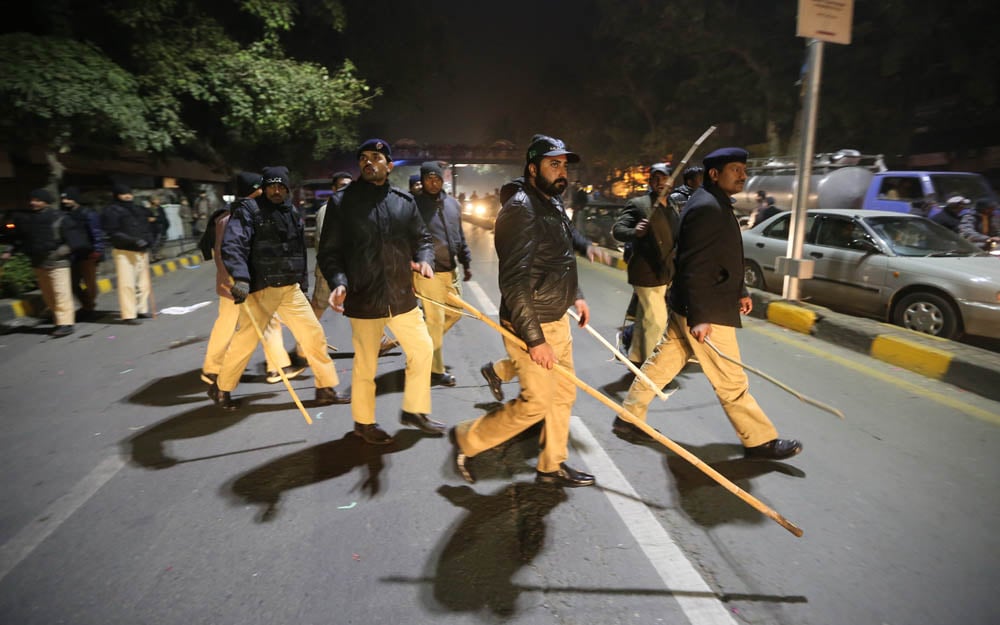
He says the role of the police is that of the negotiator and it refrains from use of force. The police is extra cautious in the presence of media as the latter highlights it as a brute force even if they have to act against violators in worst case scenario.
"The media tells it to the masses that the police is using force against ‘peaceful’ protestors but it does not bother to explain that these people had held the city hostage for hours and blocked the traffic, with ambulances stuck in the middle.
"Even in worst case scenario, police believes in minimum use of force."
Tariq Zaman Khan, Personal Staff Officer to DCO Lahore, says the protests are allowed at only one place in the city -- inside Nasir Bagh. "The protestors violate the law and block roads or other points without prior permission.
"Some people simply take to the streets without informing anyone while others apply to the district administration for permission but do not wait for approval. They make up their mind that they will come out whether or not they are permitted to do so. The district government has not approved any protest that disturbs the public life."
A police official, requesting anonymity, tells TNS that the police refrains from using force as nobody protects them when they land in trouble for manhandling the violent protesters.
"In the absence of a district magistracy system, the police has to take such decisions by itself and face the wrath when the politicians come out to pacify the people by penalising the officials."
He also says that any on-spot coverage by TV channels does a lot of damage as footage is aired in real time. "When there was no electronic media channel except PTV and Radio Pakistan, the police’s public relations department could use its influence and good terms to stop such news from becoming viral."