

Print Story
X




Only 30 out of the 342 National Assembly members pass the controversial cybercrime bill. But will the Senate put up the much-needed resistance before passing it?

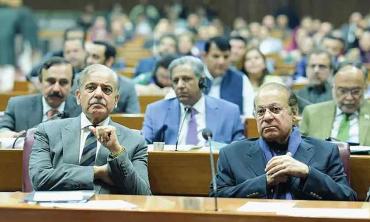
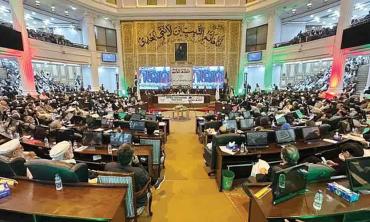
In a hurried move, the National Assembly of Pakistan passed the much-debated Protection of Electronic Crime Bill (PECB) on April 13 in the presence of only 30 members in a house of 342 members. There were only 18 treasury members and 12 members belonging to the Opposition that discussed the bill before a simple majority passed it.
Though the government representatives claim the bill has been amended after incorporation of suggestions from different quarters, its opponents insist that it is almost the same version that was passed and later withdrawn last year.
Like before, the bill is being severely criticised for allegedly infringing on civic liberties and the constitutional rights of individuals to freedom of expression and privacy.
The bill is being dreaded for criminalising simple acts like sending a text message without the receiver’s consent, which, in extreme cases pertains to harassment; and spamming and advertisement but also includes the accidental text sent to the wrong number.
Some of the major concerns regarding this bill are the criminalisation of political criticism and political expression, the over-reaching and discretionary powers given to the regulator, the lack of protection for journalists and whistle-blowers, lack of adequately set procedures, no clear distinction between acts done with mala fide intent and those done inadvertently and so on.
On the other hand, the government camp defends itself on grounds that they need to have a law to counter cyber fraud, cyber stalking, cyber terrorism, electronic data and identity theft.
"No doubt, there is a dire need to a have a cyber law that regulates the activity in cyberspace but there has to be a difference between regulating and gagging the whole population and making them vulnerable to severe punishments," says Farieha Aziz, Director of Bolo Bhi, a group that struggles to foil attempts at ending free speech.
She adds the way the bill has been passed by the National Assembly shows how desperate the government is to have this law passed and applied ruthlessly on the people - "In the presence of only 30 members at the time of discussion".
She says they are relieved to see it move to the Senate, where it is expected to face stiff resistance from the Opposition. "In the National Assembly, the result would have been the same regardless of the number of members present at the time," Aziz says.
She informs that her organisation has contacted the government authorities to share the approved bill - "but they are reluctant".
The bill has not been uploaded on the National Assembly website though it was passed more than ten days ago. "We have been told that the government has received the recommendations but these will be incorporated into the bill later on. This is quite strange, as it has to be the other way round -- amendments must be made before passing a bill," Aziz adds.
She says they are in touch with the senators who have promised to oppose the contentious clauses that aim to curb civil liberties and stifle constructive criticism. "For example, judicial oversight, with the exception of requiring warrants for search and seizure, remains absent in the proposed law. Authorities and officers have been given easy access to personal data which should be made accessible only if legitimately required and sanctioned by court."
The proposed bill does not distinguish between innocent people and criminals. Whistle-blowers, journalists and white-hat hackers run the risk of being treated as criminals for accessing "unauthorised content". Besides, Aziz explains, "loosely worded sections leave too much room for interpretation and misinterpretation, widening the window for misuse and likelihood of the provisions of this bill being used for score-settling rather than addressing criminal activity."
Nighat Dad, Director Digital Rights Foundation, believes the bill and its authors continue to ignore concerns over provisions that allow for international cooperation with foreign intelligence agencies, which allows the government to share personal data of Pakistani citizens without their consent or knowledge.
Dad says, there are no protections for the personal data of Pakistani citizens, even though "authorised" officers will be allowed to retain user data for 90 days, or as they see fit. "The PECB is draconian and punitive, seeking heavy penalties without any understanding of complexities and nuances that are necessary for interpreting cybercrime legislation."
Dad adds the language of the bill runs the risk of criminalising and thus censoring freedom of expression, something that strikes at the heart of democracy. "The government of Pakistan is exploiting recent tragedies to push forward a bill that from its very inception was flawed, and that stands to cripple the democratic nature of this nation, as enshrined in its constitution."
"Instead of addressing the valid concerns", she says, "Anusha Rehman, Minister of State of Information Technology and Telecommunication, has labelled critics of the bill as "propaganda mongers" which is highly condemnable."
Sharing an example of how a simple act can lead one into trouble, Dad says, sharing or accessing information that the government considers a threat to national security or the dignity of a friendly nation can be criminalised under this law. "This could include sharing a documentary on the social media about human rights violations in China or Saudi Arabia, or trying online to organise a rally to be held outside an embassy."
Similarly, comics, memes and caricatures that are very popular on social media will create problems for those posting them. Making a comic or caricature can get one behind bars for three years with a fine up to one million rupees. This may ring alarm bells for professional cartoonists whose very craft can put them at risk.
The presentation made by Bolo Bhi cites examples of countries that have revised similar laws. For example, it states that last year the Indian Supreme Court struck down 66A, a provision of the Indian IT Act that allowed people "to be arrested for ‘annoying’ or ‘offensive’ content, including Facebook posts."
As reported: "66A was found to be vague and inconsistent with the 8 (constitutionally) permissible grounds for restriction of freedom of expression."
Similarly, the presentation mentions, a UK High Court ruled that the Data Retention and Investigatory Powers Act as a whole was unlawful. In particular, it was found to be inconsistent with the EU laws and "incompatible with Article 8 of the European convention on human rights, the right to respect for private and family life, and articles seven and eight of the EU charter of fundamental rights, respect for private and family life and protection of personal data."
MNA PTI Arif Alvi from Sindh recommends that malicious or mala fide intent should be added to all sections on offences to establish whether an act has been done with a wrong intention.
Other recommendations coming from stakeholders are: i) Warrants should be required for not only search and seizure, but for all offences. An officer shall be bound to provide reasoning before court as to why access to a person’s data, device or to the accused himself/herself is necessary. ii) Penalties should exist for service providers and investigation officers who step beyond the scope of duty and misuse information they may gain access to -- especially in the absence of privacy and data protection legislation. iii) Cooperation with foreign governments and entities -- their terms should be subjected to a well-defined procedure stipulated under this law.
MNA PPP Shazia Marri says that they could have delayed the passage of bill by pointing out the quorum but did not, as they were committed to parliamentary business and played their due role as the Opposition.
She shares her communication with Chairman Standing Committee on Information Technology, National Assembly to explain her clear-cut stance on this issue. It states: "I feel that while it is extremely important to combat terrorism and track those who use cyberspace to commit acts of terrorism, it is also crucial to safeguard the civic liberties and rights of the people, as enshrined in the Constitution of Pakistan."