

Print Story
X




Shortage, black-marketing of medicines and delay in announcement of new pricing formula are hitting the consumers hard
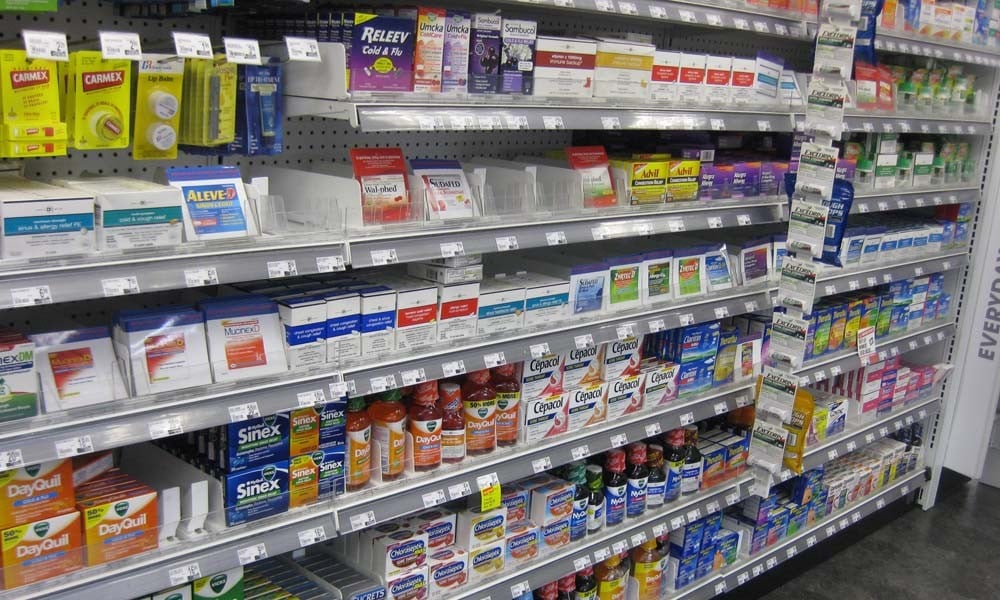
Aneela, 35, is a thyroid patient, dependent on a medicine that she has to take for life. For the last few years, she has been facing extreme difficulty in getting regular supply of the medicine branded as Thyroxin. Sometimes, it simply disappears from the market and on other occasions it is available at many places at maximum retail price. The chemists who sell the medicine at inflated prices extend this favour only to acquaintances or through trusted middlemen out of fear of being apprehended.
"I have paid up to Rs900 in days of extreme shortage for a pack of 100 Thyroxin tablets that may normally cost Rs50," she tells TNS. Recently, she adds, the price has been officially revised to Rs100 and the situation has improved due to better supply in the market. But even then the rate keeps fluctuating and remains between Rs200 to Rs400.
Similarly, Nasira, 28, had to go through the ordeal of searching endlessly for Tegral syrup for her five-year-old son. Her son suffers from mild seizures -- a condition that improves when the child is getting this medicine and aggravates when not. If the medication is discontinued, the child becomes insomniac and may get jittery as well. Sometimes, Nasira has to travel endless miles and visit scores of medical stores to find this medicine that costs Rs55 per bottle but is worth a fortune for her.
Both are low-priced and essential drugs. The wholesale medicine dealers claim that pharmaceutical companies intentionally cut the supply of these drugs that give them minimal returns and go for high-priced drugs with large profit-margins. On the other hand, the pharmaceutical companies clarify that only those drugs go out of production that cost them more at production level than the prices they get in the market. They simply put the blame on the government that fixes the prices and for crippling the industry for over a decade.
Other medicines that have irregular supply and are frequently unavailable include Lanoxin (a medicine for heart patients), Folic Acid (for iron deficiency and anaemic pregnant women), Polyfax eye ointment, Cortisporin eye ointment, Motival tablets (tranquiliser), Migril tablets (for headache/migraine), Lomotil tablets, Gravinate (anti-vomiting), Avil tablet and injection (anti-allergy), Syntocinon injection (required at the time of childbirth), Trenalen tablets (anti-depressants) and so on.
No doubt, the consumers are the ultimate sufferers of the current rift between the Drug Regulatory Authority Pakistan (DRAP) and pharmaceutical companies over the drug pricing formula. Karachi-based consumer rights activist Fareed Ahmed Siddiqui says the patients tell him that fake medicines are gaining space in the market due to disappearance of genuine ones.
He adds the government shall form a committee to ascertain what is going wrong with this industry and why there is shortage of drugs so often. "It is the responsibility of the government to provide health services to the masses and ensure supply of essential medicines. There should be a thorough investigation into the policies and arbitrary decisions of DRAP/government to know the actual reason behind this fiasco."
Nadeem Iqbal, Executive Director Network for Consumer Protection -- an organisation based in Islamabad, says that in the absence of reliable data with the health ministry, the manufacturers manipulate data to their benefit.
Iqbal says unfortunately the government considers the industry as the sole stakeholder and ignores consumers and organisations struggling for their rights.
A pharmaceutical company owner, who does not want to be named, tells TNS that a DRAP study shows more than 70 per cent of brands are cheaper in Pakistan than India. Over 13 years of price freeze, except in a few hardship cases, has resulted in the end of production of non-viable drugs, flight of capital through closure of multiple MNCs, smuggling of drugs to Afghanistan, non-expenditure on research and development and no introduction of any new molecule in the last decade, he adds.
He further adds, in 2010, the government of Pakistan hired Mckinsey International to help identify growth boosting industries of Pakistan which identified pharma industry as ‘sunrise’ industry and suggested to deregulate pharma pricing to increase competition. The idea was to ultimately lower prices due to competitive forces, increase variety of brands for patients and attract new players, he explains.
Cheaper brands and prospective generic drugs manufacturers, he says, are also wary of the government policy of freezing prices regardless of inflation.
Another criticism coming from the industry is that the government has forcefully controlled medicine pricing for 13 years but nothing has been done on the fronts of doctors and laboratory fees. Medicines merely comprise 13 per cent of health expenditure whereas doctors’ fees 50 per cent. Laboratory contributes to 37 per cent of overall medical expenditure.
The medicine prices were increased by 15 per cent in 2013 but the decision was withdrawn shortly after. But allowed 1.5 per cent increase per annum to manufacturers.
Dr Khalid J. Chowdhry, Chairman, Medipak Group and former president Pakistan Pharmaceutical Manufacturers’ Association (PPMA) says they are not against the government. Instead, he says, they also want provision of affordable health services to the masses and for this very reason they want the government to consider industry’s requests.
Chowdhry says there is perception that medicine prices have increased but actually the increase has been only in hardship cases. When the companies want a price raise in hardship cases they build their case to convince the government with supporting evidence and data that it is next to impossible to produce and market medicines at existing prices. If the government is convinced, a maximum of eight per cent increase is allowed.
"I paid a minimum wage of Rs7,000 to my factory worker in 2000. Now I pay Rs13,000," he says, continuing that the electricity prices have escalated, the use of generator has added to input costs and imported raw material has become expensive due to currency devaluation. "The only thing that has been static is the price of medicines."
Ali Rasikh, 40, who deals in cheaper medicine brands in Lahore, says patients think only the branded medicines prescribed by their physician will cure them. A major reason for this is that many physicians prescribe expensive medicines because the companies offer them incentives. "When everybody looks for the same brand, shortage is quite likely."
He points out that one-month course of hepatitis treatment would cost around Rs34,000 until recently. Once the government allowed more companies to produce and market their own versions, the price came down to Rs4,200. At the moment, the course is available for Rs34,000 as well as Rs4,200 and a little above that and the choice lies with the buyer, he adds.