

Print Story
X




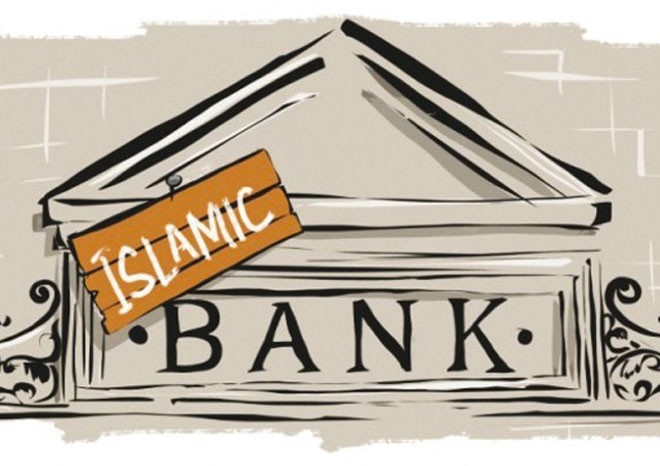
As more and more conventional banks open their Islamic banking branches, experts remain divided over the rationale
Arshad Ali, a real estate advisor based in Lahore, wants to get a car leased for his personal use. He has approached a conventional bank as well as a bank dealing in Islamic banking products. To him, the deals offered by both the banks are almost similar, except the nomenclature. He cannot figure out how these two modes of banking are different and whose offer should he accept.
The conventional bank says it will give him a loan to buy the car of his choice and receive the amount in instalments, along with the mark-up charged on it. He will have to pay a fine to the bank in case of delay in paying a monthly instalment. The original documents of the car and duplicate documents will be handed over to him by the bank once the lease period is over and all the dues are cleared.
On the other hand, the Islamic bank will offer Ali a car under "Ijarah" which is a rental agreement. Under Ijarah, the "usufructs" (the legal right of using and enjoying the fruits or profits of something belonging to another) of an asset is transferred to the client on pre-agreed terms and conditions. The car will be owned by the bank and Ali will pay a pre-agreed monthly rental for using it. The rental payment will start only after the delivery of the vehicle to the user.
He will also have to pay fines in case he does not pay instalments in time but this money will not add to the bank’s income. Instead, it will be given in charity as, according to the bank, the purpose of charging it is to create a sense of responsibility and discipline among the clients. At the end of the lease period, Ali will buy the car at a nominal amount after deducting the depreciation cost.
Another commonality in this case is that the amount of the monthly instalment payable to both the banks is almost the same.
Ali is one of the many prospective banking customers who cannot easily discriminate between the two systems. Despite this lack of clarity, the number of Islamic banks and Islamic banking counters of conventional banks have increased by the day. As per the figures quoted by the State Bank of Pakistan (SBP), the Islamic banking sector now accounts for more than 11 per cent of the country’s overall banking system in terms of both assets and deposits. At the moment, there are 22 Islamic Banking Institutions (IBIs) of which five are full-fledged Islamic banks and 17 are conventional banks having Islamic banking branches with a network of over 1,700 branches spread across 95 districts of the country. So, the question to ask is as to how exactly are they operating here and what models are they adopting in the presence of a well-established interest based banking system.
Lawyer Salman Akram Raja observes that around 99 per cent Islamic banking in Pakistan revolves around lending and buy-back model and not even one per cent is based on profit and loss sharing. A physical asset is involved in deals. For example, under an agreement the owner of a mill may sell machinery worth Rs 10 crore and agree to buy it back for Rs 12 crore after two years. "A fix rate of return is involved just like in the case of conventional bank," he says.
Raja tells TNS that, over the years, a major change that has come about is that the SBP now ensures the physical assets actually exist in case of Islamic financing. He says the ownership of these assets under such agreements can change without even moving them. "A bank’s strength is linked with assets and conventional banks also ask for assets as collateral. So, there is not much difference," he says.
Raja says the real challenge for Islamic banks is how to cater to the borrowing needs of the government that are huge. The government, he says, is the biggest borrower and around 70 to 80 per cent of the conventional banks’ loans go to it.
Raja says partnership between bank and the borrower on profit and loss sharing basis is practically not workable. Neither the bank is ready to allow the borrower to interfere in its matters nor the bororwer will allow anyone from the bank to sit on its board.
He says even the overwhelmingly Islamic states like Saudi Arabia and Iran depend on the conventional system.
"The balance sheet of Central Bank of Saudi Arabia, SAMA has a separate column for interest income. Similarly the Iranian government, under sanctions, has been seeking loans on pre-determined rate of return."
Dr Mahmood Awan, a US based economist of Pakistani origin, suggests that all the public enterprises shall be privatised by floating Shariah-compliant financial product Sukuk. These, he says, are Islamic bonds structured in a way as to generate returns to investors without infringing Islamic law. These represent shares in the ownership of tangible assets relating to particular projects or special investment activity. Awan says the product is attractive for the reason it is backed by an actual asset and not only money.
Raja says the Sukuk model adopted in the country is also based on a sell and buy back model. For example, the government sells an airport or seaport and issues Sukuk for investors that remain till the time it buys the asset bank. "In such a case, there is no real sale and a return based on Karachi interbank lending rate can be offered to the Sukuk holders." He thinks the borrowing needs of the country are too high and the profit-making assets of the state too limited to be offered to investors under this formula.
Ahmed Ali Siddiqui, Head of Product Development & Shariah Compliance, Meezan Bank, and Director, Center of Excellence in Islamic Finance, IBA, Karachi, agrees that liquidity management is an issue as the venues of investing the deposits lying with the banks are limited. Around 50 per cent of the borrowing, he says, is done by the government which opts for interest-based conventional banking and does not avail Islamic banking options. "Very rarely the government has floated Sukuk (Islamic bonds)."
Siddiqui dispels the impression that conventional and Islamic banks are the same thing, adding it’s the lack of specialised human resource that has created this confusion. He puts the share of Islamic banking at 13 per cent of the total banking portfolio in the country, saying it can be easily doubled if the government opts for it to meet its financial needs.
Business journalist Khurram Husain says even though it appears a matter of nomenclature, there is a difference as well. "Every Islamic bank has a mufti who offers advisory services as well as certify different banking products as Shariah-compliant. The people who have faith in the mufti opt for these products.
"Like conventional banks, Islamic banks are also supposed to offer a minimum rate of return which is a little lower. The regulatory environment for Islamic banking is such that it facilitates these banks so that they can offer relatively cheaper products to attract customers. There are customers of Islamic banking though it is yet to be determined how many of these are new and how many have switched over from conventional banking system," says Husain.