Print Story
X




The charity-run Institute for Disadvantaged Children at Jain Mandir Chowk faces demolition. Teachers, parents struggle to save it
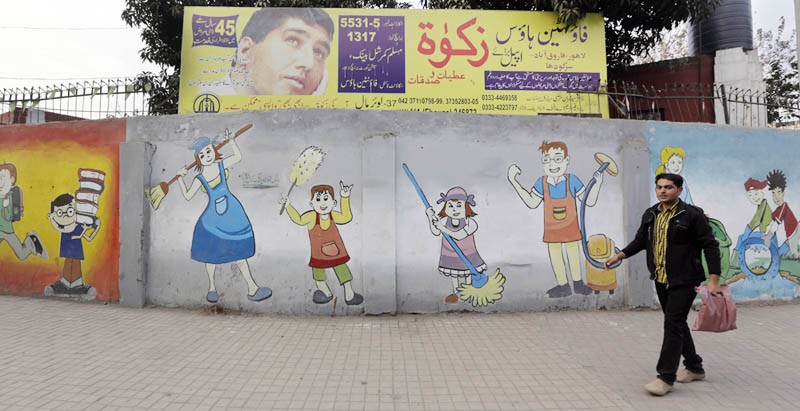
The teachers as well as parents of the physically and mentally challenged children who are enrolled at the Institute for Disadvantaged Children (IDC) are worrying sick.
Their main grouse is that the school building has been marked by the government for acquisition for the Orange Line Metro Train project.
Under the proposed plan, most of the school building, owned by the Evacuee Trust Property Board (ETPB), shall be demolished. This means that the remaining part of it shall be of no use at all.
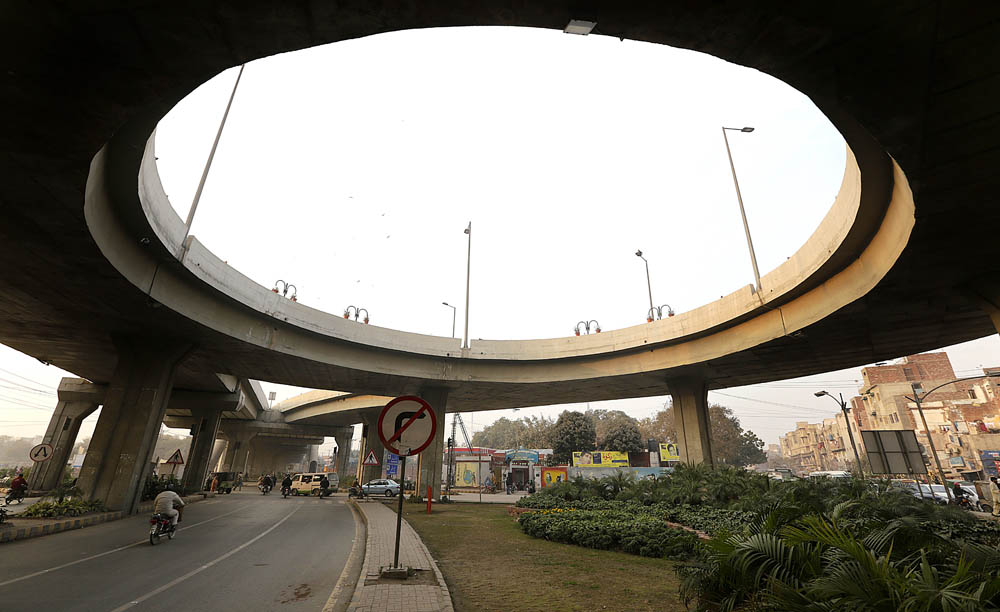
Situated right underneath an elevated structure of concrete at the famous Jain Mandir Chowk (now called Babari Chowk after the demolition of the temple), the IDC has an enrolment of about 200. The students are mostly young children suffering from different physical and mental disabilities that include Down’s Syndrome, Attention Deficit Disorder, autism, and speech impairment.
The institute, which is run under the auspices of Fountain House and constructed on evacuee property, is nothing less than a blessing for many parents who cannot afford to send their children to expensive facilities meant for special children. Here, those who cannot afford to pay are not charged a single penny whereas others who have a better financial status are charged a nominal sum.
Located in the centre of the city, the IDC has been catering to the needs of a large number of people living in the densely populated and comparatively older localities. One can even see the parents bringing their children over on foot.
The facility is a teaching place as well as a therapy centre where the disadvantaged children are trained on how to live independently and minimise reliance on others. The parents have nurtured hopes that one day their children will be normal enough to get into mainstream schools. The progress they have seen over time has given them this confidence.
But their hopes were shattered one fateful day when they reached the IDC to meet the principal, on the latter’s call. They were expecting it to be a routine parent-teacher meeting but were told of the harsh fact about the school building being picked up for the OMT project.
Since then the teachers and parents have been making frantic appeals to those who matter to spare the place. Their point is that as the route has been changed many a time to save several other city buildings such as commercial plazas, the same can be done here keeping in view the utility of the institute.
Nazia Ahsan, mother of the six years old Muaaz Ahsan, who is suffering from Down’s Syndrome, tells TNS that her son has been studying at the institute for the past four years now and has shown immense improvement.
"Psychiatrists say if his condition continues to improve at this pace, he shall be fit for enrollment in a school for normal children very soon," she says. "My worry is what will happen if the IDC ceases to exist? Will my son’s progress be stalled?"
According to her, the staff of the institute often visits them at their house under its unique outreach programme and trains the family members on how to handle the special child. "No one else can provide us such help.
"My son has developed a bond with his teachers. I fear all the progress might be reverted if this bond is broken due to the closure of the institute!"
Nusrat Safdar, mother of Bareera Safdar, 10, is also shocked. She says she has seen the markings on the school building and fears for her daughter’s well-being in case the place is demolished.
Her daughter was unable to speak so they admitted her at the institute a year and half ago. "Now she can speak words like ‘Baba’ and ‘Mama’," she says. "Her teachers were hoping she’d be able to soon start uttering longer sentences. That is, only if the institute survives."
Tahira Mansoor is another worried parent of a 21-year-old girl named Ayesha who has a learning disability. She was given admission as a special case since the institute is meant only for younger children. "It [the IDC] is like second home to Ayesha," she says, woefully. "I would request the chief minister of Punjab to save the place at any cost."
Ghazala Kaleem, Principal, IDC, reveals that the institute’s ground was acquired during the construction of the Metro Bus route and what is left of it has now fallen victim to the Orange Line.
She says the parents of the children are extremely worried about the fate of the IDC as they see no substitute for them.
Kaleem says that the IDC for young children was set up in 2010, although the premises were being used by the Fountain House for decades.
She speaks of applications that have been submitted with the ETPB regarding the matter. "What is needed the most at the moment is the support of the civil society, media and the general public.
"The government has the right to launch development projects but the development should not come at such a heavy price."
Siddique Farooq, Chairman, ETPB, says he took up the matter of saving the site of Jain Mandir with the CM Punjab and succeeded in protecting it from demolition. "As far as the matter of schools is concerned, the government has announced to give alternative spots in case these are removed," he adds.
The IDC principal has reservations in this regard. She says the disadvantaged children are not in a position to travel the distances easily and they are dependent on others. "What if the alternative land and building are provided in Johar Town? God forbid, if the need arises for an alternative, it ought to be in close vicinity to the existing location."
The principal also says the parents and the faculty are thankful to the members of the civil society, especially Raheemul Haq of FC College University and Maryam Hussain of National College of Arts, for raising the issue at different forums and keeping the debate alive.