Print Story
X




A worth-watching film about an unwashed, insufferable woman
"It came seventeen years ago -- and to this day, it has shown no intention of going away" -- that is the closing line of author-illustrator Edward Gorey’s weird and wonderful The Doubtful Guest, a darkly humorous tale of an unexpected visitor. It’s a great line, as it evokes not only Gorey’s bizarre illustrations and the deadpan verse of his story but also lends itself as a reference point to one’s own mixed experiences of guests, past and present.
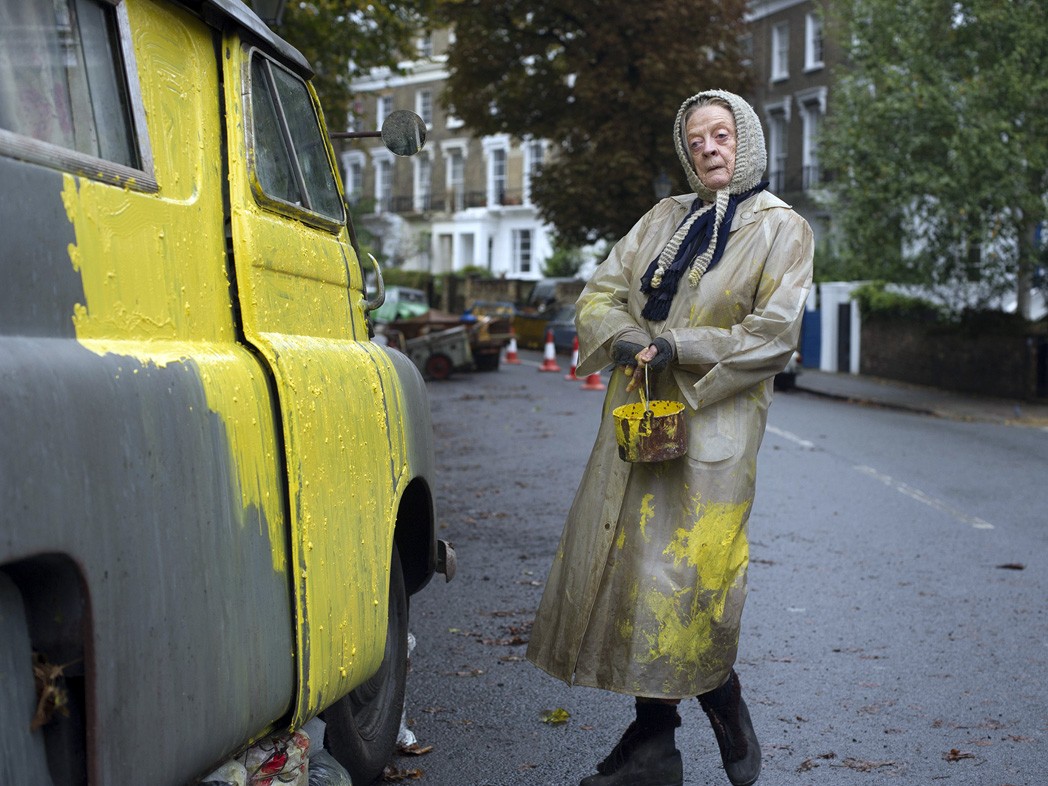
A recent film brings to mind some of this territory: The Lady in the Van is the screen re-telling of British author Alan Bennett’s association with a homeless old lady who parked her van temporarily in his driveway -- and then stayed for fifteen years. The lady -- ‘Miss Shepherd’ as she was known to residents of the Camden Street where Bennett lived -- was an extraordinary character, infuriating, obdurate, smelly and fairly unpleasant. But she also seemed educated and well-travelled, so she was something of a mystery: Where had she come from? Where was her family? And why was she living in a van?
Bennett, whose writing desk was in the window of his front room, had plenty of time to observe Miss Shepherd who was parked in his driveway, and he made lots of notes about her and her behaviour. After her death he published a piece about her and then turned the story into a stage play; it is now a feature film with the inimitable Maggie Smith in the title role.
The film is very funny despite the fact that a lot of it is about the frailty and horrors of old age. The interaction between Miss Shepherd and everybody else is amusing because although she is vulnerable and insufferable she is also very spirited and not cowed down by circumstances.
There are two Alan Bennetts throughout the film, one is the writer and the other is the person who lives in the house. The person resents Miss Shepherd’s imposition and rudeness while the writer appreciates her presence because he is able to observe her and use that as material for his work.
The film is also tinged with sadness as it is a reflection on the essential loneliness of old age. Miss Shepherd’s fate is contrasted with that of the author’s own mother, Mrs Bennett who, despite family and respectability, actually fares less well than the homeless woman living in a broken down, malodorous van who she had pitied and looked down upon. The story is also a comment on how society finds having to deal with old people extremely inconvenient. Miss Shepherd is unwashed, insufferable and ungrateful but she is, more than anything else, an inconvenience in a nice neighbourhood populated by successful professional people.
Bennett, whose writing desk was in the window of his front room, had plenty of time to observe Miss
Shepherd who was parked in his driveway.
The mystery of Miss Shepherd’s past is somewhat solved towards the end of the film, throwing up further questions about religion, creative talent, mental frailty and social attitudes. In many ways this is a story with a very British flavour, yet it is also very easy to relate to because it is a reflection on old age, relationships and exclusion.
Alan Bennett the writer was able to benefit from the discomfort and irritation of Alan Bennett the person by telling the world about the eccentric woman living in his drive. Nicholas Hytner’s film is both funny and poignant, but what makes it really special is the wonderful Maggie Smith. Smith inhabits the character wonderfully, never letting the role become an echo of another obstinate old lady role she is now famous for, the Dowager countess of Downton Abbey.
Worth watching.
Best wishes,