

Print Story
X




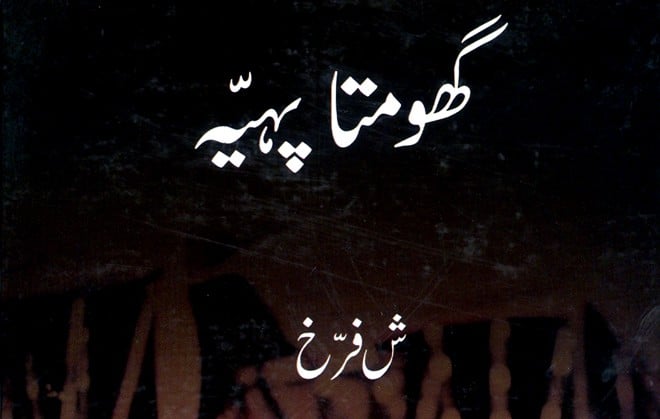
The subject of Sheen Farrukh’s book is the average people who have gone about their daily lives with the compulsion of a routine and not with the intention of remaking the world or reforming mankind
Traditionally, travel writing has had a ready audience because of its exposure to the novelty of people and places. The chances of travel were limited, expensive and there were hardly any other channels open for a peep into a world that was unknown. Similarly travellers, explorers and those with a wanderlust were much sought after company and they could dine out for weeks, if not months, recounting their exposure to an unfamiliar world. So, the art of travel writing emerged principally from an oral tradition of recounting a tale or an adventure.
Now with the rise of the internet and frequent air travel that novelty has disappeared. And going to another country or region, especially that charts a familiar course or is the beat, is like going to work everyday. Europe, particularly the United Kingdom, and then the United States is the beat of Pakistanis, primarily, because the former was the colonial master and it was easy to go there because the links had already been established since colonial times.
Additionally these destinations were also considered more advanced and people sent their children, spending their hard earned money on foreign education for a brighter future of their progeny. It was later that the diaspora started to settle there and developed an outpost for the locals, the lure of a higher standard of living and sending back money for the family became the primary motive. That also led to a process of migration and immigration that has reached a sizeable proportion in recent times, if illegal travel is also included, to the more advanced countries of the world from the backward areas of the world.
Pakistanis also travel to the United States for similar reasons, for education and in search of a better lifestyle. A sizeable diaspora too now resides there keeping alive the link between the two peoples, here and there, keeping the tensions of migration a constant and livewire topic of discussion among the two people, the one living here and those living in the United States.
Besides economic reasons, political and religious persecution of Pakistanis can be found everywhere in the world but not more than in the two countries mentioned above. With growing numbers and their usefulness in those countries, they are now a more independent and confident lot than of yore and with that they have also transported the various negative aspects of their culture abroad and insist on practicing them in the name of either customs and culture or religion. This quest of identity may have developed new areas of tension that can be the subject of an objective analysis rather than be treated as a series of condemnations.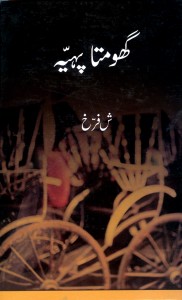
Sheen Farrukh in her book Ghoomta Paheya started off with a disadvantage because she was writing about familiar territory and familiar people. The United States and Europe were her destinations with hardly any novelty left for the readers in the areas that they travel quite frequently to or are overexposed to those societies and cultures through the media.
Obviously, she could not walk a beaten path but what is of interest is that she met various people, not that well-known but the average types, not those on the streets or the poor but from the middle classes, be it professors, writers or journalists, well off but not known or recognised as having done something great in their lives, those who have gone about their daily lives with the compulsion of a routine and not with the intention of remaking the world or reforming mankind.
And, there, behind the veneer of culture and traditions, she was able to tap the essential humaneness of these characters. Though they lived in a world very different from hers in terms of its mechanics, yet they shared the same concerns and were besotted by the same prejudices associated with backwardness and insularity. These people, with great exposure, and more income to dispose off, did not really liberate themselves from the fears and aspirations that is the lot of mankind.
It is her interest in the people that has set aside these writing and it also gives an insight into the way she has perceived people and the issues. It is not an analyses or an objective understanding of characters that constitute that society but felt experience that she has successfully been able to communicate. Her impressions are of great significance, because, on the basis of these, she leads the reader into the emotional collapse of the people, the women in particular with their growing concerns about the changing society and their primary functions of child bearing/homemaking being questioned, challenged and even rejected.
It does tell us about the societies that are overexposed but the intimacy of detail and impressions is what gives us a the more authentic individual feel about the culture in its wholeness that sometimes gets ignored in the you and me polemics.
Sheen Farrukh has the distinction of being a journalist, who broke the then concrete ceiling and joined a profession that was not considered proper for a woman. No job outside the house was thought proper for a woman in this deeply conservative society but then grudgingly some concession were extracted for teaching and medical professions.
But journalism was a man’s bailiwick, the rough and tumble of the profession, travel, exposure, meeting people, to be on the scene of action instantly was thought to be too outdoor and tough for women. But women were ready to accept the challenge and Sheen Farrukh set an example herself and steadily rose to being the first woman editor of a weekly in the country. She proved her credentials in the man-world of journalism - and after her it is no longer a taboo in every sense of the word.