

Print Story
X




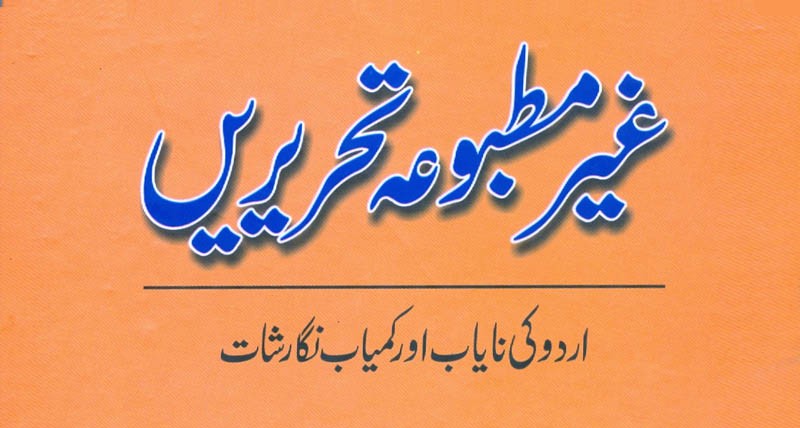
Agha Nasir, the prolific chronicler of our times, publishes some old manuscripts by well-known people
There has always been a paucity of good scripts in Urdu as indeed in the other Pakistani languages. Ever since the popularisation of the stage plays, known by the title of Parsi theatre, there has been an emphasis on either translating the plays of the European languages, in particular of English or what has come down to us in English and then adapting them making them relevant and palatable for the local audiences.
In popular theatre, certain compromises did result in the quality of the plays and it could never be quoted as part of high culture which radio play could. Because of Patras and his colleagues, the tradition of theatre established in colleges was brought over to radio. In colleges too, commercial interest was totally absent and Lahore station became very famous for its plays.
When Karachi became the capital of Pakistan, people like Agha Nasir worked very hard to maintain and even excel that high standard. When the role of radio will be evaluated, radio drama will figure as its singular achievement. In fact, drama and music were the two fortes of radio, and drama in particular flourished because there was no commercial compulsion which bedevilled the theatre on public stage.
It is often questioned as to why the scripts written for stage plays are considered worthy of being taught as literature, while teleplays and screen plays are not. Perhaps classical drama had to rely more on words while the contemporary one decries wordiness. The great opportunity of the visual assets available now may have minimised the use of language and the scattered bits of linguistic information are no patch on the lyrical and dramatic intensity of classical scripts.
Usually when plays are either translated or adapted, the purpose is to train the playwrights in the craft of writing, either for stage, radio, screen or television for these are the prevalent mediums. The great rush of translations and adaptations has been such that the natural consequence of creating playwrights equipped with a craft that is acquired and a sensibility that is thoroughly local has not followed. The great availability of the scripts written elsewhere and available to us in English have perhaps stunted the sequence and a flowering of local playwrights as it was supposed to have happened.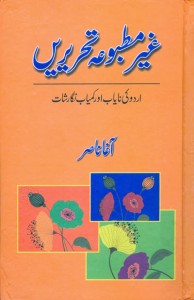
Most of the plays that were written for the radio or then television were either translation, much more so adaptations and they were adapted so well that in most cases not all could be told to have not taken birth here. Actually to adapt a play successfully is no less a talent and many of the very well adaptations have been remotely connected to the original -- actually these reworked endlessly and made part of the milieu seeming as good as home-written and produced.
Faiz Ahmad Faiz was not known to have written for stage or television, though it is generally considered that Faiz did adapt Shaukat Siddiqui’s Khuda Ki Basti for television and may have had a role to play in producing the play as well. But Agha Nasir has added to everybody’s knowledge and to the fund of literature by including two plays of Faiz: Private Secretary and Hota Hai Shabo Roz. According to Agha Nasir, these were written for the radio but apparently were produced by him for television in 1970. The third play Dehli Ki Aakhri Shaam was written by Soofi Tabassum and was produced in which many a known actor took part.
The other plays included in the volume are Lighthouse Ke Muhafiz by Nasrullah Khan, a translation of a Peter Artier play (which one it is not mentioned) written for the radio. Its only two characters were both played by Z.A Bokhari. Tasveeron Ki Zabani by Intisar Husain, a well-known radio script writer and now forgotten for his radio programme Hamid Mian ke Haan was very popular and ran for more than forty five years continuously. The other plays included are: Robert Louis Stevenson Markheim, translated by Abdul Majid with its dramatic adaptation by Agha Nasir himself, Awaz, a translation of Jean Cocteau by Muhammad Hassan Raabe.
According to Agha Nasir, these have not been published before. While he was rummaging through piles of papers and documents researching for his intended autobiography he hit upon a packet titled ‘Purane Mussawade’ (old manuscripts). He went through them and since it contained much by well-known people he decided to have them published.
Agha Nasir in the past many years has written and published many works. He has been indeed very prolific. Television found its chronicler in him. Agha Nasir, who joined this new body immediately after it was set up, remained with it despite many a storm to have a first hand knowledge of its limitations as well as the outside compulsions that it had to work under. He started his career from the radio, has recounted the entire episode how he was called for the interview after confronting Z. A. Bokhari who had come to preside a meeting, got employed and soon made a name for himself, first for the radio, then television and now of late in writing.