

Print Story
X




It is necessary to report sexual violence in the media but it is not right to identify victims of such violence as their dignity and privacy are fundamental rights
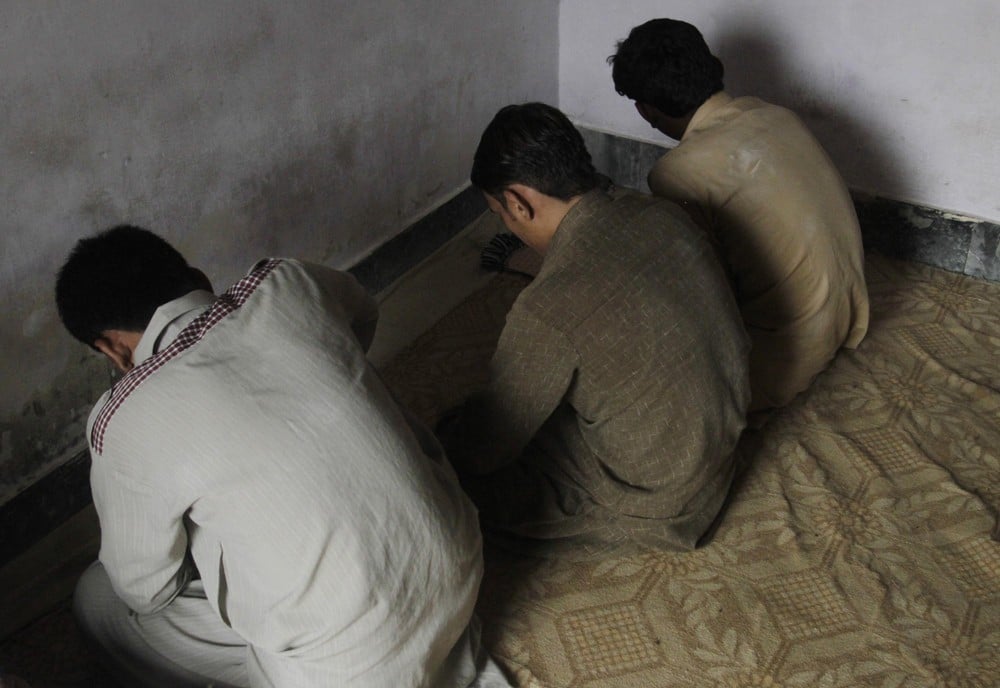
Child sex abuse scandal in Kasur district has highlighted the vulnerable state of children in Pakistan. However, it is just one example of child abuse that plagues our country.
Media reporting on such issues in the past has been inadequate. When an incident occurs, it is brushed under the carpet within days. How to create awareness on the issue and use the media effectively?
Sobia Qadir, legal officer at Madadgar, a helpline for women and children in distress, believes that awareness can be created by airing public service advertisements, talk shows, and short dramas, which educate children to avoid strangers and report any "objectionable" behaviour, shown even by those whom they know personally.
Sobia believes the message can be passed on to children in an implicit manner, through suggestive paintings, comics, plays, games, small documentaries, story books and awareness raising sessions in schools. For the poor and those out of school, committees comprising locals can be made at the local level (both urban and rural areas) to serve this purpose.
She highlights the need to sensitise parents so that they know the whereabouts of their children at all times. "We should not forget special children; how they can protect themselves in case of sexual abuse. There should be a proper self-defence training module and it must be part of the curriculum of the children," she adds.
Sobia has a few reservations about the media and says it is unethical to expose the names and show the faces of the victims and the accused. "If this happens, the former will have to live with the stigma and the latter labeled abuser without even being convicted."
Referring to her recent fact-finding visit to Kasur, she says a child abuse victim was hiding behind her to escape TV cameras but media personnel were adamant on showing his face to the world. "I requested them to spare the child but they asked me to mind my own business."
Zaigham Khan, Executive Director, Civic Action Resources (CAR), has his own take on this subject. He says homosexuality in Pakistan is often equated with abuse of male children and mostly tolerated. "Even in areas where a code of honour is strongly followed, families often keep silent over abuse of male children while reacting violently where the honour of their females is concerned." Similarly, police are hesitant to apprehend child abusers.
Related article: A policy delayed…
Khan says the biggest problem is the taboo about debating this issue and imparting sex education to children. Children grow up without understanding the changes in their own bodies and the resulting challenges. "They are not equipped to deal with adults making inappropriate demands to them. As a result, they become an easy prey to those who want to exploit them."
He says educationists in Pakistan have not produced any material that can be used to educate children about sexual issues and equip them to deal with situations of harassment and abuse. No guidance has been made available to parents about guiding and supervising their children.
He appreciates the work done by some non-governmental organisations that have often found resistance from different quarters. "They have been harassed by conservative groups and discouraged by the government. It’s time the media joins hands with such organisations to spread awareness on the issue of child abuse in Pakistani society."
The media environment in Pakistan, in Khan’s opinion, is competitive and geared towards reporting events rather than processes. When such a high profile case is reported, reporting often gets stuck in that episode alone. Little effort is made to contextualise the whole issue and carry out follow-up," he explains.
Misbah Khalid, Programme Coordinator, Aangan - Rozan, an organisation working to stop child sex abuse, suggests campaigns should be planned with the objective to target the overall communities. The target should be educating children, young people, and their families. She says children and young people can participate in making films and can take part in sports and adventure activities to produce materials for websites, create posters, and produce a song that could be associated with the campaign.
She says different organisations, including Rozan, have animations regarding child sexual abuse. Campaigns can be built around these and awareness raising messages can be aired. Celebrities can play important role in supporting such campaigns and existing helplines can also be promoted.
Khalid suggests that the media should highlight the importance of self-awareness and self esteem, better communication skills, and a healthier way to resolve a conflict. "Helping our children become more confident and emotionally strong will also go a long way towards giving them the courage to speak out."
She says talking to children about any topic, not just sexual abuse, must be done keeping the age of the child in mind. A good place to start from is to ask them what they know about protecting themselves from people who may want to harm them or make them uncomfortable.
Adnan Rehmat, media analyst and activist, says Pakistan may be a conservative country but even then, over the past few years, the media has stopped shying away from broaching what have hitherto been considered taboo subjects for open discussion, e.g., AIDS/HIV, rape, military and intelligence interference in politics, madrassas preaching violence, etc. Even sexual abuse of children has been increasingly reported in recent years.
On why the media is struggling to report about the Kasur incident, he thinks it is more out of the inability to link it not just with the larger governance issues of policing and crime but also of the changing sociology -- how new ways of exploitation can be countered.
Rehmat suggests extensive public interest campaign -- both from public and private sectors -- through both current affairs media and performance media needs to be developed and sustained.
In his opinion, these should be centered around three focus areas. "The first is the emergence and embracement of ‘personalized media’ -- use of mobile phones, which are as much a phone as a camera and a recorder, and digital media, including use of online space. The mass media can actually help people, especially the vulnerable groups, such as children and women, by generating a larger discussion about privacy and ways to prevent abuse of technology that has made possible newer, easier ways of exploitation of the marginalised," he says.
"Secondly, a policy that merges both formal education and emotional/psychological counselling at educational institutions is required. Parents and children in Pakistan don’t usually talk about sexual exploitation. This gap in communication needs to be bridged at the educational and institutional level," he suggests.
Finally, he says, it is necessary to create practical linkages with local governance with a fleshed out policy on concepts of privacy and social protections hooked with the more mainstream security policies that deal with physical aspects rather than emotional.
Rehmat says it is necessary to report sexual violence in the media but it is not right to identify victims of such violence as their dignity and privacy are fundamental rights, not just enshrined in the Universal Declaration of Human Rights but also in the Pakistan’s constitution. "The media dynamics in Pakistan incentivise sensationalism over substance," he adds.
India, as well as most Western countries, Rehmat says, have laws in place that criminalise identification of victims of sexual violence. It’s time Pakistan worked on this. "The right of the media to profit is not greater than the right of the citizen against manipulation and violation of their dignity," he concludes.