


Print Story
X




Though restrictive laws and policies exist, forest lands are being encroached upon and used for forbidden purposes
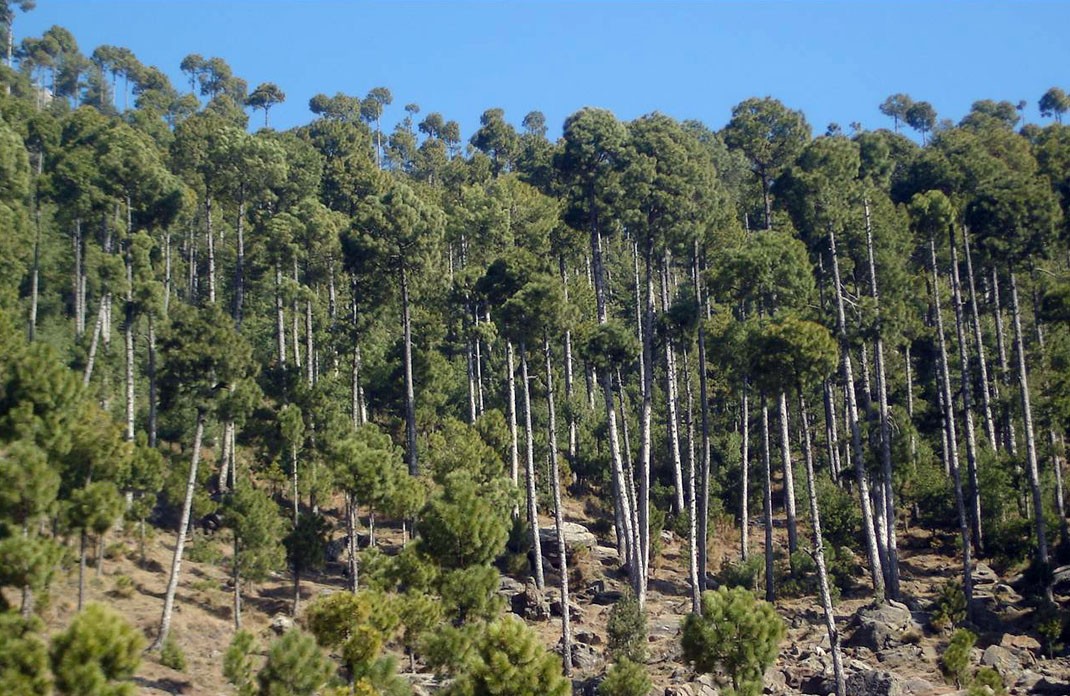
The recent news about the registration of First Information Report (FIR) against a real estate company for illegally occupying forest land in Islamabad, though after a lapse of ten years, has surprised many. Reportedly, the staff of the company was accused of cutting trees and forcibly taking control of hundreds of acres of forest land in Loi Bhir for its inclusion into its housing society.
The report against the company was made ten years ago but there was no progress until recently. This shows how strong the encroachers are and how ineffective different laws and policies to protect forest lands are.
This is just one case in point, and there are several other examples to quote. The forest lands in different provinces are being allotted in violation of the policies in place. Ideally, the forest lands cannot be used for purposes other than agricultural and the allottees are required to plant trees on around 20 to 25 per cent of the allotted land but what happens quite often is quite contrary to this. At many places, allotted forest lands have become source of illegal income for timber mafia and even used for construction of residential units.
The Sindh government is also under criticism for using forest land for sugarcane projects and patronising the illegal occupation of forest land. Its inaction against powerful landlords, who have occupied forest lands, hints at the possibility of a collusion between them. Recently, the activists and members of several civil society organisations have opposed the recent decision of the Sindh government to allot 9,000 acres of forest land to the army on grounds that if used for residential purposes, it will further shrink the already depleted forest cover.
The Sindh government, however, defends this decision saying this area had historically been under the control of outlaws and the government had lost its control over it a long time ago. As it is being allotted to a committed organisation like the army, it says, it is hoped that it will ensure implementation of the lease term on tree plantation along with farming.
However, despite such clearances, the voices are getting stronger in support of allotment of forest lands to peasants on condition of re-forestation and revocation of allotments made to influential people in Sindh.
Sardar Asif Sial, a leading environmental lawyer and international consultant on climate change, is of the opinion that the lacunae in existing laws on forest land’s use have to be removed to save forest lands from misuse. He tells TNS that though there is a national forest policy in place, the federal and provincial governments have found ways to circumvent the laws on forest land use.
Sial says that as per this policy, "The federal, provincial and territorial governments will ensure that no forest land shall be converted to any non-forestry uses. In case such conversion is inevitable, permission for transfer shall be granted by the federal government on the recommendation of the respective provincial/territorial government, subject to the condition that proper arrangements are made for provision of alternate land and funds for compensatory afforestation."
Besides, he says, diversion (if any) of forest land for non-forest purposes should be subject to most careful scrutiny by specialists from the standpoint of social and environmental costs and benefits. Necessary legislation should be done to curb the practice of forest conversions to non-forestry uses.
Even mining and quarrying in designated forest lands and lands covered by trees should be allowed only after ensuring that the beneficiaries shall repair and revegetate the area in accordance with established forestry practices.
Though such elaborate directions are there, it is unfortunate that these are hardly followed, says Sial. He says when the British laid the Pakistan’s irrigation system, they divided areas into chaks (villages) and designated common and grazing lands in every unit. The grazing lands could not be used for any other purposes but with the passage of time they disappeared and people occupied them right under the nose of revenue department staff, he adds.
Tanveer Arif, CEO of Karachi-based Society for Conservation and Protection of Environment (SCOPE), says Pakistan’s forest land expanse is a paltry four per cent of its total landmass as per official claims. This is one of the lowest in the world and much lower than the desired 25 per cent forest cover, he adds.
Arif clarifies that the forest land which has canopy cover is even less than one per cent whereas the remaining forest land is devoid of vegetation of any sort. He cites the examples of Murree and Bani Gala in Islamabad as places where forests have been removed to give way to housing units. "If this can happen in the Capital and at a distance of 50 kilometres from there, how can we expect that people in remote rural and northern areas will spare forests." He stresses that strict laws shall be introduced and enforced to monitor forest land use and conserve forests and those involved in irregularities be given exemplary punishments.
Hafiz Yousaf, a leading chartered accountant based in Lahore, states that the wealthy individuals and the corporate sector shall be motivated to participate in afforestation campaigns under Corporate Social Responsibility (CSR). He tells TNS that he has a house in Khaira Gali, KPK where he has surveyed the areas around it for new plantation. "I am also in talk with corporations like Pakistan Tobacco Company (PTC) and they have assured me that they will invest on planting trees in the areas. We must take initiatives at personal level and not always look towards the state to do the needful," he suggests.
Though the advice to individuals and corporations to take the lead has weight, the state is not absolved from its duty to mitigate the effects of global warming. Quite interestingly, Federal Environment Minister Mushahidullah Khan has announced that he is working on a draft of what would be Pakistan’s first policy to conserve forests to mitigate the effects of global warming.
Sardar Asif Sial tells TNS that instead of going for new laws and policies it shall simply implement the existing ones if it wants results. For example, he says, the framework for implementation of Pakistan’s climate change policy urges the government to strictly prohibit illegal forest cutting and conversion of forest land to non-forest uses, enact and enforce laws and regulations required for addressing illegal trade in timber and de-forestation, promote farm forestry practices by planting multipurpose fast-growing species to meet the needs for timber, fuel wood and fodder for livestock, integrate land use planning and community participation in managing forest lands and so on.