Print Story
X




With proliferation of tv channels, phenomenal increase in the number of internet users, and rise of consumerism, the scope of advertisement has further widened
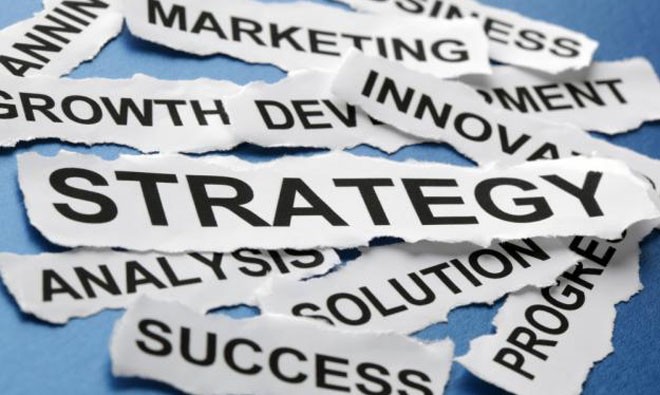
Advertising is a booming business in Pakistan and the industry figures over the years show that there has been a regular growth in the revenues. With proliferation of tv channels, phenomenal increase in the number of internet users, and rise of consumerism, its scope has further widened. Those associated with the industry see interesting though challenging times ahead.
As per the data for Fiscal Year 2013-2014 provided by Gallup Pakistan, the total advertising revenue in this fiscal year was Rs 38.32 billion, which showed a seven per cent increase over the previous year’s figure of Rs 35.85 billion. The share of tv ad spend was Rs 22.97 (60 per cent of the total amount), print ad Rs 8.34 billion (22 per cent), outdoor ad Rs 2.56 million (7 per cent), direct marketing/person to person/brand activation Rs 2.28 billion (6 per cent), radio Rs 1.57 billion (4 per cent) and internet 0.6 billion (1 per cent).
The same data shows that in print, newspapers account for 98 per cent of the total print ad revenue whereas magazines have a share of around 2 per cent. With respect to tv channels, it says, satellite channels account for 84 per cent of spend whereas terrestrial channels account for 16 per cent. The top five channels account for 44 per cent of the total advertising revenue of tv channels in Pakistan, which means that the remaining channels strive for much smaller shares of the overall budget.
A media research organisation, Media Bank, has compiled and released interesting figures about the share of leading sectors in terms of their share of total advertising minutes on tv in 2014. These were cellular communication (20 per cent), beverages (16 per cent), personal products (13 per cent), detergents (12 per cent), culinary (5 per cent), construction (4 per cent), confectionery (4 per cent), healthcare and medical services (3 per cent), food (3 per cent) and education (1 per cent).
Similarly, Media Track Pakistan, a media monitoring and research organisation, has released details of the total expenditure made on print media advertising in 2014. It says the education sector was the leading spender in print advertisement, with educational institutes spending 14 per cent of the total expenditure, followed by construction companies 13.5 per cent, banking sector 11 per cent, government of Punjab 4.9 per cent, federal government 4.4 per cent, garments/lawns 3.9 per cent and government of Sindh 2.1 per cent.
Though such reports serve as reference material for the advertising industry, marketers, advertisers, etc, so that they can make their plans accordingly, they may not carry the exact figures. But, surely, they hint at the existing trends and the scope that lies in future.
The big names in the advertising industry are mostly upbeat and gearing to tackle new challenges and exploit opportunities.
Faraz Hasan, Chief Operating Officer (COO), Publicis Pakistan and Modem 4, feels that the overall trend is towards growth in the advertising market. He agrees with Gallup Pakistan’s figures to an extent and estimates that the general media advertising spend in Pakistan would be somewhere in the Rs 35 billion to 40 billion range. Similarly, he thinks, tv as always would be the leader in this category with a 50-60 per cent share. However, he feels that this time around print has suffered a little and would be down to maybe 15 to 20 per cent of the total spend.
On the relatively new venues, Hasan points out that outdoor advertising and brand activations are on the rise and more brands are going for direct customer approach and targeting at major point of sale locations. "Outdoor is strong but limited in its current state. Unless we adapt our outdoor campaigns to more creative and intriguing visuals/interactions, this medium, too, will suffer," he adds. Radio advertisement, in his view, is more or less static.
Read also: Subject matters
Hasan terms digital the medium of the future because not only is it accessible to a whole new generation of people, but the cost benefit is truly remarkable. "Besides, its popularity is majorly due to the fact that it is one area of advertising that can be accurately measured." He says that with the increase in the number of smartphones and their penetration in rural areas, many brands that have not ever thought about going digital should start looking at it from a whole new angle.
"It is not enough to send out an SMS or to digitally plaster your product on websites, blogs and social media. There has to be a change. Advertising agencies have to lead the change."
This medium is growing in the country at the moment and some services offered by digital advertising experts are Search Engine Optimization (SEO), Search Engine Marketing (SEM), Social Media Optimization (SMO), Social Media Marketing (SMM), social bookmarketing, social networking, blogging and micro-blogging, viral and buzz marketing and establishing online communities.
Another growing trend is the outsourcing of the ad-making business to other countries, such as India and Thailand, and casting Bollywood models. Syed Ahmed Masood, CEO of Channel 7 Communication thinks otherwise. He tells TNS that it not a new phenomenon and this activity has been going for quite a long time.
The reasons behind this preference, he says, are that the film and ad- making industries of these countries are highly developed having the latest equipment and trained workforce. Many of the expensive cameras they use, he says, are not available here in Pakistan and their rent per shift is also low for the reason that they have enough competitors in the industry.
Faraz Hasan disagrees, saying he does not see the point of outsourcing to India or Thailand. "There is a tremendous amount of talent in Pakistan and technology-wise people are at par with some of the best that other countries have to offer. I personally think it’s a mental fiscalism problem. We will not be happy paying $15,000 to a production company in Pakistan, but will be happy to spend $50,000 for the same services in another country".
There is not much clarity about who regulates the advertising industry. Qamar Abbas, Executive Director, Pakistan Advertisers’ Society (PAS), a body that is representative of 80 per cent of the ad-spend of Pakistan, says there is no mechanism to approve the ads before they go on air or in print.
But, he says, "There are basic codes drafted by Pakistan Electronic Media Regulatory Authority (PEMRA), Competition Commission of Pakistan (CCP), Pakistan Broadcasting Association (PBA) and so on." The PAS, Qamar adds, also has an in-house dispute resolution mechanism under which it decides matters between its members who comprise major advertisers.
PEMRA is not empowered to pre-censor the content of its licensees but under Section 20 of PEMRA Ordinance, all licencees are obliged to appoint In-House Monitoring Committees to ensure that no content is aired that violates the code of conduct. Besides, the CCP and PEMRA can penalise marketers who lie about attributes of a product, draw unrealistic comparison with competitors, or indulge in deceptive marketing practices.
The advertisers are also expected to ensure that no advertisement should mislead by inaccuracy, ambiguity, exaggeration, omission or otherwise. No advertisement should so closely resemble any other product/advertisement that it misleads or causes confusion.
Furthermore, no advertisement should make unfair use of the goodwill attached to the trademark, name, brand or the advertising campaign of any other advertisers. Special care shall be taken to keep ads free of indecent and obscene material.