Print Story
X

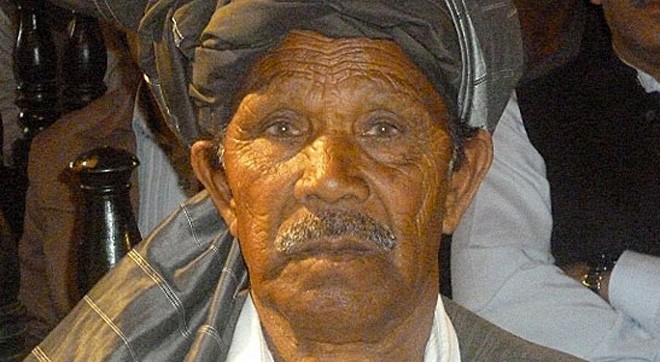
Another cry for help has gone up in the media from an artiste. This time it is the winner of the President’s Medal for the Pride of Performance, Khan Tahsil, a pushto folk singer. He seems in desperate conditions needing to pay his medical bills.
The top performers and the very famous are spared the indignity of having to seek assistance. But the whole lot that falls in the middle rung in any branch of the arts like painting, music, acting, dance and film leads a life that is not easy or comfortable.
Besides all this, artistes in Khyber Pakhtunkhwa have been particularly hurt by the political conditions in the region. During the Afghan war, many migrated to this province from Afghanistan due to the unsettling conditions, and this trickle became a deluge when the Taliban took over in the mid 1990s. As all music and performing arts were banned and violently discouraged, they came and settled in either Peshawar or went to Europe and the United States.
When the MMA government was set up in the province in the early part of the twenty first century, these artistes were discouraged from performing, so some of them went back to Kabul and other areas of Afghanistan because the Karzai regime was less inimical to the arts.
The unrest in Kabul has still not created the conditions where this activity could be carried out without fear of reprisal and assault. There may be TV networks, a few arts councils and academies but the condition is not really ideal for performing artistes in Afghanistan. Since the language is dari or pushto and the music shares great similarities, it becomes difficult to distinguish between the artistes of Afghanistan and Khyber Pakhtunkhwa especially in view of the porous borders. It is also ironical that the best artistes of Afghanistan and Iran and some other adjoining areas are outside of this region. They have set up their performing practices since they cannot perform in their own societies due to limited opportunities and a threat to their existence.
In Europe, particularly, artistes from these areas are doing rather well and are reengaged in creative work like other members of the diaspora which is quite sizable in number. Some of the best work is being created there. Many travel back and forth but still do not perform with the freedom and regularity at home compared to what they routinely do in other parts of the world. Their visits are more to meet up with family and friends. The situation has reduced them to being underground artistes, afraid of revealing their identity or profession.
So the society and the people back home suffer. They have been robbed of their best artistes, poets and performers and just have to rely on their recordings. Life has been shorn of its well roundedness and revolves around just work, security preoccupations and devising ways and means of eking out an existence. This society is no longer a normal one constantly coping with the bare issues of survival.
In Pakistan, there may be money and resources available for welfare activities of artistes but, it appears, these are hampered by a tangle of administrative set-ups. One knows there are funds for artistes in the Lok Virsa, Pakistan National Council of the Arts and the Ministry of Information at Islamabad. Similarly, there are funds at the provincial levels with all such departments. The artistes themselves have also created a fund in Lahore with the aid of Alhamra to support the most needed. From time to time the higher offices also announce such measures as a gesture of great magnanimity.
In the last tenure of Shahbaz Sharif, a fund was created and another one was launched by the prime minister Yousaf Raza Gilani with great hype after calling a meeting of many artistes, writers and educationists. It may appear strange that appeals are issued from time to time despite all these arrangements. It could be because there are many parallel schemes that are functioning and run like small streams failing to converge into a mighty river.
Too many bodies deal with this matter: there is need to consolidate the fund so that it does not whittle down as it does now into various heads and subheads. There should be a body that looks into the claims of assistance rather than it being distributed in a shoddy manner in terms of stipends and scholarships as it is done now. The art bodies consider it to be a minor work or a work that has been thrust upon them and distracts them from their main area of activity.
As it is, the artistes are not treated as ordinary human beings: they are either treated as celebrities and glamourised or demonised in a society that has an inherent animosity towards arts and artistes. The many that are drawn to the arts have done so despite all the resistance and prejudice. Only a miniscule part of the population wants the artistes to be a part of their lives.
There is a big chasm between the art and the artistes who has produced it. Usually, the artistes are blamed for not saving up and be mindful of the rainy days. They are required to be thrifty and quite a few are spendthrifts when the going is good and while they are making sufficiently from their work. But then to expect such discipline and restraint is not to understand the artistic temperament. Artistes create out of abandon and the joy of imagined plenty and they live also to the hilt. They are different temperamentally from other ordinary human beings and so have to be taken for what they are rather than what they ought to be.
Even in a country like Pakistan, the resources may be enough if properly and conscientiously managed; the artistes need not suffer the indignity of having to ask for help openly.