Print Story
X




A book that gives a comprehensive theoretical understanding of the most recognised symbol of subcontinental music
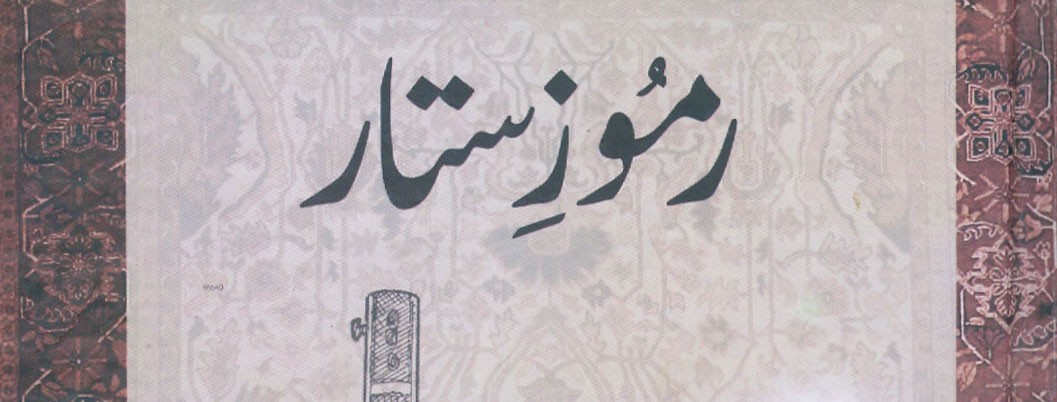
Sitar became the most recognisable symbol of subcontinental classical music during the course of the twentieth century. Since music started making inroads in the western cultural scene, especially after the Second World War, sitar and sitar players were the first to be promoted as associated with a music that was non-Western and had immense spiritual appeal.
Sitar had been in vogue during the course of the twentieth century, gaining in prominence and acceptability within the hierarchy of musical instruments which had been heavily biased in favour of vocal music. The instrumental music was meant only for accompaniment and hence was granted a role that was subservient to that of the vocalist.
Probably with the European domination, instruments here too gained in prestige and importance, and started being played as solo instruments. Gradually, as music began to be heard internationally, the sound of an instrument being free of words and lyrics held greater appeal. As pure music was able to transpose itself across the continents in that drive, the sitar and the tabla led the way. Other instruments followed.
But there has been a lot of debate about the invention or creation of forms and instruments in our tradition, due to conflicting versions of history and their cultural fallout. In our reading of history, in particular cultural history, parallel narratives originate from the ubiquitous person of Amir Khusro. He is treated as a symbolic figure of evolution of what we call the Indo-Muslim culture and, therefore, most of the creations of form and instruments have been laid at his door, including that of the sitar.
Since there have been no documentation and systematic unfolding of history, it becomes impossible to tell and separate fact from fiction, myth from reality. Rashid Malik, the indefatigable researcher and musicologist, began in earnest the quest to separate the two, and he wrote conclusively on the various attributions to Amir Khusro and failed to find any solid evidence other than the one garnered from oral sources over the course of the past many centuries.
Ustad Badaruzzaman, who is also very particular about his research being credited to the source, has likewise not been able to find any connection of the instrument sitar with the person of Amir Khusro. He also contested that it was created by Khusro Khan in the eighteenth or nineteenth century as is also generally assumed. Through circumstantial evidence, he has been able to advance the name of Feroze Khan Adarung, being principally the originator of the instrument that we now know within the tonal pattern of subcontinental music as the sitar.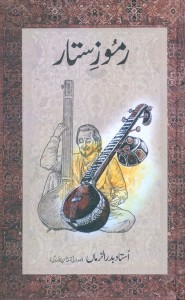
The book includes a comprehensive writeup about the various artistes who played the string instruments, both plucked and bowed. Some instruments that predated the sitar and, according to the author, might have contributed to its formation like the various types of vinas, chitrali sitar, qnoon, chung, chikaari, madhum sitar, and various string instruments both plucked and bowed which have foreign origin like Iran and the current Middle East, barbat, rudh, tarab rood, tanboor, oodh, Irani taar, dotaar, seetaar etc etc.
He has also listed the various sitar players and their contribution to the growing technique and repertoire of the sitar during the course of the twentieth and now the twenty-first century. These great sitar maestros have also made significant changes to the instrument, making it more tenable to the playing techniques and the intonational patterns which they themselves introduced.
In the past few decades, sitar became a very expressive string instrument capable of being played solo and recognised as such. Such maestros who directly or indirectly contributed have been Bhai Mardana Imdad Khan, Inayat Khan, Amir Khan, Habib Ali Khan, Bahadar Sen, Bande Ali Khan, Rahim Sen, Raag Rus Khan, Payar Khan to name a few followed by the crop of twentieth century outstanding instrumentalist Vilayat Khan, Ravi Shanker, Sharif Khan, Haleem Jaffer Khan, Budhaditya Mukherji, Raees Khan, Shahid Pervez etc.
Actually, it is a directory of string instrument players of the last few decades.
Then there are sections on various playing techniques and various gats, jor and jhalas that are played on the sitar. Three baajs are very famous, Razakhawani, Maseetkhawani and Amirkhawani and are still extant. In the past few years, as the formal education of music has been initiated in institutions, a need has been felt that books facilitating pedagogy in this area do barely exist, and the ones that are there are woefully insufficient.
It appears that one section of the book is surely aimed at helping those who want to be familiar with the instrument and its technique wanting to be practicing musicians, sitarist or sitar players. This section can be useful for it lays bare the method that should be followed in this regard.
Since Ustad Badaruzzaman is not from a family of musicians but espouses an approach that is no less professional, the theoretical understanding involved in music education is of primary concern. It can be more useful if interactive books or books produced through multimedia technology are inclusive of the text and music. It will then become easier for the reader to draw a connection between the two; otherwise these two operate in autonomous zones.
The connection of the two is of immense importance and technology can play its role in bridging the gap. Books on music should be interactive with the facility to make both the sound and the word as one.