

Print Story
X




A recent study by Pattan points out religion-based discrimination in Pakistan and suggests ways to end it
Pakistan is facing myriad challenges at domestic and international levels and needs a well-planned strategy and action plan to tackle them. It would be next to impossible for its people to take these threats head on without forging unity among them.
Unfortunately, the situation is far from satisfactory as the countrymen stand divided and distances among them are increasing by the day. The discrimination among them based on caste, creed, religion etc is too strong to resist.
In this background, there have been attempts by responsible individuals and groups at bridging these gaps, identifying the causes behind these unwanted behaviours and devising ways to bring improvement in the situation.
A recent study "Non-Muslim Citizens of Pakistan: A Fearful Existence" carried out by Islamabad-based Pattan Development Organisation is one such attempt. It is based on a comprehensive survey in which a large number of individuals were approached and asked to answer some questions. The questions were mainly about the rights of non-Muslims in the country. These individuals were asked whether non-Muslims had any rights, if yes whether these were ensured, what was the level of support of Muslims and the state that the non-Muslims enjoyed, did they feel threatened or not, were they treated as inferiors, did the text books carry hate material against them, were the incidents of forced conversion and forced marriages common, were they given representation in politics or not and so on.
The replies to these questions have been complied and incorporated into a report which also has a detailed chapter on recommendations.
Sarwar Bari, National Coordinator Pattan, says that the real purpose of carrying out the whole exercise was to point out the existing loopholes and suggest ways to improve the situation. It was not carried out in isolation and all those who mattered were taken on board, he adds.
He says the survey was carried out in Islamabad, Lahore, Faisalabad and Multan. In total, there were 935 respondents who were involved and handed over the questionnaire. Out of these, 63 were Senators/MNAs/MPAs, 61 office-bearers of political parties, 50 religious leaders, 96 government officials, 151 non-Muslims (general public), 25 media personnel, 112 members of civil society organisations/trade unions, 267 Muslims (general public), 51 teachers and 59 lawyers. It was ensured that an inclusive approach is adopted and for this very reason Wahabai, Deobandi, Barelvi, Shia and Sunni Muslims, and non-Muslims were given representation in all these groups.
Bari tells TNS that he is convinced that it is not important how many terrorists are hanged or criminals published. "More important is the task to eliminate sources that gave birth to terrorist mindset including removing of hate material."
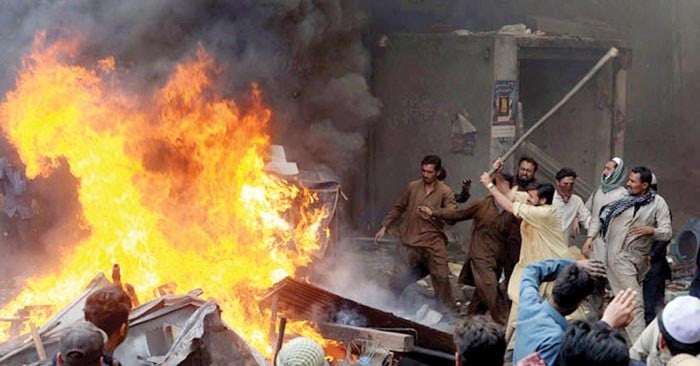
The study establishes that three fundamental articles (20, 22 & 33) of Pakistan’s constitution that guarantee rights of religious minorities have been violated with complete impunity. Religious places, lands, houses and businesses of non-Muslims are mostly unsafe and vulnerable to vandalism and theft in cases of violence.
Ninety six per cent of the respondents agreed that in case Muslims or their worship places are attacked abroad, non-Muslim citizens in Pakistan get panicked and/or targeted. Similarly, 87 per cent said that if non-Muslim women are kidnapped, forced to change their religion and married to Muslims, the state does not take any action against culprits. "Blasphemy laws have aggravated insecurity of non-Muslims and there is a need to amend all discriminatory laws" was the opinion of 80 per cent of the respondents.
An overwhelming majority disagreed that the state officials who are responsible to protect religious freedom of different religious groups fulfill their responsibility. The method to fill reserved seats for religious minorities of legislative bodies is discriminatory and undemocratic was another major observation.
Some other observations were that the absence of elected local councils aggravated issues of non-Muslim populations at local level. Eighty nine per cent respondents agreed that political leadership does not give importance to the issues of non-Muslim citizens. Political parties do not allow non-Muslim members to become president or general secretary or member of central committee at various levels of party hierarchy.
There was a mixed response to whether the CSOs, political parties, Muslim neighbours and Muslim clergy provide support to non-Muslim citizens when they are attacked. English media was termed the most sensitive about reporting on religious issues. Few termed Urdu media responsible and even fewer had to say good things about local media.
There was a general agreement on the fact that non-Muslims tend to hide their identity by adopting Muslim names and behaving like Muslims. Eighty per cent disagreed that Muslim and non-Muslim neighbours socialise with each other or that harmony exists between Muslims and non-Muslims at workplaces.
Human rights activist Peter Jacob believes that these are the stereotypes that make non-Muslims vulnerable to attacks and hate material has a lot to do with this. He asserts that hate material in textbooks have increased over the years and must be removed.
Hindu community representative Munawar Chand questions as to why the seats for non-Muslims have not increased in the assemblies despite a hefty increase in their overall strength.
The study not only gives an overview of the situation in which non-Muslims live in the country but comes up with recommendations. For example, it says that political leaders should mainstream non-Muslims in their party hierarchy and abolish minority wings. Political parties should issue 10 per cent tickets to non-Muslim candidates in those constituencies where they have significant presence. Hate material shall be removed from textbooks without delay and non-Muslims be portrayed as patriotic Pakistanis.
It calls for holding local council elections without any delay and election of all local councillors through direct election. Ninety one per cent of the respondents have suggested that officials must be empowered to take action against those who violate rights of non-Muslim citizens. Seventy one per cent believe that disputes involving non-Muslim citizens aggravate due to mishandling of mutual issues. Therefore, developing an early warning system to prevent escalation of minor disputes into disasters has been strongly recommended.