Print Story
X

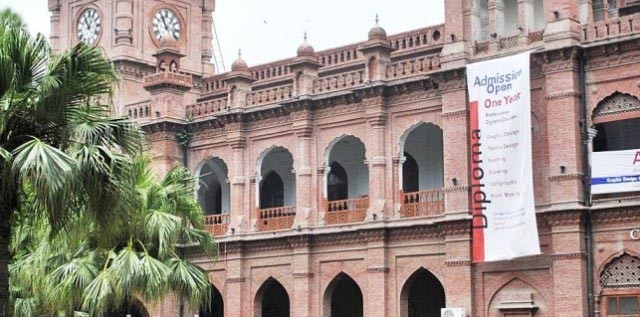
The ironic feature of Pakistani polity is its disconnect with the academia, especially if one presumes that a polity comprises politics, economy and its social tradition which determine its national and cultural identity.
In this article I will abstain from problematising the argument and not go into the interstices marking out one factor from the other. However, it will be pertinent to mention at the outset that these factors at times converge and at other times diverge from each other. They overlap, in the words of Michael Mann an acclaimed sociologist from University of California, Los Angles, "These sources [whom I am referring to here as ‘factors’] generate networks of interaction whose boundaries don’t coincide. Instead, they overlap, intersect, entwine, and sometimes fuse, in ways which defy any simple or unitary explanations of society.’
Besides, one must be aware of the postulates of Mann who considers ideology and military as equally important sources of power as the other three. In Pakistan we have been fed with an extra diet of ideology and military; hence I would opt on not commenting on their respective role in bringing Pakistan to the state it finds itself.
It will be worthwhile to turn attention to the role of academia instead.
Every Pakistani university does have its department of economics but one hardly comes across a profound comment from the faculty members at the time of announcement of budget or an economic policy. The public sector institutions are equally starved of experts in political science. It could be the general apathy for social sciences that has permeated to the very core of our intellectual makeup. Thus political commentary becomes the preserve of either anchors or media people, many of whom have their own vested interest or political allegiances. A structural analysis of the political situation is not a part of their training nor is it the aim.
Therefore, scholarly insight flows either from some think tanks or private institutions like LUMS, courtesy Professor Do Mohammad Waseem or Rasul Bakhsh Rais to name the most prominent few. In Karachi University, Professor Jaffar Ahmed is a rare exception.
Economists of any standing are few and far between. Those who are equipped to deal with contemporary economic matters have peculiar interests. They mostly align with foreign peers and confine themselves to consultancies. As a consequence, investing energy and time in training the youth is deemed a worthless exercise. It is neither monetarily rewarding nor socially empowering. Stuck in the quagmire of economic mess, Pakistan needs scholarly input from its own economists who are cognizant of the inherent problems plaguing the economy.
The state of sociology is even more precarious. In most public sector universities, sociology departments don’t exist; hence any analysis of the social trajectory does not happen at all. One can’t say with any measure of certainty if a credible sociological analysis has ever been conducted about Pakistan from within the country. Bizarrely enough, most sociological analysis is carried out in the western academy. The sources of power on which the whole structure of society rests are seldom investigated in our own country, which is ironic to say the least.
Also read: The public image of history
In such a scenario, the simplistic but all-encompassing prognosis of invoking ideology usually comes into play. This is advanced as an instrument to resolve all issues besetting Pakistan as a social entity as well as a nation state. Such an overriding emphasis on ideology has set in motion ahistorical trends in our society. Drawing on the literalist version of ideology renders any society ahistorical, particularly when its academia is inert and self-serving.
On the flip side, those at the helm did not ever consider the indigenously-instructed academics good enough for any advice. Instead, they always seemed to have taken fancy to the expertise of foreign consultants, particularly in matters pertaining to finance and economic restructuring. For the last four decades, the consultancy and advice on policy matters have come to be the sole preserve of the IMF and World Bank. Therefore any possibility to formulate our policies independently has already been squandered away.
One reason, one may aver, is economic whiz kids from Pakistan but act at the behest of international financial institutions. Economy has been divorced from politics with the result that the aspirations of the people don’t reflect in the economic policies, formulated in Islamabad. Here quoting Dr Pervez Tahir, former Chief Economist of Planning Commission will prove the point. He says that Pakistan must have some prudent politician as a finance minister instead of the technocrats with no stake in the system. A politician, according to Tahir, is not only far more aware of the reality on ground but is far better equipped to forge a consensus which is vital for taking tough decisions, like levying a direct tax of for documenting the economy. He is spot on.
Likewise, if locally trained experts/academics are included in decision-making process and their assessment is accorded some weightage, it will certainly do much better turns to our political economy.
Another important concern is mediocrity in the institutions of higher learning. Despite all checks and incentives that the Higher Education Commission dangles before the university teachers, things still look dismal. The dearth of well-qualified teachers is an incontrovertible fact. Social sciences in particular face scarcity of human resource and no one seems bothered about it. One prognosis could be to strengthen our own institutions and to bring in academic rigour into the academic enterprise. One must be mindful of the fact that some accomplished scholars are not given their due in the public sector universities, which eventually becomes a source of dismay for them.
The university administration, the state as well as society at large ought to value the worth of accomplished academics which is becoming a rare species in Pakistan.