Print Story
X

For scholars of history, civilisation was once an important concept for the study of the rise and fall in the human condition. The contours of civilisation as a socio-cultural unit of human collectivity, however, were quite fuzzy if not entirely amorphous.
Thus, the influence of a civilisation generally did not correspond with political rule in its extent and spread. In some instances, within the sweep of one civilisation, there were several states. One may argue that civilisation as an epistemic category seems to have become current relatively late in the day, when scholars started deploying it to explain the human situation in terms of the ebb and flow of political fortunes.
It appears to be a contradiction in terms that the political fate of a certain people is analysed through the socio-cultural prism, however, long durée history is at times done through such extra-political categories. It is for this reason that history as a discipline is bursting with new ideas because it is imbibing influences from other disciplines like cultural studies, sociology, and anthropology, etc.
From Abdul Rehman ibne Khaldun to Oswald Spengler and even up to Arnold Toynbee, mutations in human history were measured in terms of civilisation, which typically had a cyclical pattern. For these scholars, fall inevitably followed rise and that process was repeated cyclically, quite contrary to a depiction of history in a linear fashion.
The description of a peculiar collectivity of humans with specific social and cultural ethos drifted out of the general parlance of historians after the Second World War. It was only in the 1990s that we were again familiarised with the term ‘civilisation’ and its innate characteristic to ‘clash’ by American scholar Samuel Huntington through an article, which formed the basis for a later book.
In this article, my emphasis will not be on the ‘clash’ of civilisations, instead the features which afforded commonality to different civilisations will be underscored. While doing so, Egyptian civilisation will be my particular focus, with reference to two very young travelogue writers: Saroosh Zahid and Nediyya Zahid.
They have churned out a slim volume by the name of Egyptian Times: A View from the Nile River. It was, indeed, very interesting to read their observations of objects belonging to not only a different space but also a different time. But before commenting on their work, let’s set the context first.
The first human habitations were essentially riverine. This signified the importance that water held for humans or for any living organism for that matter. Water, combined with the sun, afforded the alluvial character to adjacent swathes of land, making it conducive to agriculture and, thus, amenable to sustainable living conditions for humans.
Because of the importance of water courses and rivers, to be a bit more specific, most valleys were named after rivers, like Sindh (which means big river). Not long after a revolution in agriculture in a remote past, political and social institutions gradually started taking shape. Clans, castes, and kinship fostered social configuration. With the surplus being generated of course at the expense of the poor peasantry, the ruler/ruled differentiation became markedly crystallised and acute.
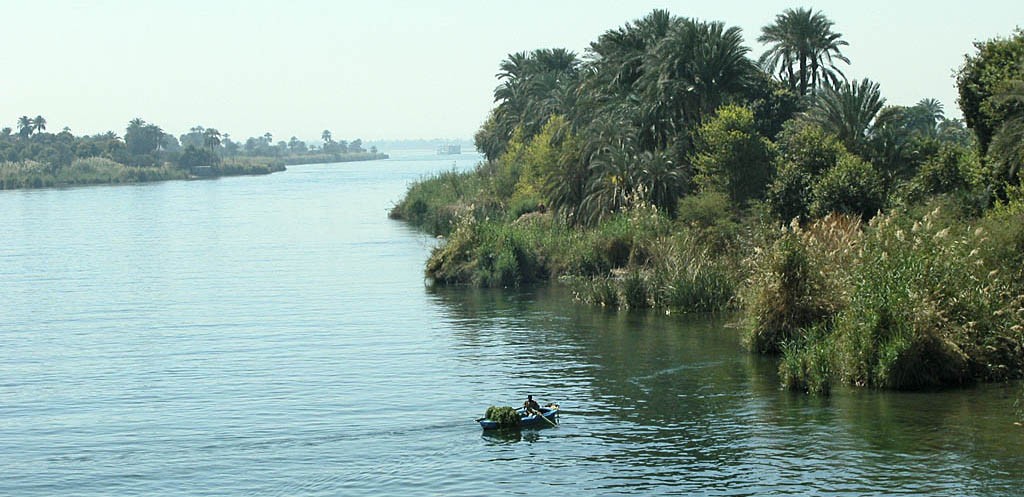
Occupational as well as social mobility became very difficult, if not absolutely impossible. These features ran across all these civilisations along rivers. Our forebears had the river Indus acting virtually as a lifeline for a rich civilisation. Egypt, once the land of the Pharaohs was enriched by the Nile, and Mesopotamia and Sumer had the Euphrates and the Tigris, to mention only a few.
The civilisations along rivers were self-contained units of human habitation with hardly any evidence suggesting that they ever clashed with each other. The Empires and principalities did clash but not the civilisations. On the contrary, they forged healthy relationships of mutuality through the exchange of commodities as well as arts and even the mobility of humans, which occurred despite all hazards.
Cotton was known to Egyptians as Sindhasan (which means a commodity originating from Sindh) because its point of origin was said to be the Indus Valley, and its surplus produce was exported to Egypt from Harappa and Mohenjo-Daro. Surplus grain was also transported to other areas.
Thus, civilisations flourished as a result of the production of a surplus, as has been argued by several historians like Irfan Habib and Kosambi. These inter-civilisation linkages make it all the more imperative for us to introduce these civilisations to our youth through the history curriculum. The world having shrunk into a global village, studying the history and culture of other cultures and civilisations by way of drawing comparisons would be enriching and worthwhile.
Reverting to Egyptian Times, one must be cognizant of the fact that writing itself is an act of creativity. Not only does it involve organisation of thought, but also the use of an appropriate vocabulary for the observations and the thoughts that the writer wants to convey. This is a remarkably daunting task. It is really commendable that at such a tender age these kids have committed their observations to paper and got them published.
Regarding the contents of the book, let me confess that I casually picked it up just to leaf through, but then I did not put it back down until I had read it from cover to cover. It contains all that Egypt is known for. For young kids as well as for grownups, it has a lot to offer.