

Print Story
X




Ustad Amir Khan’s performances had an understated elegance, reverence, restrained passion and an utter lack of showmanship that both moved and awed listeners
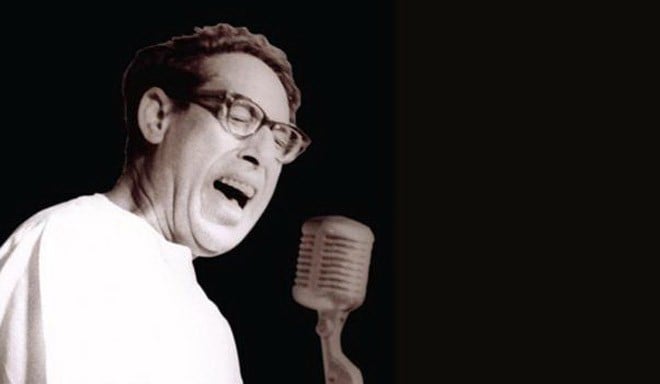
Two giants of kheyal gaiki set the standard and pattern of vocal music in the second half of the 20th century. One was Ustad Barre Ghulam Ali Khan and the other was Ustad Amir Khan.
Barre Ghulam Ali died in 1968 and Amir Khan in 1974, but their legacy and influence was much longer lasting, and many after them, who attained the status of good vocalists, were either influenced or touched by them. It was not possible to be not affected by them.
The rise and then acceptance of Amir Khan was more intriguing, given the mood and changing taste of the listening elite -- because the elements determining musical taste were driven by sensuousness and evocation rather than minimalism in the expression of emotions. The shift towards a more austere and staid performance was what Amir Khan represented and expressed, and he had many followers, both as practitioners and those finding an opportunity to lay down a critical basis for kheyal gaiki in the later half of the 20th century.
Barre Ghulam Ali Khan represented the more sensuous expression of the raag in his kheyal rendition. His singing was deeply charged with the thumri ang and that brought a certain lilt to his kheyal gaiki as well. At the same time, the virtuosity of his taans and the improvisational genius made him a favourite with both the connoisseurs and popular listeners. His appeal was thus across the board.
But Amir Khan was the vocalist for the highly initiated. He did away with what was and is considered a dictum, that the artiste has to pander to popular sentiments and changing tastes, for he shunned the over embellishment and decorative motifs of singing and minimised the use of the graces. What was left was the systematic exploration of the raag, remaining truthful to the prescribed rules and the criteria laid for its expansion. There are still many rules to observe and he followed most to the book, thus presenting an example of gaiki which was as close to the text book as possible.
It has often been feared that text book approach leaves little to differentiate between a performance and a lesson. The rules if observed more closely run counter to the spontaneity and improvisation which is the very basis of our music.
But Amir Khan displayed that all this may be true in the hands of an ordinary practitioner; not so if rendered by a top class vocalist.
He had difficulty in establishing his own style of singing in the beginning but gradually he was accepted as representing one of the authentic styles or ang that was there in the past and was being reinvented for the contemporary era. Like many of the other top class kheyal gaiks -- Abdul Karim Khan, Ali Buksh/ Fateh Ali, Barre Ghulam Ali Khan -- he was also the progeny of a sarangi player but the ang of the sarangi is not very visible in his gaiki. His father Shahmir Khan, a sarangi and veena player of the Bhendibazar Gharana served at the court of the Holkars of Indore and his grandfather, Change Khan, was a singer in the court of Bahadur Shah Zafar.
He had a younger brother, Bashir, who went on to become a sarangi player at the Indore station of All India Radio.
Actually what he did was to make his singing totally devoid of the colouration of sarangi. He often did not even sing to the accompaniment of the sarangi, preferring the harmonium as he did not approve of the two melodic lines being sung and played almost simultaneously for the fear of collision of the two resulting in both cancelling each other out. For him, the best instrument was the human throat and he insisted on retaining the primacy of the human voice. All other sounds, basically of instruments, were supposed to be in tandem assisting the full flowering of the voice.
The most important influence in his gaiki was undoubtedly that of Ustad Abdul Waheed Khan, the virtuoso of the Kirana Gharana. He took up the same slow meticulous elaboration of the raag in the vilampat lai. It had a soothing touch that captivated the listener with its gradual building of the structure. It is also said that he was influenced by Rajab Ali Khan in his taans and Aman Ali Khan in the merukhand.
Amir Khan rich baritone voice though with a three-octave range was very skillfully employed by him in the exploration of the lower register. The way he musically negotiated the mandaristan was very peculiar to him and since has not been excelled. The unique style that he developed is known as the Indore Gharana, which blended the spiritual flavour and grandeur of dhrupad with the ornate vividness of heal. He helped popularise the tarana, as well as kheyalnuma composition in the Dari variant of Persian.
While he was famous for his use of merukhand, he did not do a purely merukhandi alaap but rather inserted merukhandi passages throughout his performance.
While he could do traditional layakari, including bol bant, which he has demonstrated in a few recordings, he generally favoured a sur-oriented alaap-dominated style, and his layakari was generally more subtle. His performances had an understated elegance, reverence, restrained passion and an utter lack of showmanship that both moved and awed listeners. He had an introverted, dignified style. He also wrote lyrics to be composed with his pen name, Sur Rang.
Basic tabla strokes that define the taal on the tabla accompanist, generally performed kheyals and taranas with only a six-stringed tanpura and tabla for accompaniment. Sometimes he had a subdued harmonium accompaniment, but he almost never used the sarangi.
Khansahib’s disciples include Amarnath, A. Kanan, Ajit Singh Paintal, Akhter Sadmani, Amarjeet Kaur, Bhimsen Sharma, Gajendra Bakshi, Hridaynath Mangeshkar, Kamal Bose, Kankana Banerjee, Mukund Goswami, Munir Khan, Pradyumna Kumud Mukherjee and Poorabi Mukherjee, Shankar Mazumdar, Singh Brothers, Srikant Bakre and Thomas Ross. His style has also influenced many other singers and instrumentalists, including Bhimsen Joshi, Gokulotsavji Maharaj, Mahendra Toke, Piu Sarkhel, Prabha Attre, Rashid Khan, Rasiklal Andharia, Sanhita Nandi, Shanti Sharma, Nikhel Bannerji and Sultan Khan.
In Pakistan, Mubarak Ali sings in his ang.
Ustad Amir Khan was awarded the Sangeet Natak Akademi Award in 1967 and the Padma Bhushan in 1971.
Amir Khan’s barsi was on February 13.