

Print Story
X




To be a role model for fellow humans, a leader like Jinnah ought to be represented as a human
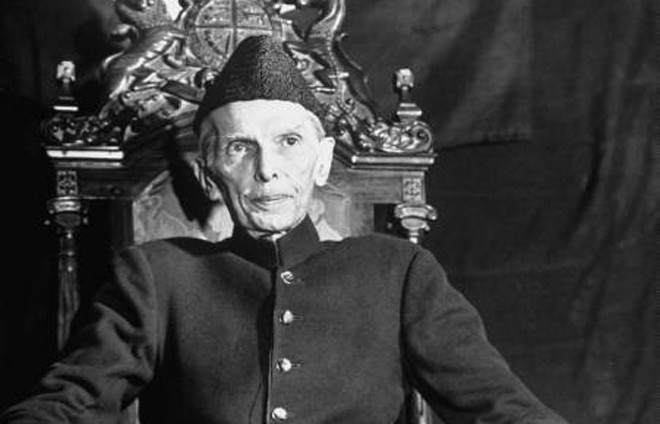
On the eve of 138th birth anniversary of Muhammad Ali Jinnah, I will try to analyse the grand narrative which has been constructed about him.
It is argued that context mostly holds precedence over personality in the historical analysis of the western academics whereas hagiographical narratives tend to turn such a method on its head. This article, therefore, does not deal with Quaid-i-Azam per se; it only looks at his representation only. In the lines to follow, Quaid-i-Azam will be referred to as Jinnah not out of irreverence to the founder of Pakistan but for the sake of ensuring objectivity.
As a founder of Pakistan, Jinnah has been written about in abundance, obviously in hagiographical terms. He is referred to in media, textbooks and political commentaries as a role model and the epitome of a particular ideology, thus deifying him unequivocally.
In Pakistan, a well-knit network of ideologues acts as Jinnah apologists. They hail from various disciplinary fields like History, Political Science, Pakistan Studies and Media Studies and have been at work to silence or suppress any critical view voiced regarding Jinnah. A small divergence from Jinnah’s statements, enshrined in his speeches, and all hell breaks loose. The list of these Jinnah apologists is infinitely long and the corpus of hagiographical literature for our protagonist is correspondingly huge and extensive. Much of it, therefore, has failed to get critical acclaim from the international academia.
The Jinnah hagiographers operating in Pakistan employ altogether different methodology than the rest of academic world in their assessment of the role of the South Asian leaders in both colonial and post-colonial dispensations. Generally, trained academics tend to ascertain the role of a larger than life figure(s) in historical and political context, which formulates their ideological orientation. Thus temporal exigencies articulated through the contemporaneous political trends nurture and determine a particular political mindset. Context holds primacy over any particular individual. That is why historians in particular are trained to make sense of the context in which the events are played out.
Conversely, hagiographies are conceived and composed usually in stark indifference to the context. The force of the personality forming the subject of the hagiography is powerful enough to change the course of history. Hence, personality is central to the whole chain of events.
In one of my previous columns, I highlighted the role of Shibli Naumani in underlining the hagiographical tradition which struck firm roots among the Muslim literati of North India. Thus the overriding role of the personality as a propelling force of history was firmly entrenched. Shibli’s inspiration was Thomas Carlyle, a famous 19th century British historian and author of Hero and Hero Worship.
More so the principal protagonist of the hagiography is projected in sheer denigration to those subscribing to a different political creed. To elucidate that point, one can allude to the way Gandhi and Nehru are mentioned in most of the biographical narratives of Jinnah by Pakistani authors. These figures are virtually depicted as complete demons, devoid of any good. They are characterised as cunning, mischievous and inveterate enemies of Muslims. Thus by lowering the stature of his political adversaries, Jinnah is made to look prominent.
One may argue here that most of our scholars don’t bother to seriously engage with the politics of Jinnah’s adversaries. By readily dismissing them, they expose the vulnerability of their own scholarship, which comes out as markedly one dimensional. Sadly, our method of doing history has not been able to evolve beyond the simplistic mode of drawing binaries. In such a method ‘good’ is projected in absolute terms and so is done in condemning what seems to be the ‘evil’, without any conception of a middle ground.
Consequently, in the case of Jinnah, the period that he spent under the political apprenticeship of Dada Bhai Neroji and Gopal Krishnon Gokhale is reduced to mere footnotes of history. Similarly, the inspiration that he drew from the tradition of the ‘West’ is very conveniently banished from the hagiographical discourse. In its stead, he is Islamised and his politics is given a different historical context peculiar to Arabia.
The query that mystifies an inquisitive mind is how any person, elevated into a legendary character transcending the limitations usually ascribed to a human, can be emulated by the mortals, devoid of such mythic traits. It then amounts to chasing an illusion, which is beyond the reach of any human. Such representation of any individual with supra human traits ceases to be a historical figure. His ideology and actions, as narrated in the hagiographical accounts, are made to appear as if cast in stone.
To be a role model for fellow humans, a leader like Jinnah ought to be represented as a human whose actions and political priorities had temporal relevance. With the changed socio-political realities, their ideas can be reviewed, revised and if deemed necessary altered radically.
Revision in the political ideology of any leader by no means belittles him/her. Ascribing universality to any leader or ideology is a part of social construction which renders them irrelevant to the process of evolution that humans are forced to undergo, and we must acknowledge that the beloved founder of our homeland is no exception to this norm.