


Print Story
X




Knee-jerk reactions like speedy executions and establishing military courts may fail to create a particular impact
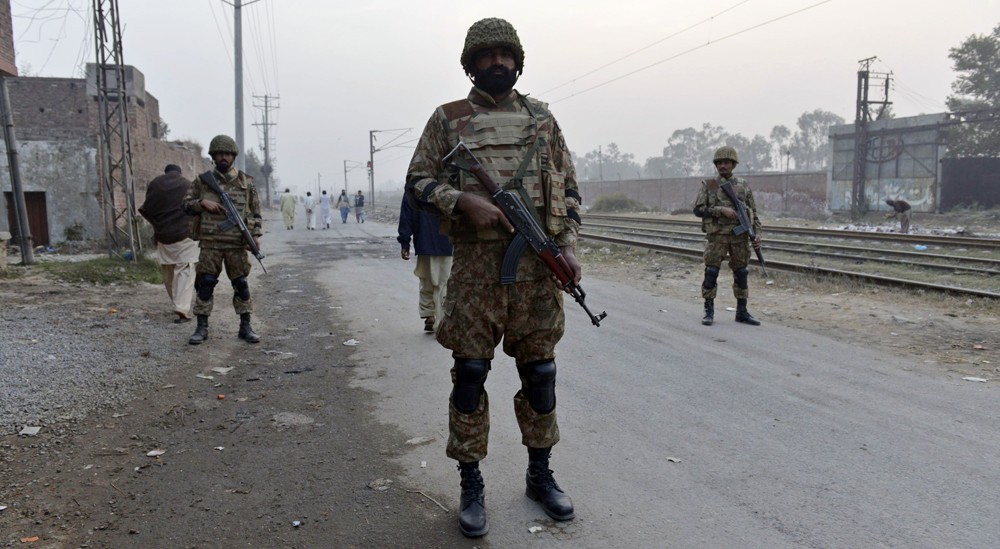
Pakistan lifted the moratorium on death penalty with the execution of two convicted terrorists -- Aqeel Ahmed alias Dr Usman and Arshad Mahmood Mehrban -- in Faisalabad. The hangings followed terrorists’ attack on Army Public School in Peshawar on December 16.
The decision reflected anger of the Pakistan army and the political leadership. They have formed a consensus for setting up special military courts, bypassing normal legal course, for two years for speedy trial of cases of terrorism.
Among other steps, one is to continue with the executions. In reaction to the killings of innocent children, immediate changes have been made in the prison rules related to execution to set an example.
The Punjab government amended the Prisons Rules 1978 to allow execution of a convicted terrorist a day after his black warrant was issued. Through the amendment, the execution of a convict was carried out 14 to 21 days after the issuance of a black warrant.
According to news reports, there are 14 anti-terrorism courts in Punjab and they have convicted terrorists in 178 cases and granted acquittals in 226 cases in 2014. Similarly, Sindh government also changed the prison rules.
"The Supreme Court of Pakistan, in the late 1990s, termed the setting up of special military courts illegal and a system parallel to the normal legal course," says Zahid Bukhari, a former Lahore high court judge and prosecutor general of Punjab. "It was made clear that if such courts are needed they should be under the administrative control of respective high courts," he adds.
That is why, at that time, special Anti-Terrorism Courts (ATCs) were formed under the high courts. Bukhari agrees that the country is passing through a crisis which needs extraordinary measures but that should not be done bypassing debate and relevant amendments. "We already have good and effective laws. The procedure to conduct speedy trails is mentioned in the law but due to a huge backlog of cases and flaws in the investigation procedures, speedy trial is not possible. The law says a case should be decided within seven days."
"Only military courts are not a solution. It can be a temporary arrangement to rethink and revisit the existing laws and remove lacunas," he adds.
The government has the authority to amend rules of any law without taking them to the parliament.
According to chapter 14 of Pakistan Prison Rules, if a convict is not medically fit he cannot be hanged till he recovers fully. Also, there have been specific timings to carry out an execution. But through the new amendment, the government has changed the timing as the aforementioned hangings took place at 9pm.
"The concept of punishment in a law is for deterrence, retribution, reformation, and expiation. We need bold steps but also we need witness protection plans to ensure justice in civil courts," says Masood Khan, former director general of jail staff training institute. "We need change in criminal procedural code and ensure personal, documentary, circumstantial evidence reasons to do justice."
Khan says such executions, which are according to the law, can create an impact because these more than 8,000 convicted inmates are a big nuisance in prisons as they know nothing would happen to them.
Abid Hassan Minto, prominent attorney at law, believes knee-jerk reactions like quick executions and establishing military courts would fail to create any particular impact. "Do people remember what the previous military courts do in the 1990s?" he asks, adding, "It would be telling the people and the world that army has the upper hand in this country."
Minto criticises the concept of speedy justice which ignores the existing procedures and laws. "The best thing which the government can do is to adopt procedures which the military courts adopt and apply them in civil courts to ensure speedy justice and to properly handle this issue," he says.
He points out that even constitutional amendment can be challenged by in the Supreme Court if it is contradictory to fundamental human rights and freedoms.
Anwar Kamal, former president of Lahore High Court Bar Association, disagrees with the setting up of military courts. "We need to strengthen the current criminal justice system and remove bottlenecks. The move would create negative impact on the civil courts and normal legal course where clients are not getting justice in time."
Soon after the political consensus, the Home Departments of respective provinces are all set for planning further executions. Interior Minister, Chaudhry Nisar Ali Khan, has indicated about executions of around 500 terrorists convicted by the courts.
The Punjab Home Department will also hold a meeting to plan executions of six convicts whose death warrants had been issued but their relatives got stay orders from the high courts. Later, the high courts withdrew the stay orders.
"If we follow the system, there should be no delay," says Nasir Aslam Zahid, former judge of Supreme Court of Pakistan. "Such radical steps cannot sure full deterrence," he adds, while citing the example of Saudi Arabia where every month dozens of convicts are beheaded. "For cure and prevention of the crime and terrorism we have to see the whole situation. We need to give socio-economic justice and make the country a true social welfare state. The military courts are not the remedy."