

Print Story
X




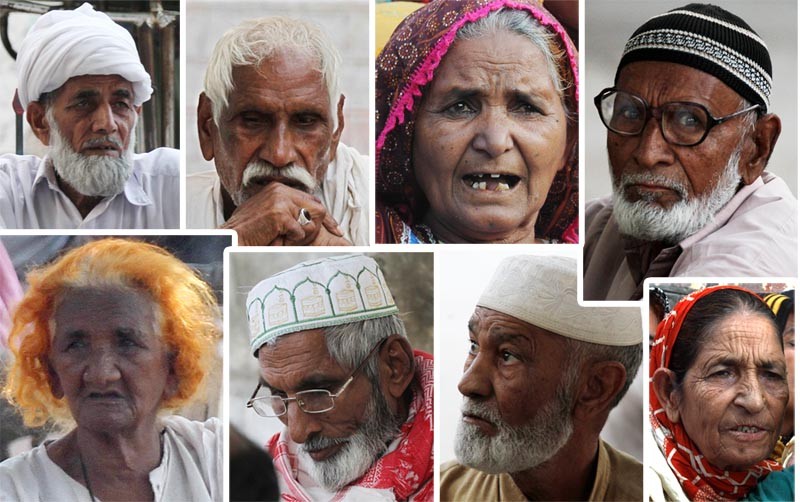
Elderly people in Pakistan feel less safe, less connected to the rest of society, and less able to enjoy civic freedoms
Sitting lonely in a park, seventy-three years old Shaukat Ahmed has not much to share. Retired from a government department as superintendent, he is living with his two sons in a 10-Marla house in Iqbal Town, a predominantly middle-class locality in Lahore.
"There are not many avenues after you are retired from job. Actually, you have no money to give to your family, no social support, and you have limited activities," he says while sitting on a wooden bench in a small park.
Shaukat visits the park daily to have some fresh air and sit alone. His other pastime is playing with his grandchildren and watching television before he sleeps.
Pakistan is among the countries that are speedily growing old, according to a 2013 index backed by the United Nations. The UN warns that Pakistan is among the many countries that are ill-prepared to deal with geriatric issues. Pakistan was ranked 89 out of 91 countries included in the Global Age Watch Index.
In a country like Pakistan with a poor enabling environment, elderly people seem disconnected to the mainstream, trying to live in their own world.
The elderly have different shades and problems, which change from class to class and family to family. The issue is how to keep them engaged and sane.
In Gymkhana Club, a social club in the city, "the majority of routine visitors spending hours at the place are old people," says a club member. They have formed social circles of the like-minded and keep themselves busy in different activities, including playing cards, etc."
A similar group exists of retired people from different government departments who hold monthly meetings where they chat and discuss different issues.
For Tahir Ali, 64, who has retired from a private company, the problem is adjusting in his hometown. He misses factory life and remains in touch with his friends there. "It is getting difficult to adjust here but I am trying," he says. "After spending 30 years in a different environment it is really hard to adjust here." Tahir spends most of his doing petty works and reading books.
"Having a lower retirement age --60 years in our case -- has both advantages and disadvantages," he says. "Many employees are energetic and capable enough to continue performing their job effectively at the time of their retirement but they have to make room for the young as per rules."
Muhammad Latif, 89, is paralysed and bed-ridden. He spends most of his time recalling his young age and career and talking about politics. Having retired from police service several years ago, he was happy socialising before he became seriously ill.
"We bring up our children so lovingly but feel ourselves helpless when we see them busy and tired," he observes. While old men go out and spend time in different activities, elderly women have limited activities. They are mostly confined to one room.
"My major activity is to have a round of this small house and offer prayers five times a day," says Nasreen Bibi, 71, who lives with her husband and children in a five-marla house in a small locality in Lahore. "We are totally at the mercy of our children," she says.
Many elders are seen keeping themselves busy in religious activities, reading, socialising, and watching television. They lack the support of state and society. They have limited rehabilitation facilities under the current social system. Family support system plays a very important role in engaging elderly people.
Shaukat believes retired people have no life in Pakistan unless they have some money or expertise which can keep them busy through some socialising.
The 2013 UN-backed index also highlights that Pakistan has significantly lower pension coverage. Also, as compared to neighbouring countries, elderly people in Pakistan feel less safe, less connected to the rest of society, and less able to enjoy civic freedoms.