Print Story
X




Profile of a group of lawyers that goes by the name of Khatam-e-Nabuwwat Lawyers Forum
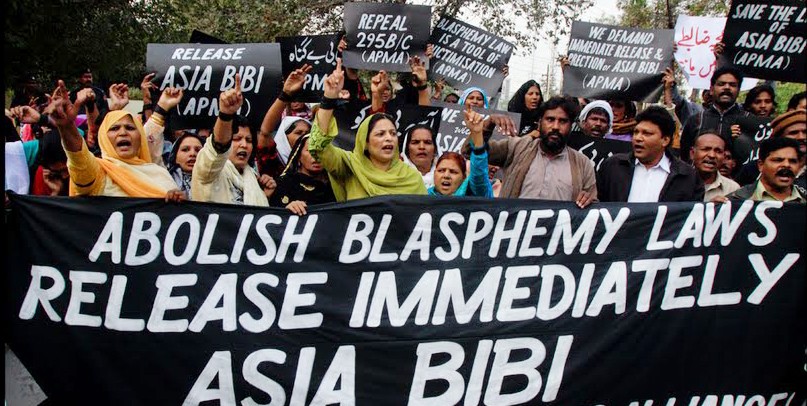
Sitting in a small chamber in a basement on Mozang Road, Ghulam Mustafa Chaudhry seems well-prepared defending his role as the counsel from the complainant side in almost every blasphemy case these days. Chaudhry leads almost a decade-old Khatam-e-Nabuwwat Lawyers Forum, a group of lawyers with around 500 members at the Punjab level, voluntarily presenting themselves in such cases and gaining prominence for the past few years.
"Our motto is to defend the dignity of Prophet Muhammad (PBUH); make sure that no innocent gets sentenced in such cases and no guilty gets free," Chaudhry, in his early fifties, tells TNS.
"The forum never takes up cases in a hurry and without proper investigation. Sometimes, clients contact us and sometimes we approach them. Before taking the cases, we do our separate investigation. Our members go to the spot. We see the whole record and then decide to take the case," he maintains.
The forum showed disinterest in an internationally highlighted case of Sawan Masih, a young Christian who was charged of blasphemy by his allegedly drunken Muslim friend. The episode ended on a sad note with the burning of around 175 small houses of a whole Christian neighbourhood -- Joseph Colony in Lahore -- where the accused’ family lived in early 2013.
The forum found the character of the complainant doubtful and did not jump into the case. Sawan Masih was sentenced to death by the trial court and his appeal is pending before Lahore High Court.
Chaudhry’s interest developed in this subject when he was a college student and the Ahmadiyya community was celebrating the 100th anniversary of its foundation. "They wanted to set up their headquarter in a Lahore neighbourhood, which was not far from my locality. There was a move to oppose that and we as students became part of that movement, which led to the creation of a students group in the college."
Practising as a lawyer for about 17 years, he became interested in the subject when Yousaf, an alleged claimant of Prophethood, was sentenced to death by the court and later killed in jail in 2001. He approached Ismael Qureshi, counsel from the complainant’s side through some reference, and requested him to take him as his assistant.
"We do not take a single penny from any person for such cases," says Chaudhry, adding, he is not the only lawyer in his family and he owns a busy law firm along with his brother and nephew to deal with other cases. "Whatever time and money we are pouring in these cases is from our earning."
He thinks that media shares a major responsibility. "Take the case of Asia Bibi and see international reports in which there are no facts but exaggerations. This reporting is one-sided and jumping to conclusions without knowing the facts and having proper information."
Chaudhry believes there is a growing trend of using these laws to take asylum abroad by certain communities.
He denies the impression and allegation that blasphemy cases are lodged to settle personal scores or enmities. Misuse means false or fabricated cases which can be proven wrong and the complainant can be fixed legally, too, but one has to prove that in the court.
Chaudhry, accompanied by secretary of the forum, M Tahir Sultan Khokhar, and head of the women wing of the forum, Tahira Shaheen, says the forum has no sectarian base.
"We want to give the message to the people not to commit blasphemy. If you want to stop reaction to these incidents the best way is to stop committing blasphemy," says Khokhar. He believes cases are not lodged on the basis of personal enmity but facts and if a case is wrong or false that can be proven in the court through strong defence.
The forum regularly holds monthly meeting in the local bar room, discussing different cases and situations.
"To decide who is guilty and who is not is up to the court. There have been acquittals in some cases, too," Chaudhry says, adding, "The highest number of cases of blasphemy is against Muslims, according to the reports. Then there are Ahmadis and Christians come third, so, why is this propaganda that this law is used to persecute minorities?"
While we are talking, Chaudhry receives a telephone call. He congratulates the other person on getting orders from a district court in Sheikhupura for lodging a blasphemy case against an Ahmadi woman in a village for what he says was intentionally tearing an Islamic poster, carrying the name of Prophet Muhammad (PBUH) in front of some Muslims.
"We believe that judiciary is free and independent and there is no pressure on it while deciding the cases," says Chaudhry. "As far as our group is concerned, nobody can claim that we have harassed anybody within or outside the court. There are lawyers defending blasphemy cases everywhere in Punjab."
Though Chaudhry has no clear answer to the question of extra judicial killings and attacks in the name of blasphemy he warns people to be careful in such matters.
Talking about the killing of Salmaan Taseer by his own guard for supporting Asia Bibi, the president of Khatam-e-Nabuwwat Forum says, "Taseer was the constitutional head of a province and he should not have dared to touch this sensitive law, seeking its revision. What kind of message was he giving to the people by going to jail and supporting Asia Bibi without knowing the facts from all sides at a moment when her appeal had also been moved to the high court?" he asks.
"We are not a group of extremists or terrorists. This is the image which has deliberately been created."
Chaudhry seems calm, determined, and careful in his legal battle against the accused blasphemers. His commitment has a message for the defence lawyers to be legally strong and well-prepared. Money cannot fight passion, he believes.