Print Story
X




Another "home series" being played in the United Arab Emirates (UAE)
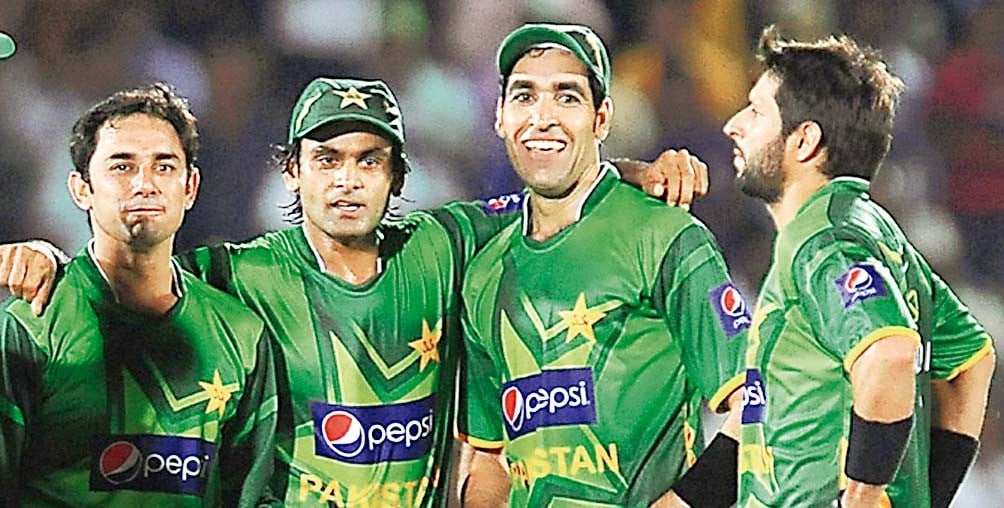
Pakistan’s another "home series" is being played in the United Arab Emirates (UAE), against Australia. The only Twenty20 match will be played today. The One-day International series starts from Tuesday.
Pakistan’s one of the most experienced players Younis Khan has been dropped for the ODI series to provide young players some experience against the world class side. It will also be Pakistan’s first series without ace spinner Saeed Ajmal in a very long time.
The Pakistan ODI side consists of many aggressive players like Shahid Afridi, Ahmed Shahzad, Muhammad Hafeez and Sohaib Maqsood, but the bowling department looks ordinary without the experienced fast bowler Umar Gul, who is nursing an injury, and master spinner Ajmal, who has been banned by the ICC for suspect bowling action.
The perception that Pakistan is a very talented side has lost its legitimacy. Talent alone is not enough to see a side through in a series against the world’s top team.
Pakistan are no longer a force they used to be in the late eighties and the early nineties. People fail to realise that matches are won through spirit and team effort.
The big names can’t guarantee success, at least in the long run. Pakistan do produce extraordinary results now and then, but that has more to do with the individuals’ brilliance than team effort.
A player can help his team win a few matches, but not a whole series.
The lack of discipline and unity among team members can be described as the root cause of Pakistan’s inconsistent performance, while Australia have put a lot of planning and patience into building the team, and now the results are there for all to see.
Australia’s exceptional run of successes has not come out of the blue. It has taken a lot of hard work from the Australian administrators.
There is a huge gap between the standard of cricket that is played in Pakistan and at the international level. When a Pakistani youngster enters the international arena, he finds it difficult to adjust to the conditions. This sudden change in the standard puts the new players in a tight spot. That, in most of the cases, means failure and a premature end to their careers.
Since the retirement of the two Ws -- Wasim Akram and Waqar Younis -- Pakistan have been in search of a quality and consistent strike bowler. Only speed is not enough to unsettle good batsmen. A bowler also needs a good brain to figure out the batsmen’s weaknesses and exploit them accordingly.
A quality spinner is always a trump card for his side. Ajmal could have been the key player against Australia. His absence must give confidence to the Australian batsmen.
Left-arm spinner Raza Hassan who will replace Ajmal doesn’t have much international exposure.
Pakistan and Australia have played 89 One-day Internationals. Australia have a clear edge with 54 wins. Pakistan won on 31 occasions. One match was tied and two remained undecided.
Former Australian captain Ricky Ponting is the most successful batsman with 1107 runs in 35 ODIs, including one hundred and eight fifties with the average of 36.90. For Pakistan Javed Miandad is the highest run-getter with 1019 runs, also in 35 matches, averaging 33.96.
Muhammad Yousuf is just behind him with 1016 runs in 29 ODIs at an average of 37.62.
Wasim is the most successful bowler with 67 wickets taken in 49 matches at an average of 27.43. Glenn McGrath took 57 wickets in 32 ODIs.
Ponting won 16 ODIs against Pakistan in 21 appearances as captain, while in the same number of matches Imran Khan remained successful on eight occasions only.