Print Story
X




Attack on a blasphemy accused in Adiala Jail by a guard is not the first of its kind. Are we doing something to prevent more such incidents?
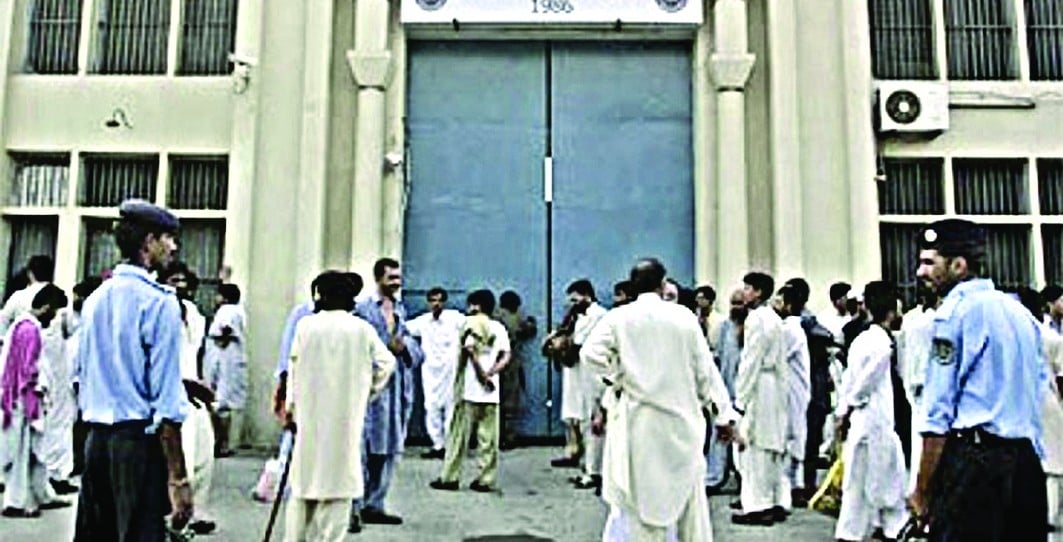
Muhammad Yousaf, 25, an official prison guard, is said to have had dreams that he should kill 70-year-old Muhammad Asghar, an alleged blasphemer and a certified mentally sick British national who has been in Rawalpindi’s Adiala Jail for the past four years. He was awarded death sentence by a trial court this January.
Following the ‘divine instructions’ on the morning of September 25, the attacker managed to take a pistol in the jail defying the law; he went to the barrack where Asghar was detained and shot him on the back. He fire two shots and missed the third when the nearby guards grabbed him. The bullets passed through the victim’s body, damaging his lungs and ribs. He luckily survived.
The blasphemy case was registered against him in 2010 in Sadiqabad -- the bordering district of Punjab and Sindh and his hometown as well.
Muhammad Asghar went to United Kingdom decades ago and, according to his family, became a wealthy man over time. He created a business empire after arriving in the UK as a teenager and owns high-priced properties in both countries, his is reported to have said. His family said he has a long history of mental illness and was diagnosed with paranoid schizophrenia in Britain in 2010.
He was charged with blasphemy for writing letters to people claiming prophethood and including this reference to it on his business card, a government prosecutor told the trial court, against his defence.
Police inspector Raja Rasheed, the investigating officer of the case, said the attacker guard Yousaf has confessed to his crimes. "He is not ashamed of his action," the investigator told TNS.
Belonging to district Chiniot in central Punjab, Yousaf joined prisons police five years back. During the job, he also received Elite Force training for six months and was appointed in Adiala Jail in early 2013. The attacker is said to be religious. His duties kept changing in the jail. He was also posted for few weeks at the barrack where Mumtaz Qadri, killer of Salmaan Taseer, the then governor of Punjab was kept.
Qadri, one of the official guards of Taseer emptied his gun on Taseer on January 4, 2011 after the governor raised the issue of Asia Bibi, a Christian woman accused of blasphemy, and criticised the controversial blasphemy law urging its revision.
Qadri, who proudly confessed to his crime, is in the same jail after getting death sentence from the trial court. The judge who awarded him death sentence, later left the country quietly.
"We cannot say anything if Yousaf was inspired by Qadri. The matter is being investigated," says Farooq Nazir, Punjab Prisons’ Police Chief.
This is not the first time that blasphemy victims have been attacked in judicial custody, which is an offence of a very serious nature.
A year ago, Muhammad Saqib, a mentally challenged person who claimed to be a prophet, was brutally injured by a death-row prisoner in the Central Jail, Gujranwala. In 2003, a Christian Samuel Masih, charged with blasphemy, was later killed by a constable in police custody. In 2009, the Gujrat police arrested two composers of an alleged blasphemous book. A few days later, one guard fired at and killed one of them in police custody. In 2009, a young Christian, Fanish Masih, was arrested in Sialkot. A few days later, he was killed in jail. In 1997, a Muslim cleric, Yousaf Ali, was arrested under blasphemy law allegedly claiming prophethood. He was sentenced to death by trial court and shot dead in Kot Lakhpat Jail Lahore in 2002. All these victims were either under trial or had their appeals pending before relevant high courts.
Also read: Blasphemy again
"Under the law no one, including the jail guards and senior officials can take any kind of weapon into the premises of the jail," Muhammad Masood Khan, former director general of academy of jail staff training institute told TNS. "The guards are trained not to take the law into their hands."
Talking about some of the reasons of these attacks, he said that unfortunately, polarisation in the society has deepened. Intolerance on certain issues including religion, blasphemy, and other beliefs has increased.
"We must realise, that prison is reflection of a society. Whatever happens in the society will be extended to the prisons. You cannot ignore polarisation there," he said, recalling his experience of jail visits where they used to see such groupings and discuss how to handle them.
Blasphemy has become an uncontrolled legal tool of victimisation and exploitation in Pakistani society where anybody can trap any person to settle personal scores, putting the life of the accused at high risk.
Human Rights Commission of Pakistan (HRCP) has stressed that the security of all jailed blasphemy accused and individuals convicted of this charge must be ensured and the culprits seriously dealt with.
The tragedy is that in the overcrowded prisons, both alleged blasphemers and their attackers are considered criminals and usually kept in the same jail. Both are criminals but one of them is enemy of the other. "Muhammad Asghar has survived but he is an inmate and will be sent to the same jail after recovery while his attacker would also be sent in this jail as an under trial inmate for a crime in the same jurisdiction."
Masood stressed the need of seriously dealing with overcrowding in prisons where even five to six death-row inmates are kept in one small cell where officially only one is allowed. He urged promoting education, bringing reforms in the role of officially paid religious teachers in jails and overhauling of faulty criminal justice system.