Print Story
X




A valuable book that aims at archiving the speeches of author and culture critic Intizar Husain over decades
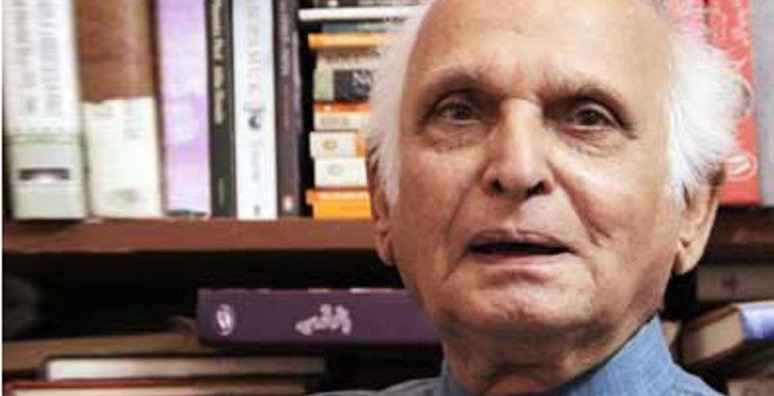
Intizar Husain is more often than not the chief guest on occasions and is thus expected to say something erudite or to read a paper full of acumen if the surroundings happen to be more formal. For decades he has been doing that and mercifully, it appears that all the papers that he read have not been lost in history. Some have been preserved and printed in a book form.
The stature that he has achieved as the chief guest is thus not incidental.
One does not envy Intizar Husain for he has been for many years the leading writer of both short stories and novel and through his newspaper columns a critical observer of the cultural scene. This cultural scene that has not existed in isolation but as a combination of the overtones of social, political and economic grinding hum.
There is consistency in certain of the values both in literature and society that he adheres to very strongly and this provides a more direct connection between the various papers or extempore speeches that he had been making all these past few decades. He sees the present as flowing from the past, deeply connected to the way society has developed or changed not only over decades but centuries.
This change has been facilitated by the various influences that have been exerted over it by outside sources. Thus the internal dynamism of society and the pressure exerted from outside mix to form an organic whole. There is nothing that is sudden in the process of growth and assimilation.
This slow development or growth is organic and rejects what from time to time has been thrust upon culture, language and social norms. The literary/artistic values too slowly simmer in the cauldron and develop their flavour and taste in due course of time. The abrupt, the fanciful and the zealous fall by the wayside.
Intizar Husain thus is an advocate of the inclusive approach and calls any exclusion or insistence on exclusion as a form of extremism. And extremism is what he does not like or does not find beneficial to humankind.
These days too he insists, and he is only stating the obvious, that extremism is defining the age that we live in and is thus excluding much that has formed the core of our cultural existence. The local ground that is hugely fertile has had seeds planted from Central Asia, Persia and Arabia and these then struck root and started to grow with their own special fragrance and individual colour. It was followed with the graft of the European civilisation. The plants and flowers grew more beautiful and colourful retaining a bouquet of fragrance.
This bouquet is the Indo-Muslim culture that forms the core of the cultural air that we breathe. This will not be found anywhere else and is peculiar to this area -- the languages, the poetic idiom, the musical intonation and the hues not in replication but an expression of something individual and genuine.
And understanding and acceptance of the individuality of culture is the basis of appreciating what is our very own. And this leads to a plurality and peaceful amalgamation that forms a prerequisite for humanism. Intizar Husain is primarily a humanist who has valued the creation by man.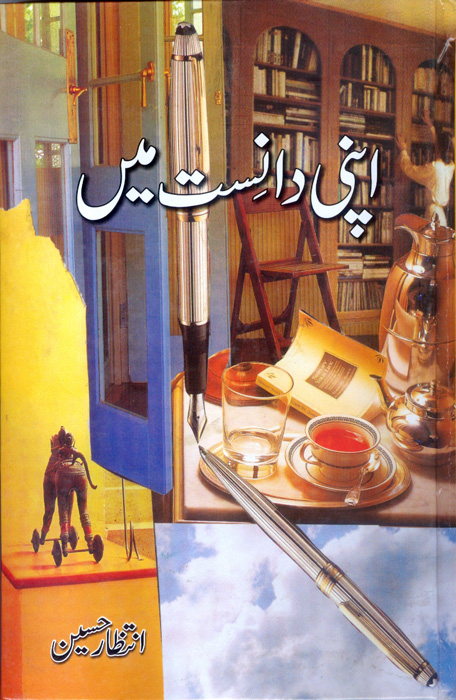
While going through these beautifully written or spoken pieces one is pushed back into time and begin to wonder whether one has lost or gained in these sixty odd years of the country’s existence. Why did the course change from an all inclusive approach to that of exclusion. The emphasis these days is not on what is ours ,rather what is not ours. This exclusion in the name of either religion or imperialism viewed as cultural invasion makes Intizar Husain wonder why the assimilation that took place centuries ago is being put into the dock of controversy and polemical debate now.
Intizar Husain wears many hats. He is undoubtedly one of the foremost writers of fiction in the Urdu language and this not only means that he is a significant writer among his contemporaries but in the entire course of Urdu fiction he finds himself at the very top. He has written both novels and more famously afsanas that actually brought him to prominence. He has written plays for the radio and the stage and a number of articles on literary criticism which can be placed in the highest categories.
He has also written his own biography which is concentric with the biography of the artistic and literary ebb and flow of the country since independence and above all continuously written newspapers columns on a vast variety of subjects; the bedrock being the cultural sustenance of this society. This is the touchstone that he measures and values everything by.
One wonders whether all the articles of Intizar Hssain have been preserved or that they have been collected and published in one go. Actually these would result in many volumes because he has been very regular in penning the articles and the period too stretches over decades. It would be worthwhile to collect these articles and publish them so that the trajectory of his ideas, views and sensibility can be properly charted.
Not only will the publication of Intizar Husain works be a very fruitful thing for understanding our cultural stultification, growth, ups and downs but will be beneficial also for scholars and researches that have to dig into the newspapers archives to choose or select from. Though he admits he is no Mushfiq Khawaja in preserving, enlisting and marshalling his own work, it is essential that the entire body of work of an author, a cultural critic and an analyst of society is not done by the author himself but by competent researchers.