

Print Story
X




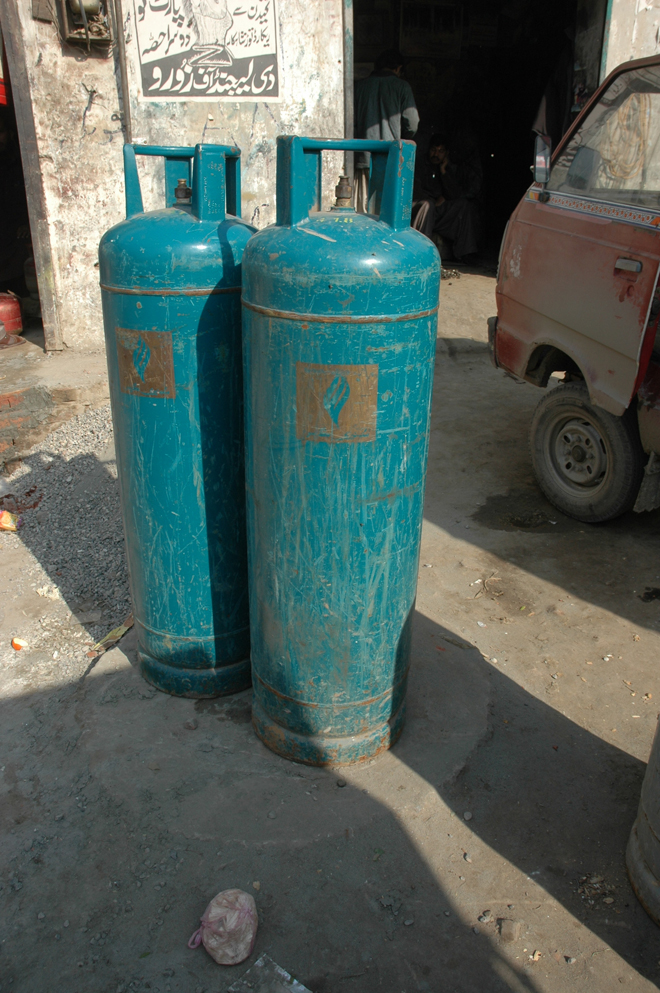
Incidents in which a motor vehicle caught fire on the road are becoming common these days. And the cause is always the CNG/LPG cylinder leakage

A few days ago, a mother and her young daughter and son were returning to their home in Cantonment on a rickshaw when they met with an accident. As the story goes, the rickshaw driver raced the vehicle, in a bid to overtake another vehicle on the road, when it turned over, its gas cylinder catching fire in no time. The driver and the woman’s son managed to save their lives by jumping out of the vehicle. The victims were later identified as Hanifan Bibi and her 16-year-old daughter Arooj. They were residents of Farooq Colony, Factory Area.
Unfortunately, such incidents in which a gas cylinder busted in a motor vehicle are becoming quite common these days on the roads of Lahore. And the cause of the incident is always the CNG/LPG (Compressed Natural Gas/Liquefied Petroleum Gas) cylinder leakage, with the driver making away in most of the cases.
The use of LPG and CNG is increasing by the day because of their low price as compared to petrol. LPG is more widely used in auto rickshaws as it is considered a cheaper source of fuel.
"Substandard cylinders, their fitting from authorised workshops, and their filling with low quality and unauthorised gas from illegal vendors is the major cause behind the accidents," says Ch Muhammad Iqbal, Lahore’s Secretary, Regional Transport Authority (RTA).
Iqbal says that in the most of the cases it has been observed that the cylinders are intact and gas leakage causes fire.
According to the law, such vendors are not authorised to sell CNG/LPG. Besides, public vehicles are not allowed to use this gas. Very recently, country’s Oil and Gas Regulatory Authority (OGRA) issued a notification clearly reinstating the ban on the usage of LPG in public transport vehicles, terming this use of the gas as "extremely dangerous."
The authority said that the buses, coaches, wagons, auto rickshaws and motor cycles should be barred from using LPG as fuel. The violators supposedly would face a severe inquiry.
The use of LPG is mostly for domestic purposes in Pakistan.
LPG filling stations and cylinder blasts have been subject to fatal accidents in the past. There have been incidents where the LPG/CNG cylinders exploded. A few years ago, at least three people died and several were injured when an illegal shop of LPG caught fire on one of the busiest and congested roads in Samanabad. The shop was located outside a residential area in a market with bakeries and restaurants around it.
In May 2013, at least seven schoolchildren were burned alive when a gas cylinder in the school van caught fire in a town in district Gujrat. A couple of year ago, an entire wagon full of passengers who were off to a wedding ceremony was burnt in a similar accident in the outskirts of Lahore.
"It is a matter of the implementation of law," says RTA Tariq, adding that "Not a single authority can do it. All law enforcement agencies need to act collectively."
He says the traffic police, the local police, and town and district level administration have the authority to stop the sale of illegally approved gas stations and shops in dozens areas of Lahore.
He says that wherever they find violation in a public vehicle, they are also fined. In recent days, the RTA has recovered substandard cylinders from more than 20 public vehicles in different parts of Lahore.
For Muhammad Hanif, a 57 years old rickshaw driver, who runs it on monthly rent, economy matters a lot.
He says they need cheap fuel to earn something otherwise you cannot take home even a penny if you run the vehicle at the high-priced petrol. "There is no regulation of the whole public transport system," he adds, urging the government to take some good steps to organise this sector.
"We can find the LPG easily and it also saves some money while for CNG you have to wait for hours in long queues to get your small cylinder filled. Petrol is simply unaffordable," he maintains.
After the Gujrat accident, the higher court of the province strictly banned use of cylinders in public vehicles and the ban continued for a few months. Later, no one seemed to care. The judges also issued a fresh ruling to regulate the use of CNG in commercial vehicles and check the quality and fitness of CNG kits.
The RTA says it is mandatory for the public vehicle owners to display a certified cylinder fitting workshop’s card. But it is hardly followed.
He also says that the related departments are not adequately staffed to implement all the rules which lead to negligence and corruption.
In Lahore, there are 17 certified workshops meant for fitting CNG cylinders, but most rickshaw drivers prefer illegal shops. This saves them some extra buck.
The registered number of different types of autos in Lahore is around 70,000.
Majid Ghauri, a rickshaw union leader in the city, urges the government to take solid measures to facilitate the rickshaw owners, drivers and commuters. "Our organisation has declared an 11-point agenda which is presented to the government off and on for the help of this sector. But no one cares.
"The agenda includes setting up specified CNG stations exclusively for rickshaws in the city," he adds. "Also, there should be an awareness campaign and orientation of rickshaw drivers and commuters at large scale so that they can follow the rules."
He says it is the responsibility of the local government to ensure that illegal shops are shut down and a proper substitute is offered so as to facilitate the rickshaw drivers. "Sadly, the government has never taken a serious interest in this."