Print Story
X




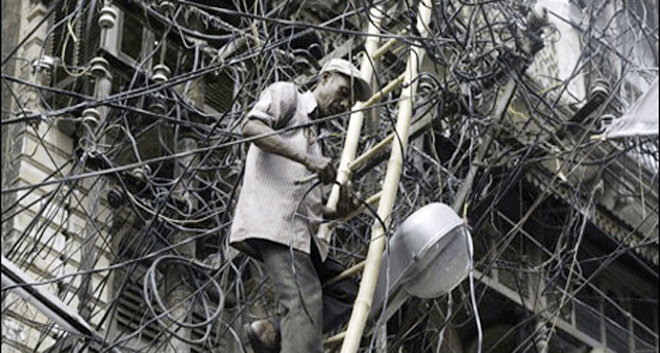
On an average, 12 Lesco linemen are killed in the line of duty every year. The deaths occur largely because of workload, lack of proper equipment and, sometimes, the staff not being medically fit
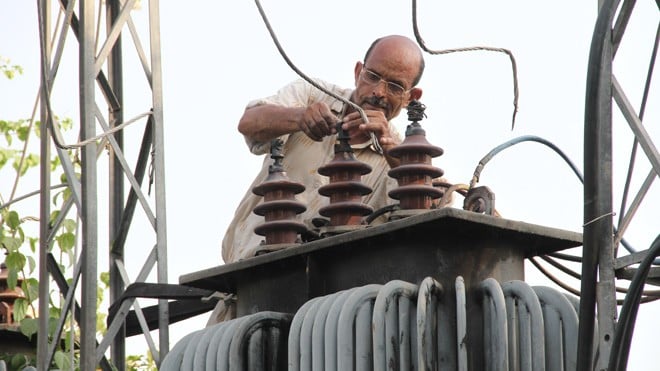
Mian Saeed, 45, a lineman at the Lahore Electricity Supply Company (LESCO), has practically no scheduled hours at work. With over two decades of experience in the field, he is following in his father’s footsteps who served at the same post for 40-odd years.
God knows Saeed is only one of the 10,000-plus line staff (of Lesco) that are responsible for carrying power transmission lines to every hearth and home in Lahore and adjacent districts. They could be called ‘foot soldiers’ -- the nature of their job is such that they are always exposed to danger. Out of the total Lesco staff, about 50 percent are linemen.
On an average, 12 Lesco linemen are killed in the line of duty every year. The number exceeds 100 if you talk about the casualties across the country.
"Last year, at least 12 deaths were reported that had been caused by electrocution or accident at work," says Ahsan Gilani, Additional Director, Safety, Lesco.
Currently, there are 14 linemen associated with one sub-division each. Lesco has 160 sub divisions which have, with the passage of time, been overburdened by a sharp spike in the number of customers. In 1984, through foreign consultations, it was decided that there would be one sub-division for every 5,000 consumers in urban units and 8,000 in rural areas. However, the scheme was never put into practice.
Today, a regular sub division boasts more than 30,000 customers whereas the number and the capacity of the staff have not been increased so far. "When your staff is working round the clock, their fatigue will lead to accidents and deaths," the official maintains.
"Our job is fraught with danger. We are in physical touch with high tension wires all the time," says Mian Saeed.
He suggests that there should be no lineman above the age of 45 or 50. However, at the moment, most Lesco line staff people are in their 50s and 60s.
Workload, age factor, health issues, non availability of proper tools, incomplete paper work while assigning duties, and improper supervisory are all affecting the job of the line staff.
"Mostly, deaths are caused by increased workload and the slip-ups that ensue and the lack of enough safety measures," says Osama Tariq, a senior representative of All Pakistan WAPDA Hydro Electric Workers Union.
He says that there are clear instructions from the Union that you should refuse to perform a duty in danger if there are no written instructions from the supervisory staff and/or in the absence of safety equipment.
A few weeks ago, Makhdoom Zia, a lineman from Narang Mandi Sub Division, Muridke Division, was electrocuted by 11KV power lines and died on the spot. He was survived by five sons, two daughters and a widow.
The United States government has also lent a helping hand. So far, the USAID has trained over 2,000 linemen under their safety training programme. Besides, it has offered training to 9,000 linemen at the DISCOs.
However, Mr Tariq believes that there should be on-the-job training of the line staff.
Linemen, according to the information gathered by TNS, lack proper equipment and are medically unfit to perform their duties including working on electricity poles and addressing complaints of citizens. Previously, it would be the company’s responsibility to provide latest and modern equipment to the linemen. But later, the company had a stop gap arrangement and allowed every sub division to purchase the equipment up to 15,000 when required. This policy is being followed for months now, leaving the sub divisions to buy substandard equipment.
Many DISCOs have started to provide small vans or rickshaw services to carry the ladders to help the linemen in their work but in Lahore such a step is yet to be taken.
The issue of having vehicles for carrying the ladder to facilitate the linemen is a longstanding one, as some senior officials of the company want to purchase heavy cranes that are huge and very expensive. Besides, it is believed that they would remain mostly under-utilised, causing a waste of money. They also have a huge running cost, says a Lesco official.
"Mostly, deaths occur due to negligence and mistakes on the part of the staff," a lineman observes. "However, we hardly see any line staff or official being punished for this.
"The rate of punishment is almost zero because the accused staff approaches the high-ups or the union starts exerting pressure on the administration. In the present circumstances, there is seemingly no end to the miseries of the line staff."