Print Story
X




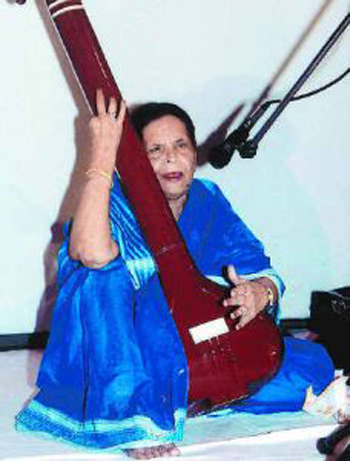
Muneer Khatoon subscribes to the old school in whose rendering of raags, the music of the last 100 years or so can be heard
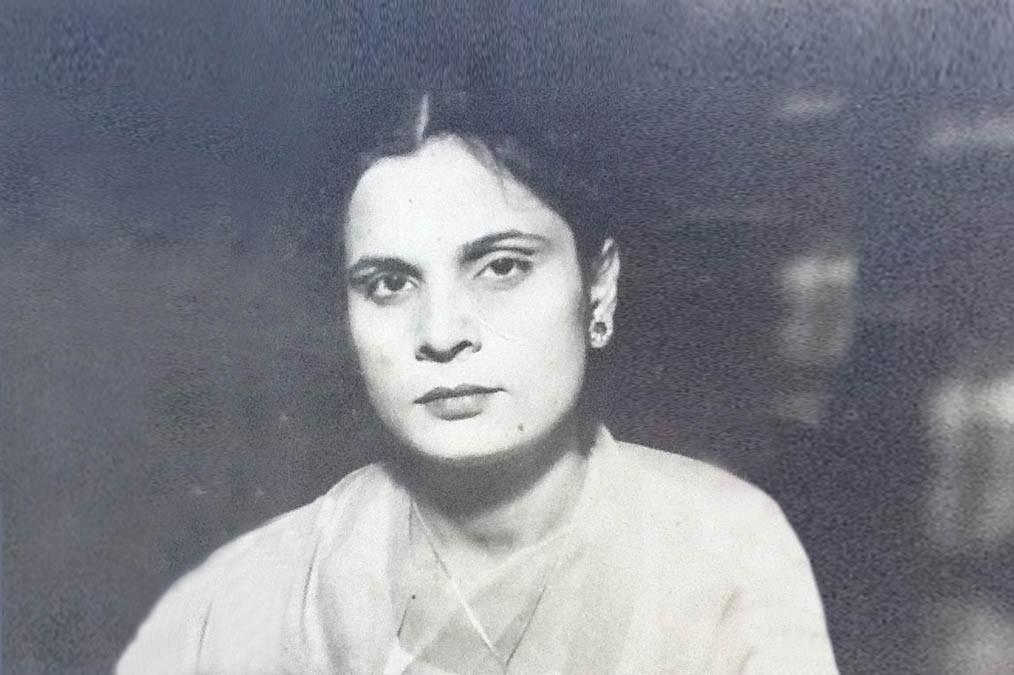
This was not Muneer Khatoon’s first visit to Lahore. She has been coming here from India periodically. Her first trip was in the 1960s, when she also performed for the All Pakistan Music Conference.
In the few informal performances that she gave on her current visit, despite frailty she was still alert and quick on cue when arriving at the sur or in holding the note. She still remembers a vast number of asthais and antaras that she has picked up on the way from the various gharanas and ustads in a large number of raags that she has been educated in.
Belonging to the Kirana Gharana and being greatly influenced by one of its most outstanding exponents, Ustad Abdul Waheed Khan, she has been carrying the legacy of her gharana now well into the 21st century. If there was an aficionado in music, it was her Ustad, who did not change his style of rendition due to the changes that were taking place and were forcing the other ustads to bring about some change in the substance and style of their music.
Ustad Waheed Khan stuck to the purity of his rendition and, along the way, inspired many youngsters, including Muneer Khatoon.
The same purity of style has rubbed on her as well and she had stuck to her rendition of kheyal, thumri and dadra the same way her Ustad did. Being further down the line in terms of decades, her style does appear to be dated and peculiar due to these innate characteristics.
She has many diehard fans in Pakistan who are devoted to her style of singing, her purity in rendering the raag and the repertoire of bandishes, which contain the niceties of those raags. It is assumed that the bandishes of the ustads were not only based on the tonal structure of the raags but also contains within their compositional structures the salient aspects of the raags. Such bandishes have been the treasure trove of the ustads and teachers and, with the passage of time, these are being forgotten or are not being replaced by similar delicate enunciation of the raag embodied in the bandish.
With the emphasis changing to composition freed from the structure of the raags, such bandishes are now becoming a thing of the past. If there is somebody still in possession of the knowledge of the era gone by, he or she ought to be treasured.
Muneer Khatoon happens to be one such vocalist.
Kirana Gharana had two vivid styles, one epitomised by Ustad Abdul Karim Khan and the other by Ustad Abdul Waheed Khan. The former was more popular and widely celebrated while Waheed Khan was the gaik’s gaik. Ustad Abdul Karim Khan wandered far and wide, had plenty to do with the theatre in Maharashtra, its music and dance, and was fully aware of the audience’s preferences. He was also receptive to the new form of music that was being popularised by the talkies in the last years of his life. He varied his style, made it more acceptable and in tune with the changing taste of a country that was seeing the end of the princely rule under colonial patronage. This nexus had prevented the musical taste being determined by the freewheeling ethos of the market alone.
Ustad Waheed Khan stayed true to tradition not allowing himself to be affected by changes which, in other words, were popular or had seeds of acceding to the expectation of a varied audience rather than letting the audiences rise up to the uncompromising standards set by the Ustad himself.
This has been the dilemma of the arts since patronage shifted from a certain class to find its moorings in a market that is heavily mediated by a number of factors. The rise of the middle-classes and the greater exposure to the musical systems of the world made possible through the media violated the insularity of the classical tradition and forced it to be judged by the standards or the strategies determined by market mechanisms. This has not only been the case in the subcontinent but all over the world with the result that if there is a true classical tradition anywhere in the world it only resides in memory.
Many societies though have attempted to grant a special status to the classical traditions and bolster them up with subsidies and other grants but the market mechanism is all set to create a value judgment against what is appreciated by a few as compared to the many more.
Muneer Khatoon subscribes to the old school and in her intonation and rendering of the raags, the exclusive bandishes, some many centuries’ old, the history of music of the last 100 years or so can be heard. There has been a degree of valiant resistance associated with her determination to keep true to what she has learnt from her ustads. In the classical tradition of music, the bandishes which are old and certified in the sense that they have travelled down many generations, and the style of the expansion of the raag, if ascribed to any one gharana are aesthetic categories much valued.
Judged on these basics, the music of Muneer Khatoon is of great worth and it was cherished by those privileged to be present on the occasions when she performed in very small informal gatherings.
Music has suffered greatly due to the hostile relationship that has existed between India and Pakistan. The free movement of musicians is restricted considerably and they have to get NOCs for public performances, which are not the easiest thing to happen. If there is softer option for performances between the two countries, it is possible that the Pakistani artistes get more out of this exchange than the Indians. But either way, it will be good for music, particularly music which is not popular and driven by the taste of the market which these days is backed by giant multinational companies.