Print Story
X

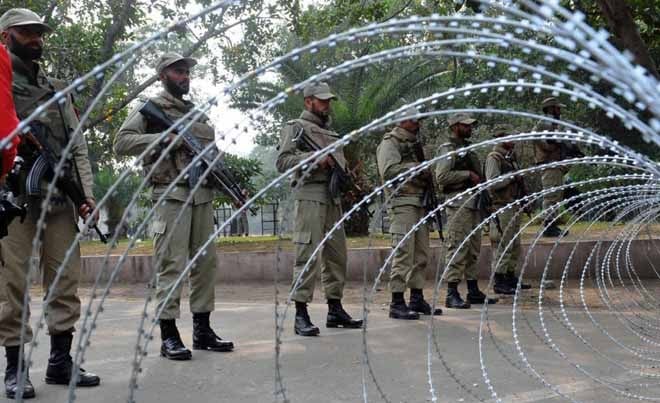
The job of analysts in this country is rather tough. They must find ways and means of saying the same things over and over again. And be rather creative about it. Tired of using clichés like "civil-military imbalance", they have now come around to calling the current crisis being all about a "war of narratives". And judging by the events and stances, it does seem an apt description.
So what exactly are these narratives and what are the points of conflict.
At this point in time, it is needless to say who has won the war of narratives, being fought on multiple levels. Of the many sections of society that have stood behind the most dignified of all institutions, do not just think of religious groups (some of them banned by the very state); there was a demonstration in its favour even by the Government College University Lahore.
The institution is rather touchy about its dignity and could not wait to see the results of its own complaint against a media house before the regulatory body. It has therefore forced the cable operators to block the channel from being shown in areas that fall in its direct domain, and shifted and shuffled in all other domains.
The military’s narrative is simple. It is after all the only functional and efficient institution of the country and hence most qualified to define and guard the ‘national interest’. And for the last six years, after the removal of Gen. Musharaf from the scene, it says it has clearly taken a back seat. Besides, it is fighting the elements that pose an existential threat to the country.
The civilians do not agree with the notion of military having taken a back seat, even if they do not articulate it. The attack on Hamid Mir has brought this underlying tension to the fore. But that is not the only thing the attack has done. It has exposed everything that is wrong with the media. On one level, it seems that media is the only other unaccountable institution after the military.
Just like the military mistakenly holding itself as the custodian of national interest, the media thinks of itself as the repository of freedom of expression. Over the years, it let go of the professional and ethical standards and became enamoured with just commercial interests. In the process [read race for ratings], it lost its unity too.
Are there any lessons the media has learnt from this episode? Will there be more journalists like Hamid Mir doing programmes on missing persons or less? Can this be a turning point to reform the media? These and other questions are raised in today’s Special Report from the perspective of all three players -- military, media and the government.