Print Story
X

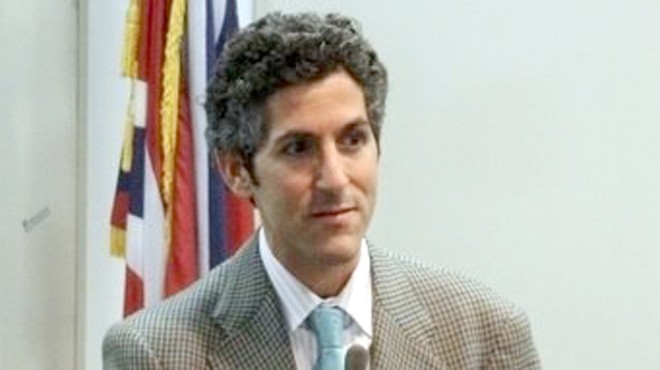
My sojourn to Houston, Texas entailed some intellectually charged interactions, with a few highly perceptive individuals. Ussama Makdisi, Professor of History at the Rice University, US, and the first holder of the Arab-American Educational Foundation Chair of ‘Arab Studies’ was the foremost among them.
He is an Arab with Lebanon as his country of origin.
Makdisi holds PhD from Princeton University, USA. The Carnegie Corporation named him a Carnegie scholar, 2009, for promoting original scholarship on Muslim societies and communities settled in the US and beyond.
He has won many awards for his path-breaking studies, such asArtillery of Heaven: American Missionaries and the Failed Conversion of the Middle East and The Culture of Sectarianism: Community, History and Violence in Nineteenth-century Ottoman Lebanon. His most recently-published book is Faith Misplaced: The Broken Promise of U.S.-Arab Relations:1820-2001 that offers fresh perspective and insight into the evangelical missionary enterprise in the Arab world.
Interestingly, Makdisiis related to late Edward Said, the author of Orientalism, one of the few most influential texts in the post-war period.
Makdisi has inherited his unequivocal support for the Palestinian cause from his great uncle, Said. Indeed, until his demise in 2003, Said was the most prominent voice representing the Palestinian cause in the international academia. Despite tremendous pressure exerted on him, Said remained steadfast in espousing what he thought was right. Makdisi referred to the famous debate between Said and Bernard Lewis many years ago, where Said had the last laugh. The two were sort of adversaries not only with reference to their trajectories of scholarship but also with their perceptions of Middle Eastern politics.
Pakistani academics ought to emulate Said -- and have a definitive political opinion that is articulated fearlessly.
Makdisi, too, is dauntless in his stance, despite the criticism Jews have levelled against him. Michael C. Duke’s write up in The Jewish Herald-Voice (Houston) is a case in point. The criticism is not only due to the courses he teaches but also because of the Arab World: History, Politics & Culture lecture series, which is dubbed as an instrument of advancing "a clear partisan political agenda."
Makdisihas a profound take on sectarianism in an extremely diverse Lebanese polity. He regards sectarianism as a manifestation of modernity. To him, sectarian violence is not a response of the Islamic traditionalists to westernisation or the outcome of the socio-economic inequities among the adherents of the various sectarian denominations. "The religious violence of the nineteenth century, which culminated in sectarian mobilizations and massacres in 1860s (in Lebanon) was a complex, multilayered, subaltern expression of modernization" and not as believed by many, as "a primordial reaction to it".
Same holds for Deobandi articulation, which was essentially sectarian, among the subaltern sections of the UP. Ashra’af (genteel class), on the other hand, opted for the liberalism subscribed by Syed Ahmad Khan and M.A.O College Aligarh. Thus, class character mediated through modernity was an important factor in crystallising sectarian identities.
Makdisi’s recently-published book, Faith Misplaced…makes an interesting read for more than one reason. It not only charts the course of events that determined the relations of the US with Middle East -- like President Truman’s enthusiasm for Israel that radically changed the perception of the Arab world about the US in general. Prior to it America was perceived by the Arabs as a nation "known for their sincere and generous sympathy with the aspirations of weak nations, for help in the fulfilment of our hopes".
But that goodwill got overturned by 1948 with Israel’s coming into existence.
Concurrently, he underscores the role of the Arab-Christians, who stood for the cause of the dispossessed (read it as Palestinians), which is of critical importance given the exclusion that Muslims in general have subjected them to. Particularly in Pakistan, the Arab sensibility is taken as exclusiveto Muslim, a notion that has been overturned in that book.
Some well-known Pakistan literati can be elucidated here -- like Phillip K. Hitti and Albert Habib Hourani, both outstanding historians and staunch advocates of Arabs. Hitti’s book,The History of Arabs, is still popular among the history students in Pakistan. Charles Malik, PhD from Harvard, is yet another. He was the Lebanese ambassador to America. His role as a committee member, ‘which produced the Universal Declaration of Human Rights’, is recognised internationally. Hitti divided his time between the University of Princeton(from where he retired in 1954) and the American University of Beirut (AUB).
Albert Hourani too had a strong connection with AUB, though he mostly taught at the University of Oxford, UK.
What is of essence here is the multi-dimensional nature of being ‘Arab’. Hitti, Hourani, Said and now Makdisirepresent the same culture -- as other Arab -- though their religion is different.
Culture, therefore, acts as glue. And, Pakistanis needs to understand this, especially with respect to minorities in the country. Even in these circumstances, riddled with despondency, one cannot but hope that in Pakistan too religion is mediated through culture - and create a society where everyone lives in complete harmony.
Thus, Makdisi’s books have a profound lesson for us to learn.