

Print Story
X

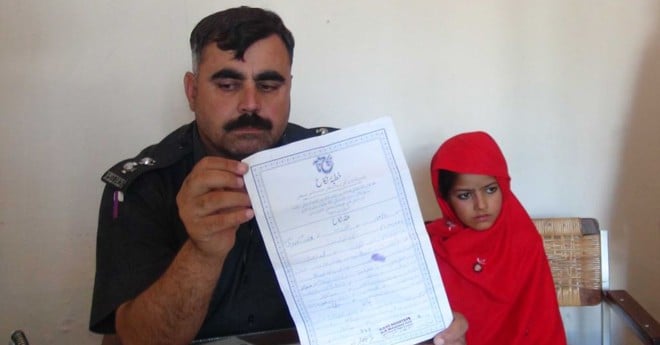
The Council of Islamic Ideology (CII) has been in the news recently due to the recommendations it made about annulment of laws banning child marriage and asking for wife’s permission before contracting second marriage.
The CII insists the recommendations have roots in Quranic teachings and sunnah of the Prophet Muhammad (PBUH). The critics of the CII term them an outcome of biased thinking of the council members and their inaccurate interpretation of religious texts.
Religious scholar, Dr Javed Ahmed Ghamidi, says there are no divine laws on polygamy and marriageable age and insists the parliament has the right to formulate them, keeping the interest of its citizens and the society supreme.
Talking from Kuala Lumpur, Malaysia, on phone, Ghamidi says, "the Quranic verses often referred to in this case are, in fact, an appeal under which Muslims were asked to marry widows who had become vulnerable after martyrdom of their husbands in the war of Uhad. This appeal was made in a particular context."
He says it is portrayed that "Islam allowed four marriages for the first time while, in fact, polygamy was quite common in the tribal Arab culture where tribal elders would boast of having 10 or more male off-springs."
"Today," Ghamidi says, "the parliament has the right to make laws which protect the rights of women and stop injustice to them. This is in conformity with the teachings of Islam which has put a condition on men to do justice if they want to have more than one wives."
He says Islamic history has a lot of examples where rules were changed according to the needs of the times. The government, he says, "can make these rules just the way it makes rules prohibiting inter-provincial movement of wheat or binding drivers to drive on the left side of the road."
Ghamidi supports laws prohibiting under age marriage, saying a person should be physically and mentally fit to bear and bring up children."
He says Quran categorically states that only the wise can get directions from it, which he thinks is enough to prove that those coming up with strange recommendations in the name of Islam are not the ones who stand to benefit from divine instructions.
Zia Awan, an Advocate and a Karachi-based human rights activist and President of Lawyers of Human Rights and Legal Aid (LHRLA), questions why all the recommendations coming from the CII are centered around sexuality? He has hardly found council members talk about other important aspects of modern day life.
Zia believes "it’s a blessing for the people that CII has only an advisory role." But, he says, "this does not mean that it be given a free hand to spread confusion in society and make people believe that certain laws made with an intention to protect child and women’s rights are un-Islamic."
He says there are always two schools of thought among the clergy -- the conservative and the progressive. On the one hand, Jamia Azhar, Egypt is issuing landmark decisions according to modern-day requirements of Muslims and, on the other, the CII is trying to push them back to the Stone Age.
Zia thinks it is a waste of time to discuss CII’s recommendations on child marriage and second marriage which have put Pakistan at the center of global criticism. He suggests the government should focus on fixing a uniform age limit for a child which is different for girls and boys under the Prohibition of Child Marriage Act and different under Hudood laws, Juvenile Justice system, and Sindh Children Act.
Lifting the condition of minimum age for marriage will open new floodgates of child abuse in the country where even consensual sex with a minor girl is rape under the existing laws. "When the husband marries for the second time," Zia says, "without the permission of the first wife the act is tantamount to the breach of trust."
Human Rights Commission of Pakistan (HRCP) Director, I. A. Rehman, terms the recent CII recommendations mischievous, saying they speak volumes of regressive thinking of its members. "It also establishes the fact that CII members do not have a clear understanding of the teachings of religion and how to benefit from them for the welfare of the mankind," he adds.
Rehman rejects the idea that there should be no bar of age for marriage. He says consent is the basic ingredient of a legal marriage under Islam and minors are not mature enough to take prudent independent decisions. He points out that "mental maturity is a must and the boy and the girl should have a sense of the challenges of married life and the mental and physical capabilities to meet them."
The laws against child marriage, he says, "are there in the country for ages but none other than the myopic mullahs have had any problem with them, especially in case of the girls it has to be seen whether they are capable enough to take up the responsibilities of married life and motherhood or not."
Rehman also comes down hard on those who recommend a man can contract second marriage without seeking consent of the first wife. "When a marriage takes place," he says, "the husband promises to protect the rights of the wife one of which is her right on her husband. So, when the husband thinks about second marriage he is violating the right of the first wife and should not be allowed to take this step without her permission. The same CII once gave a recommendation that a person going for second marriage should bring the decision to the notice of a civil judge and seek approval from him rather than the first wife."
Kashif Nawab, Team Leader at Social Action Transformation of Humanity (SATH-Pakistan), an NGO working for women empowerment, minorities’ rights, justice and peace, says, "studies say risk of death for pregnant girls under the age of 15 is five times higher than for women in their 20s. But despite this, it is quite common in rural and backward areas that girls have three to four children by the time they turn 18."
The risk to life, he believes, should be "a solid ground to prohibit child marriage and enforce ban on it." Kashif says strong criticism of the CII recommendations shows that people think positively and want progressive interpretation of religious texts.