

Print Story
X

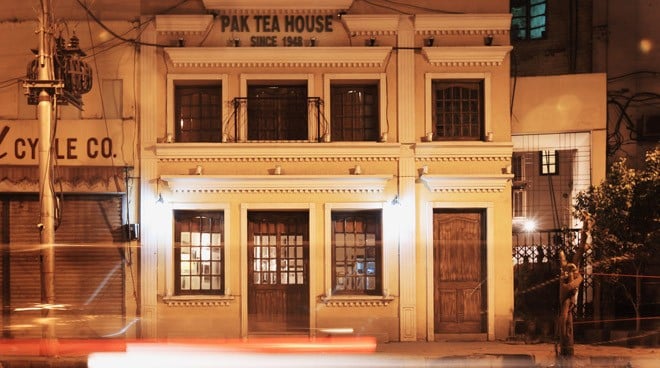
The door opens and the visitors are welcomed by the sight of young people encircling a grey haired man, apparently in his 70s, and standing next to the entrance. The venue is the famous Pak Tea House in Young Men Christians’ Association (YCMA) building on the Mall and this man is an expert in Urdu literature.
After a two-hour stay here he has to leave but this group of students wants the conversation to continue. They keep on taking notes as he asks them to clear the place and let the visitors find way to one of the tables placed in the hall. After a short session discussion at its doorstep, he tenders his excuse and rushes off with the promise to return at the same time after two days.
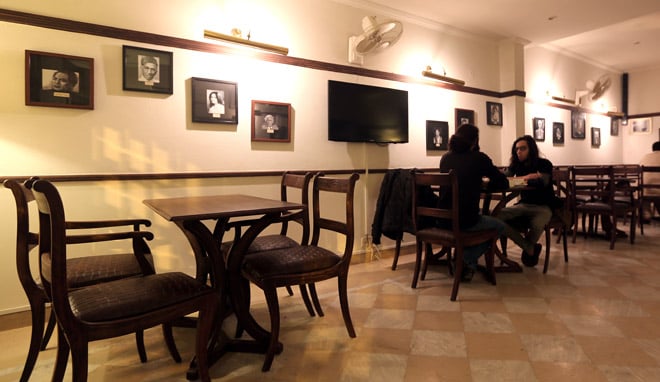
The place is dimly-lit and its walls carry photographs of no less than 70 prominent literary figures from the past who used to frequent Pak Tea House and indulge in creative intellectual debates. All of them have departed for the heavenly abode but their photographs add value to the sanctity of the place.
The furniture is a bit old fashioned and gives a glimpse of the times when this venue was a very happening place. Waiters clad in old-fashioned, white outfits shuttle between tables and kitchen counter in what seems to be mechanically orchestrated moves and serve the visitors a range of items from the menu printed on newsprint. Starting from five to six items a year ago, the menu has expanded and today offers 26 items to the variety of people who visit this place.
This is the scene at Pak Tea House, which was inaugurated on March 10, 2013, after a long period of closure by Mian Muhammad Nawaz Sharif, before the general elections were held. One year on, the location has seen several changes, for instance in its administrative control.
Initially put under the control of the City District Government Lahore (CDGL), it is being looked after by the Walled City Lahore Authority (WCLA) for the last four months or so.
Jawad Zaidi, Manager, Pak Tea House, says his organisation Dean’s Caterers is trying its best to keep the spirit of the place alive.
He says the uniform of the waiters is designed on the pattern of that which was in vogue in the 1970s and the ‘80s. Besides, certain food items such as Daal Maash Makhani Special have been introduced on the request of the old visitors who recalled it as the main attraction of the place. These people would not miss a visit to Pak Tea House on Tuesdays when the item was served.
Zaidi says the number of people visiting the place is increasing and the afternoon timings can be called as the rush hours. There is the ground floor and the first floor and the maximum seating capacity is 80.
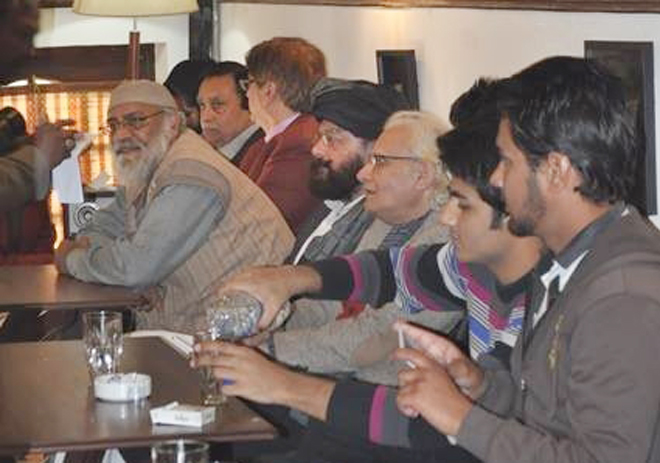
He says the Anjuman Taraqqi Pasand Musannifeen and the Progressive Writers’ Group hold weekly sessions at the venue which is very encouraging. Students of Urdu literature and those with a taste for Urdu literature come to the place and attend these sessions.
Jawad says the literati frequent the place after 6 in the evening as many of them do jobs during daytime.
Secondly, as the city expands, many people who have a longing for the place live far away and make special arrangements to reach here.
Parking is a problem but the situation gets better in the evenings. The WCLA management has taken up the issue and it is hoped the designated area will be declared an exclusive parking area for the guests.
Poet cum journalist Nasir Zaidi, a frequent visitor, says he likes to sit at the spot generally occupied by well renowned poet Ahmed Faraz. He says jokingly that he "has an exclusive right to the seat… In case someone else is sitting there, I request him to vacate it and explain the reason as well."
Zaidi spends long hours at the place and is often found talking about the people whose photographs are mounted on the walls. He also helps budding poets with their verses and answers to the questions of journalists who may be there.
He is patient and does not lose his calm. But he has his reservations and suggestions to improve the situation.
He believes the sanctity of the place should remain intact and the young couples who see it only as a meeting point should be discouraged.
Zaidi also demands that the administration should provide newspapers to the visitors, revise food prices downwards and print a book carrying details and brief biographies of the literary figures whose photographs can be seen at the place.
The book, he says, can be sold for Rs200 or so and he is sure everybody will be willing to pay this much.
"Isn’t it a pity that the poets have to buy water for Rs30. This is the same place where they were served for free if they could not afford to pay."
Zaidi reveals that he was Pak Tea House at the time of its inauguration, a year ago, and recalls how the photograph of Attaul Haq Qasmi was placed in the midst of those of the personalities who had passed away. He says he pointed this out and the photograph was removed immediately.
Kamran Lashari, DG WCLA, says this place was handed over to the Authority by the government as it was doing specialised work on culture and heritage. Since then they have worked hard and taken measures to revive it as a literary joint.
For example, Lashari says, the place has been painted in a way that gives it an old-world look. Research has been carried out to collect data and photographs of literary figures and a parking place was acquired.
Future plans include collaborating with different literary and educational societies for their literary activities at the place, arranging events to pay tribute to writers, poets and intellectuals on their birth or death anniversaries and holding mushairas, literary conferences, amateur poetry competitions and literary discussions. Issuance of 20 percent discount vouchers for poets is also on the cards.