Print Story
X




The way forward for Jhimpir lies in embedding principles of sustainability governance into policy design
| P |
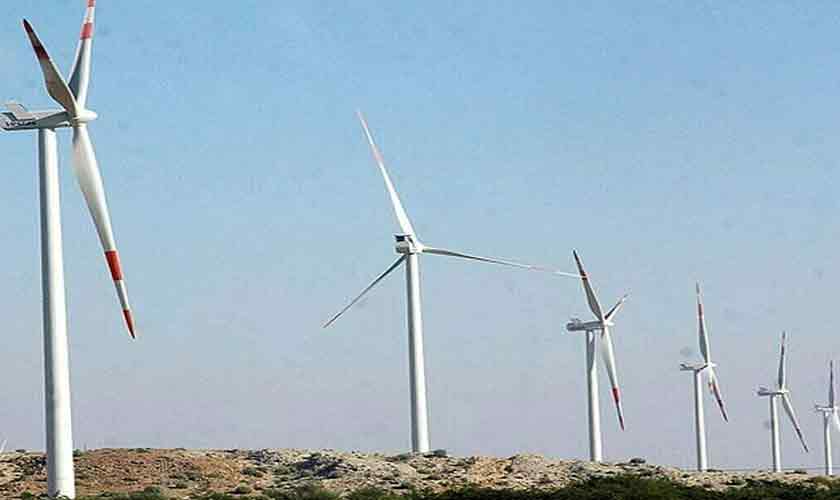
akistan’s power sector is full of contradictions and dilemmas. Nowhere is this more visible than in Jhimpir. Some 120 kilometres northeast of Karachi lies this windswept corridor, capable on paper of generating 43,000 megawatts of electricity across nearly 10,000 square kilometres.
The site boasts average wind speeds over 7 metres per second, making it suitable for wind energy generation. The extensive wind power farms of Jhimpir, stand as towering symbols of Pakistan’s push toward a clean, renewable energy future. Vast fields of sleek turbines harness relentless winds to generate significant electricity for the national grid, fuelling the country’s green energy ambitions. Yet, many local communities living in the shadow of these wind clustres lack schools and hospitals. Access to safe drinking water is limited.
A significant number of households here lack access to electricity supply and remain shrouded in darkness after sunset. Some of these households were provided solar panels but the systems did not sustain long-term use due to fragile and expensive batteries. Unable to afford replacement batteries or maintenance, many families have been forced back into living without electricity.
Why does such abundant renewable energy potential sit alongside such visible want? The wind farms provide scant employment for locals. The vast majority look on from the sidelines. For them, the giant turbines are less symbols of opportunity than whirring monuments to a modernity that has passed them by.
I met a rare girl in the village to had studied up to the fifth grade. Her journey came at a steep personal cost; she had to live away from her family, staying with relatives for five years just to access schooling. In a village where most girls receive no formal education, she stood out, carrying a quiet confidence born of her rare opportunity. Yet her story also highlights the sacrifices many girls and their families must make to pursue education in underserved areas.
As power blackouts darken Pakistan’s big cities, Jhimpir’s villages endure a deeper socioeconomic blackout. Women bear the heaviest burden in this: beyond endless household chores, they trudge long distances for water, gather firewood and tend to livestock. The absence of healthcare and livelihood opportunities compounds their vulnerability, widening the already entrenched inequalities. For children, meagre health services and failing schools blunt their development, ensuring that deprivation is passed faithfully from one generation to the next.
This stark contrast between advanced energy production and persistent social deprivation reveals a critical paradox in Pakistan’s energy transition. It highlights a broader challenge: expanding renewable energy capacity alone is not enough without inclusive development strategies that improve the lives of local communities. The Jhimpir example shows how infrastructure investments, though vital for climate and energy goals, can bypass the people whose wellbeing must be central to sustainable progress.
What credibility does ‘sustainable progress’ carry when those living in the shadow of turbines see none of its dividends? Sustainability is as much about governance as it is about technology. Without policies that bridge social and economic divides, Jhimpir’s wind corridor risks becoming a showcase of exclusion. Unless local communities are woven into the fabric of planning—through jobs, services and fair access—the promise of wind power will remain little more than rhetoric, a green success story measured in megawatts rather than in improved lives.
Current measures of renewable energy success focus mainly on installed capacity and emission reductions, highlighting technical and environmental gains. However, they overlook the lived reality of communities like Jhimpir, where social uplift is missing despite towering clean energy infrastructure. Without including human development indicators, such as education, healthcare, clean water access and job creation, evaluations risk a narrow view of sustainability that leaves vulnerable populations behind. True progress must extend beyond megawatts and climate targets to embrace social inclusion, empowering people and ensuring renewable energy drives equitable, sustainable development for all.
Sustainable governance means adopting inclusive policymaking that aligns energy production goals with broad socio-economic development, gender equity and community wellbeing. It requires going beyond technical achievements to ensure that renewable energy projects actively benefit the people who live near them, especially marginalised groups.
Effective governance requires empowering communities through participatory decision-making that ensures that their voices are heard. Energy projects must be coupled with targeted investments in health, education and infrastructure to improve living conditions. Gender-responsive policies help address women’s specific burdens and ensure equitable resource access. Transparency and social accountability mechanisms are essential to guarantee that renewable energy delivers both environmental and meaningful social benefits.
Successful examples from the region illustrate these principles in action. In Nepal, the Alternative Energy Promotion Centre has implemented small wind-solar hybrid systems that provide affordable, reliable energy to local households, including marginalised Dalit communities and schools in rural districts. By combining energy access with social uplift and incorporating wind data acquisition to identify appropriate sites, the project strengthens local resilience and inclusion.
Pakistan can adopt these successful examples by implementing inclusive, community-focused energy policies that prioritise local participation, gender equity and targeted investments in social infrastructure alongside renewable energy expansion.
Renewable energy, when harnessed through inclusive development frameworks, can serve as a powerful catalyst for broader social justice goals by promoting equitable economic opportunities, social inclusion, and environmental sustainability. Projects that prioritise community involvement, especially in underserved areas, can help redistribute economic benefits and foster improved social outcomes such as women’s empowerment, education and local skill development.
Trichy in Tamil Nadu, India, has developed into a vital wind turbine manufacturing hub, producing over 50 percent of the country’s wind turbine towers and blades. This industrial growth has generated more than 3,500 jobs and is bolstered by targeted training programmes from institutions like BHEL and IIT Madras, helping to build local technical capacity and economic resilience in the region.
On the social front, access to clean energy has been linked to tangible empowerment, particularly for women. In rural West Bengal, micro solar domes have enabled women to engage in income-generating activities by reducing the time and labor involved in traditional energy collection methods, facilitating greater economic participation and enhanced social status. In northern Pakistan, the deployment of micro-hydropower plants has provided women with reliable electricity for both household and communal uses, contributing to improved socio-economic participation and empowerment.
Research has shown that renewable adoption in South Asia not only drives economic expansion but also helps reduce income inequality by facilitating fairer income distribution through improved energy. Improved energy access, particularly from renewable sources, is strongly linked to women’s empowerment, enabling increased participation in economic activities and decision-making processes.
The way forward for Jhimpir and Pakistan’s energy transition lies in embedding principles of sustainability into policy design and implementation. First, renewable energy expansion must be linked with tangible local development by mandating community development funds in power purchase agreements. These funds should finance schools, clinics, water supply systems and livelihood schemes in wind-rich districts, ensuring that the infrastructure boom translates into human development gains. Second, policy must prioritise local participation and skill development. Creating vocational training programmes tied to the renewable energy industry, ranging from turbine maintenance to ancillary manufacturing, can help integrate communities into the value chain and address chronic unemployment.
Third, governance frameworks should institutionalise gender-responsive policies, ensuring women gain access to clean energy technologies, microfinance and income-generating opportunities. Mechanisms such as community energy cooperatives, transparent monitoring systems and participatory planning platforms nhance accountability and build local ownership. By reimagining Jhimpir’s turbines not just as generators of clean power but also as anchors of inclusive growth, Pakistan can shift from a narrative of megawatts installed to one of livelihoods transformed.
The writer is a gender and climate specialist at Sustainable Development Policy Institute