

Print Story
X

| I |
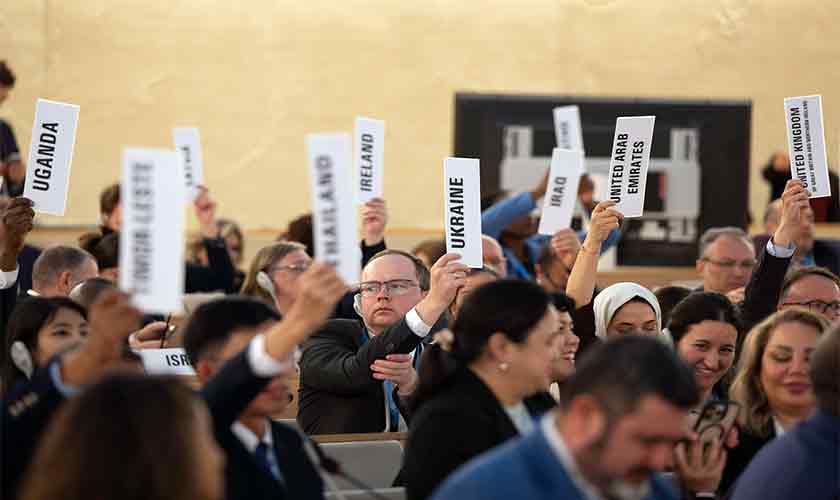
n April this year, member states of the World Health Organisation concluded a historic pandemic preparedness treaty after painstaking, marathon negotiations spanning the previous three years. This is one of the shortest time spans during which a global treaty has been agreed upon between member states. The agreed text was inked by member states at the World Health Assembly in May.
The need for a new pandemic treaty arose due to the demand for redressing inequities witnessed in the manufacturing and distribution of Covid-19 vaccines, treatments and personal protection equipment during the Covid-19 pandemic. After an initial hesitation over whether a new pandemic treaty or amendments to the existing international health regulations were the best way forward, the deliberation over crafting a pandemic treaty got underway in earnest in 2021. The negotiations were conducted under the aegis of the Intergovernmental Negotiating Body.
With the publication of a zero draft in February 2023, focus shifted from general discussion to a narrow and serious consideration of the text by member states. While major sticking points were ironed out between February 2023 and the final agreement in April 2025, the issue of intellectual property rights and technology transfer remained at the heart of the new treaty deliberations. The inequity observed during the Covid-19 pandemic led to a call for a trade-related intellectual property rights (TRIPS) waiver, waiving the application of intellectual property rights to Covid-related medical products.
Appreciable progress was made on the TRIPS waiver, so the twin issues of intellectual property rights and technology transfer assumed the centre stage in the torturous pandemic treaty negotiations. Not surprisingly, despite the aspirational and solidaristic mood at the beginning of the treaty negotiation, serious disagreement erupted over the text after the publication of the draft. In particular, Article 11 of the draft, covering the complex and knotty issues of technology transfer and IPPR, became the most contested terrain. The EU and the pharmaceutical industry pushed for the technology process to be entirely voluntary, based on the experience of the Covid-19 pandemic, while countries of the Global South opposed it. At one point, it seemed the negotiations would founder on this hotly contested point. In the end, a compromise was found on wording which envisaged a technology transfer process to be both voluntary and on agreed terms.
A key achievement of the treaty is to embed the One Health approach into the pandemic agreement, underscoring the interconnectedness of animals and the environment and collaborative surveillance.
The footnote to Article 11 overcame this hurdle in the following phrase, “for the purposes of this agreement, “as mutually agreed, means willingly undertaken and on mutually agreed terms, without prejudice to the rights and obligations of the parties under other international agreements. This has been interpreted to mean that if willingness to transfer and share technology during a pandemic does not materialise, the government can use existing provisions in other international treaties to compel technology transfer. There are already mechanisms available in trade-related intellectual property rights agreements wherein compulsory licensing can be invoked in times of public health emergencies. However, this provision has been rarely used because of the fear of legal challenges from a powerful bloc of Western countries and big pharma.
The final signed-off text comprises 37 articles. Despite a larger consensus on the sticking points mentioned above, Pathogen Access and Benefits Sharing issues have been kicked down the road to be discussed at a later date. So is the key issue of financing of pandemic preparedness. The agreement, as it stands, is far from perfect. According to some commentators, many of the provisions are phrased in non-committal and non-binding language and freighted with words like deemed appropriate which do not clarify the obligations of the states. Despite these weaknesses, the pandemic treaty has been hailed as a landmark that puts in place mechanisms and principles for concerted international cooperation in the event of the next pandemic.
A key achievement of the treaty is to embed the One Health approach into the pandemic agreement, underscoring the interconnectedness of animals and the environment and collaborative surveillance. Now, it is the governments’ task to begin implementing it. The agreement, as it stands today, should be made to work for all parties by engaging in further negotiations on the Pathogen Access and Benefit Sharing clause and pandemic financing issues. The pharmaceutical industry should begin to work constructively with key institutions such as the WHO World Health Technology Transfer Pool and the Medicines Patent Pool to ensure access to pandemic-related products when the next pandemic comes knocking at our doors.
The writer is a public health consultant and the author of Patient Pakistan: Reforming and Fixing Healthcare for All in the 21st Century. He can be reached at drarifazad@gmail.com Twitter: @arifazad