Print Story
X




Aftab Sha’ban Mirani will be remembered as a politician who never confused visibility with influence
| H |
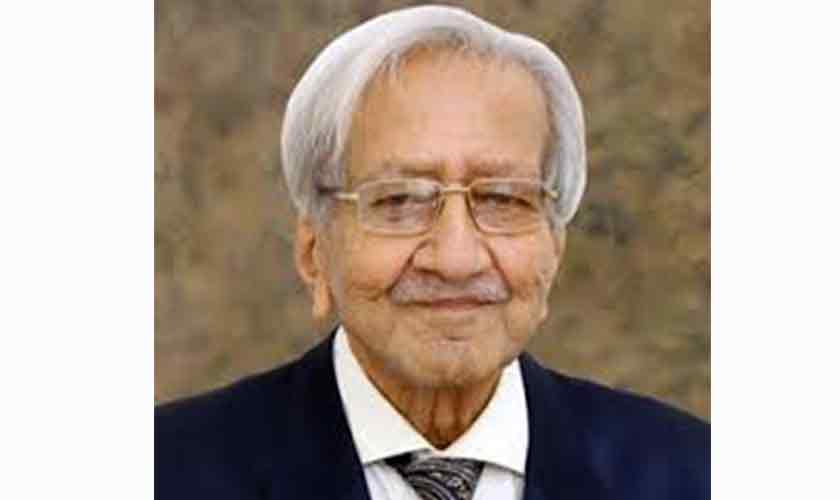
e belonged to a generation of politicians that has almost vanished — one that practised loyalty without theatrics, authority without noise and public service without spectacle. With the passing of Aftab Sha’ban Mirani in Karachi on November 1, Pakistan has lost not only a former chief minister of Sindh and defence minister, but one of the last custodians of an older, steadier political temperament — the kind that believed politics was a responsibility, not a performance.
Born in Shikarpur, Mirani entered politics when the PPP was still rebuilding itself after the execution of Zulfikar Ali Bhutto. Democratic space had to be contested, not assumed. He was among the young Sindhi leaders who stood by Benazir Bhutto during her early confrontations with the Establishment, long before parliament, cabinet office or federal power became available. Over the decades that followed, he would become one of the party’s most trusted veterans — a man who spoke little, worked quietly and never confused visibility with influence.
In 1990, Mirani briefly served as chief minister of Sindh, stepping into the role during a period of fierce political polarisation and tense relations between Karachi and Islamabad. Those who recall the moment say his greatest achievement was not legislative change, but stability — the ability to hold the provincial system together while others pulled at it. He governed not like a firebrand, but like a steadier of the table.
Three years later, Benazir Bhutto inducted him into the federal cabinet as defence minister, a post he held from 1993 to 1996. It was a time when civilian rule was constantly negotiating its boundaries with military power. The role demanded discretion rather than display. Syed Naveed Qamar, who worked closely with him in that period, says Mirani was “one of the very few who understood the difference between holding office and holding the system together — he never personalised power and he never tried to play hero with institutions.” That, in many ways, was his political ethic.
He returned repeatedly to the National Assembly from Upper Sindh, where his constituency work was rooted in irrigation channels, district hospitals, road links and local administrative access. His politics was not designed for talk-shows but for tehsil offices, union councils and jiyala gatherings under a tree. Nisar Khuhro, who saw him operate across four decades, said Mirani “never forgot that the strength of the PPP came from workers, not from television studios — he stayed among the people even when he held the highest offices.”
Mirani’s quietness was not timidity; it was method. He believed that politics was built in years, not cycles; that influence is earned when your phone is still answered after you’ve left office. He did not pursue the politics of disruption, but the politics of duration.
Mirani was also one of the few remaining figures who had worked with both Benazir Bhutto and the party’s present leadership, which gave him standing as a bridge between eras. President Asif Ali Zardari called him “a sincere and loyal leader whose services to democracy, the federation, and public welfare will be remembered with great respect.” Prime Minister Shahbaz Sharif paid tribute to him as “an experienced political leader and senior parliamentarian whose contributions will never be forgotten.” Sindh Assembly Speaker Syed Owais Qadir Shah described him as “one of the most composed and committed members ever to enter the House.”
But the tributes that define him best are from those who came up alongside him — the old guard. Syed Khursheed Shah, who shared the National Assembly benches with him for decades, remembered him as “a man who never chased power, yet power always trusted him.” Former three-time chief minister Qaim Ali Shah, a political contemporary from the same generation, said Mirani’s passing “feels like the closing of a room we all once sat in — a room of patience, loyalty and mutual respect.”
Younger PPP voices recognised the generational gap as well. Shazia Marri described Mirani as “a representative of a political culture we may never see again — where conviction was not shouted, but lived.” Senator Raza Rabbani, reflecting on his constitutional role, said he “represented continuity over charisma — the kind of democratic durability that rarely makes headlines, but without which institutions collapse.”
Mirani’s quietness was not timidity; it was method. He believed that politics was built in years, not cycles — that influence was earned when your phone was still answered after you’ve left office. He did not pursue the politics of disruption, but the politics of duration. Even those who rarely appeared beside him in public recall private calls, discreet interventions and the kind of personal loyalty that outlasts elections.
For many in Sindh, his greatest legacy is not a single bill or speech, but the consistency of his presence — the man from Shikarpur who stood by the party in exile and in power’ who dealt with the federation without surrendering the province’s dignity; and who never treated workers as instruments but as comrades.
His passing is not just the end of a political life, but the end of a political type: the unglamorous mediator, the reliable negotiator, the office-holder who didn’t need to be seen to matter. In a political culture now driven by speed, noise and profile, Mirani’s absence will be felt most in the spaces where steadiness used to live.
He leaves behind a family, a party, a district and a generation that saw in him something understated but rare — a leader who carried weight without demanding attention and who chose service over spectacle. In a time when politics is increasingly transactional, his life is a reminder that endurance, loyalty and humility still matter.
The writer is an award-winning investigative journalist and the editor-in-chief of The Scoop, a digital platform. He can be reached on X @HassanNaqvi5