Print Story
X




Integrating financial architecture for climate resilience in Pakistan
| M |
y visit to Barbados, shortly after it was struck by the devastating Hurricane Beryl in 2024, and my detailed conversations with local experts, as well as listening to the insightful leadership of Prime Minister Mia Mottley, reinforced a vital principle in climate disaster management. The proactive risk leadership displayed by people like Prime Minister Mottley and Ambassador Liz Thompson, my friend and colleague at the Board of the Fund for Responding to Loss and Damage, confirmed that the solution to climate disasters must shift from reactive humanitarian aid appeals to establishing prearranged and guaranteed financial liquidity.
This lesson was echoed in Jamaica, which only last week suffered a severe blow from Hurricane Melissa. Small island nations like Barbados and Jamaica have learned that climate resilience is not just about securing finance; it is a foundational measure of social responsibility. This is especially true as future flood and cyclone risks intensify in coming years.
Shared vulnerability in climate disasters
Climate change manifests through unprecedented risk scenarios worldwide. While estimating damage remains crucial, the ultimate measure of Pakistan’s response capacity lies in our governance architecture—our commitment to safeguarding the most vulnerable populations during inevitable disasters. To identify actionable lessons, it is useful to compare two equally destructive but contextually different events: the massive 2022 Pakistan floods and Hurricane Ivan’s impact on Jamaica in 2004—and their recurrence in both countries in 2025. By focusing on their proportional impacts, universal needs for national resilience and the requisite financial protections emerge clearly.
Risk scale and proportional impact
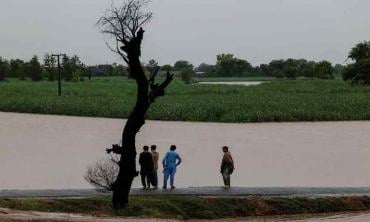
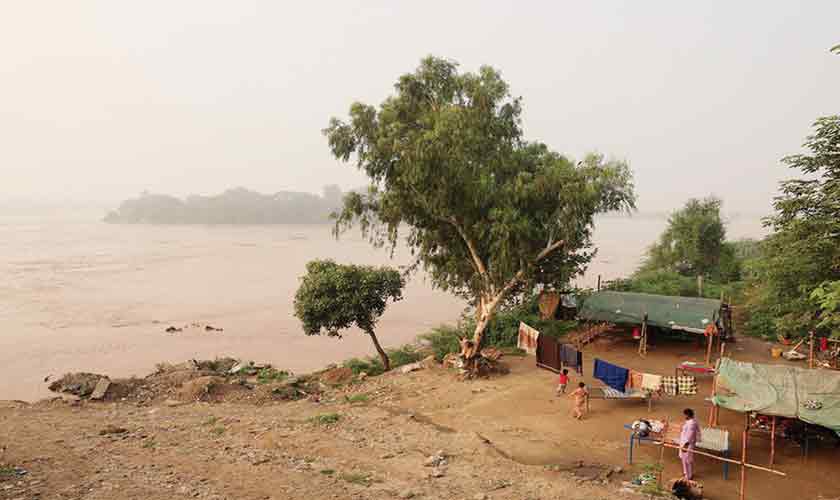
Assessing climate events by proportional damage transcends differences in country size to reveal shared vulnerabilities. In 2022, the floods submerged nearly one-third of Pakistan, directly affecting approximately 33 million people—around 14 percent of its over 230 million population. The economic cost, estimated at about 8 percent of the GDP, represented more than a fiscal shortfall. It was in several ways a systemic reversal pushing back years of development progress. The disaster’s vast geographic scale complicated centralised response efforts, dispersing resources thinly across districts and provinces.
Jamaica, much smaller by size and population, faced a proportionally comparable crisis during Hurricane Ivan. The storm affected roughly 370,000 people, again about 14 percent of the population at the time. The economic damage was also estimated at nearly 8 percent of the GDP. This parallel starkly illustrates that a major climate crisis can inflict an equivalent proportional blow across vastly different national contexts, destabilising a comparable percentage of people and wealth. For Pakistan, as for Small Island Developing States, such proportional risk is a grave immediate threat to long-term stability and development.
Infrastructure and systemic failures
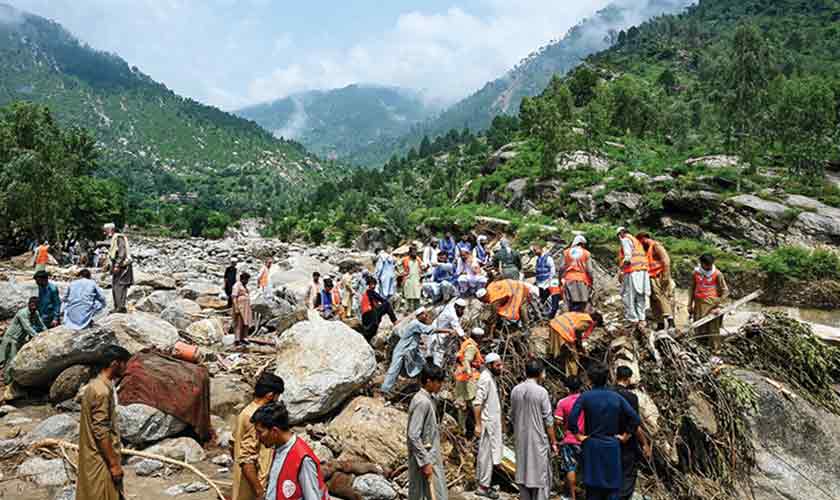
The first critical lesson is unmistakable: physical preparedness requires robust systems designed to absorb shocks. The floods in 2022, and now in 2025, exposed systemic fragilities in infrastructure. The failures arose from outdated flood defences, inadequate drainage systems and the absence of climate-proof standards for utilities and transport. The floods damaged or destroyed over 2.1 million homes, resulted in the death of more than 1.1 million livestock and swept away 13,000 kilometres of roads alongside 400 bridges. This widespread destruction not only crippled transport and communications but also exacerbated health crises with waterborne diseases and interrupted education, as many schools became emergency shelters for months.
Jamaica has developed a culture of preparedness over decades of climate threat exposure. Post-Ivan, Jamaica invested in building 850 emergency shelters—a notable number relative to its population—and focused on upgrading both permanent and temporary infrastructures. Their strategy centres on decentralising essential services and establishing rapid repair protocols. This experience shows that physical resilience is necessary but not sufficient; it must be paired with a financial safety net.
Disaster risk financing
The most significant divergence between Pakistan and Jamaica lies in the approach to disaster risk financing. Pakistan’s flood response in 2022 and 2025 was heavily dependent on reactive funding—unscheduled humanitarian assistance and donor support. This reactive model led to delayed fund disbursements, lengthening suffering and complicating reconstruction planning. Lacking widespread insurance penetration, Pakistan bore disproportionate uncompensated liabilities on state budgets.
Pakistan’s flood response in 2022 and 2025 has been heavily dependent on reactive funding—unscheduled humanitarian assistance and donor support.
In contrast, Jamaica’s experience following Hurricane Ivan stimulated pioneering steps toward proactive disaster risk financing. Jamaica formalised the cost of climate risk, ensuring predetermined funds are instantly accessible when disaster strikes. It is a core member of the all-important Caribbean Catastrophe Risk Insurance Facility, which offers parametric insurance coverage.
Parametric insurance is a game-changing innovation that triggers payouts based on objective hazard parameters, bypassing subjective and slow damage verification processes common in traditional insurance. This mechanism enables disbursements within days, ensuring rapid financial liquidity where it is most needed.
The Caribbean Catastrophe Risk Insurance Facility (CCRIF SPC) is set to make a record payout of $70.8 million (approximately J$11.4 billion) to Jamaica following the devastation caused by Hurricane Melissa. This payout, the largest single disbursement in CCRIF’s history, is announced to be made within 14 days to support recovery efforts after the disaster—hard for most Pakistanis to believe.
In late 2025, when Tropical Storm Melissa threatened Jamaica, the government swiftly activated its National Response Coordination Plan and leveraged CCRIF’s financial instruments to prepare social protection systems for immediate cash transfers if trigger conditions were met. Pakistan, if pursuing parametric insurance, would not need to coordinate regionally but could develop national or thematic parametric products tailored to local risks.
By utilising Cat Bonds and parametric insurance to transfer large-scale cyclone risk to global capital market, Jamica has exemplified modern climate governance. This approach prioritises protecting livelihoods and public finances while enabling faster restoration of stability and dignity for the most vulnerable.
Are there any takers in Pakistan?
Pakistan’s disaster risk financing
The federal government of Pakistan is gradually shifting its disaster risk management from the traditional, donor-dependent liability model towards a forward-looking financial liquidity model. Both the National Disaster Risk Reduction Strategy, developed by the NDMA, and the Disaster Risk Financing Strategy, developed by the NDRMF, have been endorsed by their governing bodies at the national level. However, they were created in parallel without explicit provincial buy-in, limiting their full potential. These documents serve complementary yet distinct functions: the NDRRS sets the policy and strategic direction, while the NDRMF’s financial strategy provides the essential funding mechanisms for effective implementation.
At the heart of these strategies is the ambition to scale-up parametric insurance, which guarantees rapid, pre-agreed payouts based on climatic triggers. While Pakistan does not yet have access to large-scale catastrophe risk pools like the CCRIF, it is piloting focused parametric insurance schemes in agriculture, such as Crop Parametric Takaful. This approach can extend to cover flood impacts on housing, standing crops, livestock, human lives, and rural micro-enterprises offering a smarter alternative to cash disbursements through programmes like the BISP, which have become routine after each flood.
Two major challenges limit progress: Pakistan lacks reliable climate and disaster data needed for effective insurance, and insurance coverage in key sectors like agriculture is very low (only about 9.5 percent). The country is still early in building capacity but aims to reform institutions and adopt evidence-based financial measures to guarantee funds for future climate shocks.
The way forward is unmistakable: The 2022 and 2025 floods in Pakistan, alongside Hurricane Ivan in Jamaica, highlight our shared vulnerability to climate extremes and the imperative for practical solutions. The Caribbean’s transition from reactive appeals to a prearranged, robust financial armour—through instruments like catastrophe bonds and CCRIF—is the blueprint that Pakistan must follow.
This is no longer a mere theoretical exercise or a matter of goodwill. Climate change management demands hard-edged, sophisticated financial governance, grounded in science, innovation and political resolve. Instead of cash disbursements or providing relief goods, national and provincial governments in Pakistan can adopt parametric insurance to protect the lives and livelihoods of its people in the perilous years ahead.
The writer is an Islamabad-based expert on climate change and water governance. He can be reached at atauqeersheikh@gmail.com.