

Print Story
X




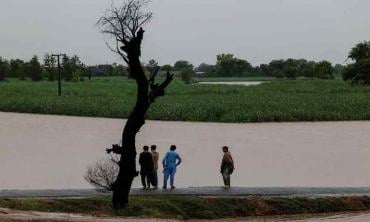
Rehabilitation has started following the recent floods in the Punjab. The impacted families say a lot more needs to be done to rebuild their lives
| I |
n Multan’s Basti Bakhsh Wala, Irshad Bibi sits in a small shop she has set up in a corner of her house. She recalls the days when floodwaters entered their area. She was at home with her two daughters and an ailing husband. When the water began to rise, the family decided not to leave their house. “We didn’t think it was right to abandon our house,” she says.
During the days the floodwater remained, Irshad Bibi stayed within the house with her husband and daughters, facing the uncertainty together. With her husband’s poor health keeping him confined to the bed, it fell upon Irshad Bibi to take charge and manage everything on her own. She was determined to keep her family safe.
“The water was six feet high. Some people say this flood was nothing compared to the one in 2014. But I have lived through that flood too. This was far worse,” she says.
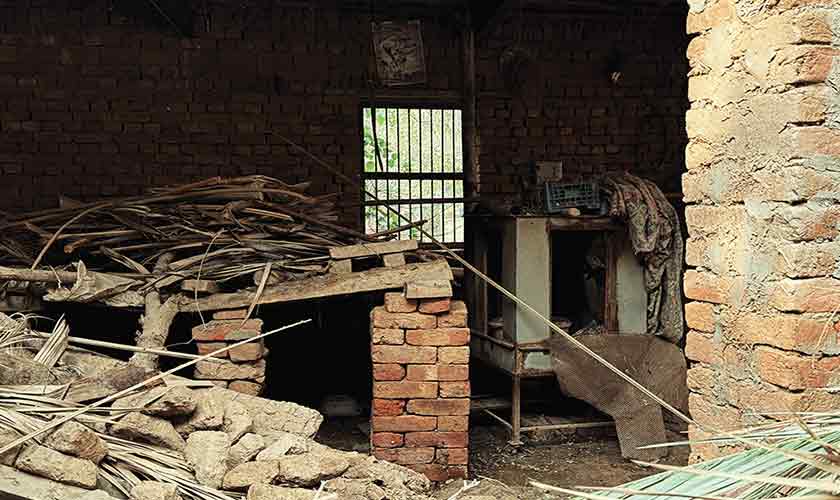
“I tried to build a barrier with my own hands,” Irshad Bibi says, describing how she piled mud around the walls of her house hoping to keep the water out. “But the water rose so quickly; nothing could stop it.”
While she and her family stayed in the house to protect their belongings, they went without food for two days. No help reached them. “There was no aid from the government,” she says. “We had to endure it.”
Basti Bakhsh Wala is one of the settlements of Multan’s flood-affected areas. The residents here are now trying to return to a normal life. Some families have lost their houses. Some other houses have sustained partial damage. Everybody here has been impacted; everybody has a tragic tale to tell. Children wander along the broken roads, trying to rediscover life and play again. Inside their houses, women are busy arranging and cleaning what little is left. Two months after the flood, the men can be seen working tirelessly, putting everything they have into rebuilding their homes from the ground up.
Gul Naaz, another resident of the basti, shares how she and her children survived fifteen days without electricity after returning home. “The children’s school has reopened,” she says, “but we have nothing left. It’s hard to return to normal life when everything is gone.”
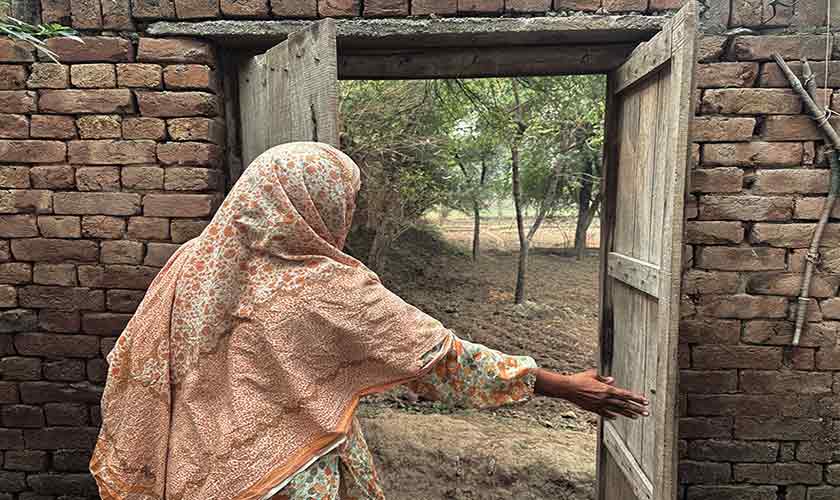
She recalls how she had to leave her house when the flood hit, unaware of the destruction it would leave behind. “I only realised the extent of the damage after I returned,” she says while showing the flood affected courtyard of her house.
“Now, as I try to put things back in order, I don’t even know where to begin.”
To evaluate the impact of the floods, the Assessment Working Group, under the leadership of the United Nations Office for the Coordination of Humanitarian Affairs, launched a Rapid Needs Assessment in all officially designated calamity-hit districts of the Punjab.
According to the UNOCHA report, the floods affected over 4.2 million people in the 18 most-affected districts. The highest number of affected people was reported in Muzaffargarh: 1.1 million people (26.9 percent of the total affected). It was followed by Jhang with 646,000 people (15.3 percent), Bahawalpur with 514,000 people (12.2 percent), Khanewal with 397,000 people (9.4 percent) and Multan with 347,000 people (8.2 percent).
During this monsoon season, according to the PDMA Punjab, some 4.7 million people were affected across 28 districts in the Punjab.
In Multan division, authorities have distributed Rs 730 million among more than 18,000 flood-affected residents. Many of the survivors say the government compensation falls far short of what’s needed to rebuild their houses and livelihoods.
Muhammad Ahmed, from Sher Shah in Multan, says his 25-marla house was destroyed in the floods. “The government has given me only Rs 75,000,” he says. “That’s barely enough to buy a single trolley of bricks.”
On the other side, near the bank of the River Chenab, Ghulam Nazik is rebuilding his home with his wife and three children. After spending a month living on a river embankment, the family has returned to the place where the floodwaters had swept away everything they had. They never had a land of their own. They are rebuilding on government land. It is the only place they can call home. Sometimes their shelter is made of just mud; at other, they use reeds to create a temporary roof.
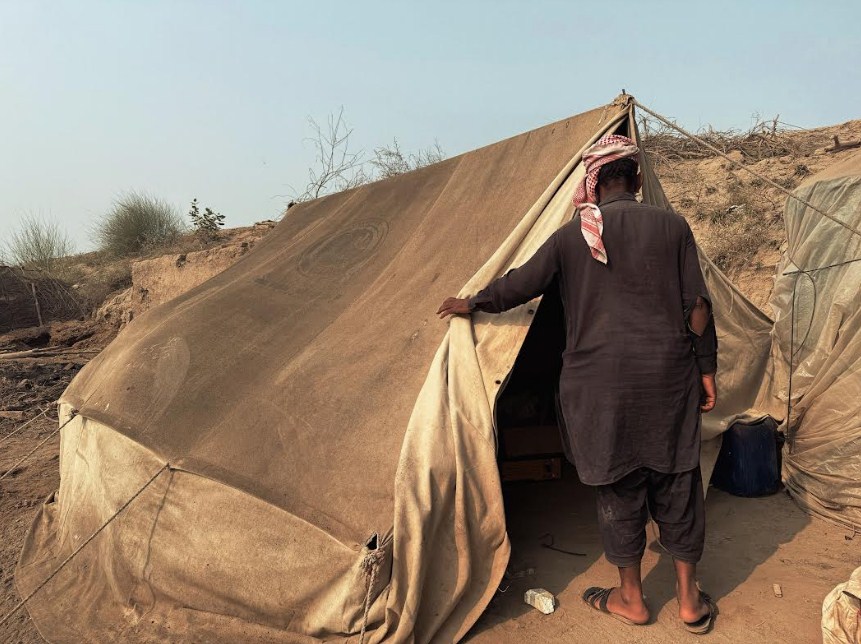
Currently, Ghulam Nazik and his family live in a tent provided by the PDMA. One of his children was born a few months before the floods hit. Nazik says, because they don’t own land, his family does not qualify for government compensation.
“We don’t meet the government’s criteria for aid,” he says. “We had been living like this before. We are back to living the same again. Our lives have been the same, moving from one place to another looking for shelter. It will probably continue this way.”
The writer is a freelance multimedia journalist in Multan.