

Print Story
X




The Doha and Istanbul talks have brought a faint glimmer of hope—a brief lull in the storm
| T |
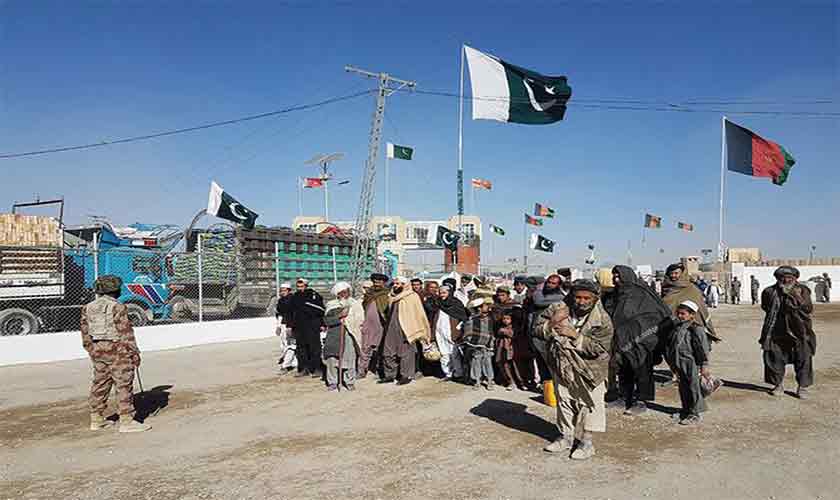
he border between Pakistan and Afghanistan has grown quiet for now, following days of tension and an exchange of fire. Trade activities remain suspended, but the guns have fallen silent and a fragile calm has returned to the frontier. After recent clashes that sent gunfire echoing through the mountains and smoke drifting over the valleys, the uneasy neighbours have once more agreed to a temporary ceasefire. Delegations from both sides are now sitting across polished tables in Doha and Istanbul, speaking of a peace that has eluded them for decades.
The latest round of talks after bloody border skirmishes earlier last month, is being described as a cautious attempt to calm tempers and restore confidence. No formal agreement has been signed yet but negotiators are working on a draft framework that includes border management, counterterrorism cooperation and the creation of humanitarian and trade corridors.
The truce followed an eruption of violence that began on October 11, when heavy fire broke out between border forces at several points along the frontier. The fierce clashes, which lasted for several hours, claimed lives on both sides. The violence also led to the closure of major crossing points, leaving hundreds of travelers, traders and patients stranded amid the chaos and uncertainty.
In the border village of Bacha Mina in Pakistan, residents still speak of that night in hushed tones. “We heard continuous shelling and gunfire; families were terrified and ran to nearby villages,” recalls Wazir Gul, who took his children and fled on foot.
After a month of closure, the Torkham border reopened temporarily to allow the repatriation of Afghan nationals. Authorities say the crossing remains closed for trade and pedestrian movement and that a full resumption of normal activity could take more time.
Over the last three years, officials from both countries have met more than a dozen times in flag meetings, followed by local elders’ jirgas, exchanged hundreds of diplomatic protests and signed paper after paper—all promising a stability that has not materialised. The 2,600-kilometre border has remained what it has always been: porous, unpredictable and scarred by mistrust.
In Doha, the discussions were framed as the last chance to draw a roadmap for lasting peace. Sources familiar with the meetings say the draft envisioned a Joint Border Coordination Office to enable direct contact between military officials, along with mechanisms to stop cross-border militancy. Another section proposed “peace corridors” for trade and humanitarian movement.
The counterterrorism clause demands that Afghanistan prevent any group, including the Tehreek-i-Taliban Pakistan, from using its soil against Pakistan. In exchange, Pakistan is expected to continue humanitarian support for Afghan refugees and tone down its rhetoric. Scepticism shadows every handshake.
“Both Pakistan and Afghanistan were compelled by external forces to sit together,” says journalist Najam Sethi. “Neither seems ready for the kind of compromise that could lead to real peace.”
History supports his doubt. Over the past two decades, countless border and trade agreements have been signed, violated and forgotten. Each ceasefire has been followed by another round of violence; each promise of cooperation has dissolved into accusations. Islamabad claims to have issued more than two hundred demarches to Kabul, protesting incursions and sharing intelligence about cross-border militants.
Nowhere are the consequences more visible than in the border districts of Khyber, North Waziristan, Mohmand, Orakzai and Bajaur. In Khyber’s Tirah valley, fierce fighting between security forces and terrorists has claimed the lives of civilians and soldiers and displaced hundreds of families.
“Three times China tried to mediate between the two sides,” says a senior Pakistani security official, “but the Afghan government didn’t take it seriously.” Traders say the ongoing tension with Afghanistan has not only dealt a huge blow to import and export and caused losses arunning into billions of dollars.
The core of the problem, experts say, lies in Kabul’s refusal to act against the TTP. “The Afghan Taliban will never move against their ideological brothers,” notes a border intelligence officer. “That’s why every peace effort collapses.”
Nowhere are the consequences more visible than in the border districts of Khyber, North Waziristan, Mohmand, Orakzai and Bajaur. In Khyber’s Tirah valley, fierce fighting between security forces and terrorists has claimed the lives of civilians and soldiers and displaced hundreds of families. With roads closed and transport scarce in the Tirah valley, many are walking for miles, leading donkeys and mules laden with their belongings.
Journalist Khialmat Shah Afridi from Bara says “women, children and the elderly are traveling on foot.” In response to a question, he replies, “We just want peace, nothing else.”
Police confirm a sharp rise in militant attacks since early 2025 in Khyber Pakhtunkhwa. “They come across in small groups, strike and disappear back into Afghanistan,” says the DPO of Khyber. “The terrain helps them.”
Torkham Customs Association president Mujeeb Khan Shinwari says the annual bilateral trade between Pakistan and Afghanistan stands at nearly $1 billion. He says the national exchequer is losing around Rs 700-800 million daily due to the ongoing border shutdown.
Trucks packed with perishable goods line up for kilometers; traders face mounting losses while daily-wage workers go hungry. Prices of food and other commodities have skyrocketed on both sides of the frontier. “The closure has broken our backs,” says Torkham Labourers Union president Farman Shinwari. He says they cannot survive like this.
Journalist Fakhar Kakakhel says that beyond Pakistan, regional powers are watching uneasily. “Iran, China and Uzbekistan are all worried about extremist elements operating from Afghan territory,” he says. “No country is immune to the spillover.”
Former ambassador Ayaz Wazir believes the answer lies not in foreign mediation but in tradition. “Send a jirga of tribal elders to Kabul,” he suggests. “The Taliban understand the language of culture and honour. A jirga can bridge the gap that diplomacy cannot.”
Wazir points to the example of Zalmay Khalilzad, the US envoy who negotiated with the Taliban. “He spoke their language and understood their customs,” Wazir says. “Pakistan should do the same.”
Journalist Mazhar Abbas says the Istanbul talks may calm things down temporarily, but peace will only come when the Afghan Taliban act against the TTP. “The mistrust between Islamabad and Kabul runs deep,” he says.
Former chief minister Aftab Ahmad Khan Sherpao agrees, saying this is not the first dialogue. “China has hosted talks before, but Afghan negotiators never have full authority. They’re just buying time,” he says.
In the tribal belt, efforts are under way to hold the line. Earlier last week, the army chief met with elders and leaders in Peshawar. For many observers, the equation remains simple. Senator Noor-ul Haq Qadri says, “If Afghanistan stabilises, Pakistan stabilises.” But that vision, echoed countless times over decades, still seems distant.
The Doha and Istanbul talks have brought a faint glimmer of hope—a brief lull in the storm. For now, the guns have fallen silent, the dust is settling over a weary frontier and the border is open for repatriating Afghans. But the peace remains fragile—a thin thread stretched across mountains that have known the sound of war for far too long.
The writer is a freelance journalist and social worker.