

Print Story
X




The tradition of setting verse to music reveals how poetry travelled
| P |
oetry in South Asia has rarely been confined to the page. Long before printed books or recorded cassettes, verse lived and moved through sound; spoken, sung and memorised. Most poets reached the common people not through books, but through the human voice. Their words were recited in gatherings, remembered by listeners and carried onwards by song.
For centuries, the society was steeped in poetry and the mode of its transmission was almost exclusively oral. The poet would read or recite his verses; the people would commit them to memory and pass them on. When those verses were sung, they reached an even larger audience, people who were poetically literate even if they could not read or write in the modern sense.
Among those who understood the power of sound was Muhammad Iqbal. His poetry, layered with philosophy and fervour, first stirred widespread attention when he wrote Shikwa. The poem, in which a believer dares to address God in protest, caused an uproar. Many accused Iqbal of blasphemy and demanded punishment. The controversy only amplified his voice. It drew readers and listeners who might otherwise never have engaged with his work.
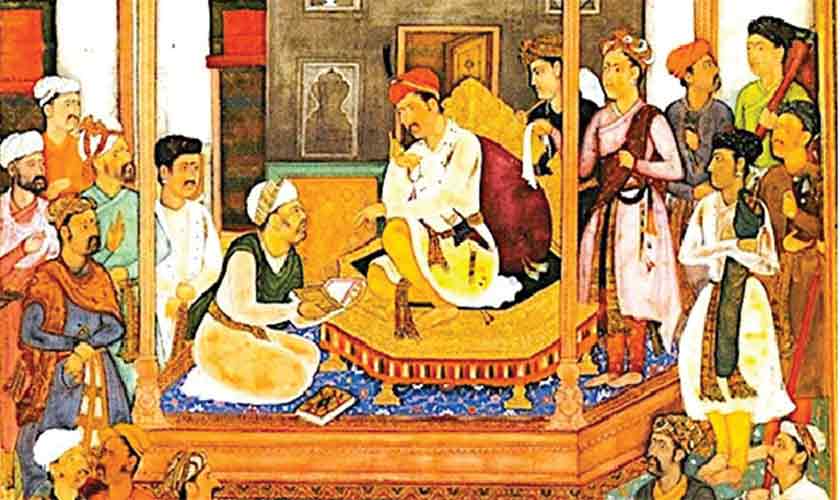
In the centuries before Iqbal, the singing of poetry had been central to cultural life in this part of the world. The tradition of performance in mehfils and salons was old and deeply embedded. The highest classical forms of music, dhrupad and khayal, had already moved beyond the confines of specific lyrics, allowing melody and rhythm to lead. In those forms, the composer, lyricist and vocalist were often one and the same. Yet in the urban salons, poetry was still sung. Often, it was the poetry of famous male poets performed by women.
Theatre in the subcontinent, too, was musical in essence. It relied less on plot and more on poetic association, with the story unfolding through song, gesture and dance. Characterisation and melody were inseparable. By the late Nineteenth Century, Dagh Dehlavi was among the poets most frequently sung in the salons. His sensuous verses, full of longing and wit, suited the ambience of those intimate, often aristocratic gatherings.
But by the end of the Nineteenth Century, winds of change were sweeping through the literary world. Reformist poets such as Altaf Hussain Hali began to challenge the conventions of romantic metaphor. Hali wrote with a new directness, addressing the lived realities of colonisation and decline. He believed that poetry should awaken moral and national consciousness rather than merely please the ear.
In the centuries before Iqbal, the singing of poetry had been central to cultural life in this part of the world.
Iqbal, who admired Hali, followed that trajectory. Though he himself was deeply musical, known to play the sitar and to recite his verses in a melodious tarannum, his subject matter and tone no longer suited the soft, seductive ambience of the salon. His poetry, filled with spiritual intensity and political command, seemed to demand public squares rather than drawing rooms.
This tension between poetry as song and poetry as call to action defined Iqbal’s relationship with music. While he was not against musical rendition, his verse resisted the languid mood of traditional performance. His was the voice of awakening, not of surrender. As one critic noted, “The mizaj (temperament) of the salon was supplication and seduction; Iqbal’s tone was that of command and declamation.”
It was only after the creation of Pakistan that Iqbal’s verses began to be widely set to music. His Shikwa and Jawab-i-Shikwa entered the repertoire of celebrated qawwals. With the rise of state-run media, especially Radio Pakistan, his poetry reached audiences on an unprecedented scale. The microphone replaced the mehfil and the poet of awakening found a fittingly national platform.
Even with these efforts, Iqbal has never been the favourite of composers and classical vocalists. His poetry is grand in thought, demanding in diction and steeped in moral gravity. Unlike the supple romanticism of Ghalib or Dagh, Iqbal’s cadences do not easily lend themselves to the ornamentation of raga and taal. His words call for contemplation more than performance.
This absence is revealing. Music and poetry, though long intertwined, part ways when their temperaments diverge. The poetic imagination of the salon was intimate and personal; often feminine in texture, about beauty, separation and surrender. Iqbal’s imagination was collective, masculine and prophetic. He was not a lover singing to the beloved but a thinker addressing a sleeping nation.
It is perhaps why, despite being revered in Iran for his Persian verse, Iqbal is seldom sung there either. The current cultural climate in Iran, deeply conservative in its interpretation of sacred art, offers little space for musical renderings of revered poets. His stature remains monumental, but largely silent.
Still, the journey of poetry from the sung verses of Dagh and the salons of Delhi to the broadcast voices of Iqbal’s Shikwa tells a larger story of how art adapts to the times. Where once a single melody might carry a verse from court to courtyard, later it was radio waves that bore the message. What remains unchanged is the ear: the human desire to hear poetry, not just read it.
Iqbal’s relationship with music, then, mirrors the transformation of the poetic tradition itself from the lyrical to the declarative, from the private to the public, from the sigh to the call.
The writer is a culture critic based in Lahore.