

Print Story
X




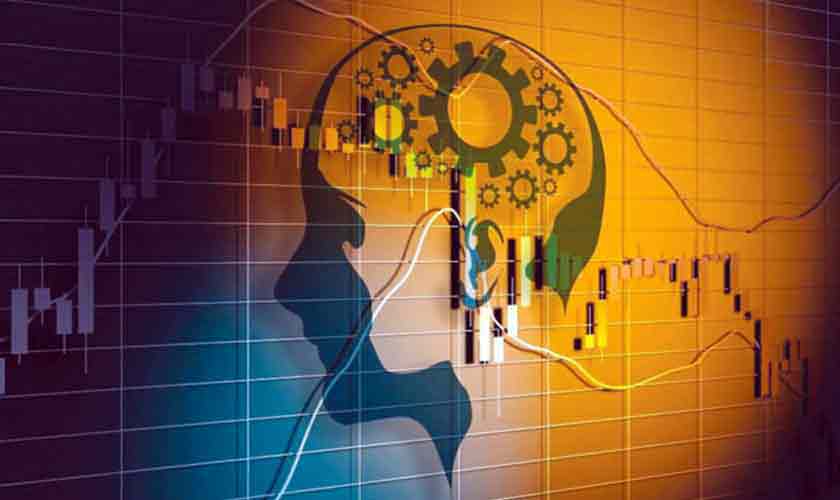
Artificial intelligence has become the new infrastructure of education around the world
| I |
f Pakistan is to escape the trap of low productivity and weak innovation, its universities must evolve into AI-powered ecosystems that link learning directly to economic transformation.
In Pakistan, our greatest untapped resource is not land or minerals, it is human potential. Our higher education system, built on memorisation and rigid pedagogy, continues to produce graduates who are often unprepared for the demands of a data-driven global economy. The future, however, offers a way out: AI-powered universities, where intelligent learning systems, faculty retraining and adaptive curricula create graduates who can think, innovate and lead.
This is not a technological whim. Around the world, artificial intelligence has become the new infrastructure of education, by transforming how students learn, how teachers teach and how knowledge becomes economic value. For Pakistan, adopting AI in higher education is not about modernity for its own sake. It is a matter of national survival in the age of intelligent economies.
AI is not merely a tool; it is a capability multiplier. In classrooms, it personalises learning and closes skill gaps. In research, it accelerates discovery. Across industries, it creates demand for an entirely new kind of graduate, one who combines creativity with computational reasoning.
Countries that have restructured their universities around this idea are already pulling ahead. Singapore’s National University, Georgia Tech in the US and Finland’s University of Helsinki have embedded AI into pedagogy, research and civic life. Through its AI Institute and Centre for Future-ready Graduates, the NUS has built a culture that connects technological learning with employability. The results are measurable: faster innovation cycles, higher graduate employability and deeper integration between academia and industry.
For Pakistan, this linkage is critical. Every policy document speaks of a knowledge economy, yet few connect the dots between knowledge and its creators — the universities. AI-powered learning offers the bridge between higher education and economic competitiveness. It can help Pakistan produce graduates who are not just degree-holders, but innovators, analysts and entrepreneurs.
In an AI-enabled classroom, teaching is no longer one-directional. Students learn through adaptive content that responds to their pace and needs; faculty use real-time dashboards to identify who requires support and why. Assessments shift from rote exams to problem-solving tasks supported by AI-driven feedback.
This is already happening at the University of Management and Technology in Lahore. We have taken the lead in embedding AI across teaching, learning and research. UMT’s digital ecosystem integrates AI tutors and AI mentors as well as AI-integrated humanoids and chatbots. We are also investing in an intelligent HR and learning management system and automated assessment tools. Faculty are being trained to co-design courses using AI, by using generative models to customise research prompts and evaluation rubrics.
This transformation is cultural as much as technological. The teacher is no longer a lecturer but a learning architect, guiding students through personalised, data-informed pathways. The university becomes not a place of delivery, but of design where each student’s journey is mapped, monitored and continuously improved.
Global universities provide instructive examples of how AI can be harnessed to deepen learning and broaden opportunity. Arizona State University, through its EdPlus division and AI Acceleration Lab, has built one of the most advanced digital learning ecosystems in the world. Its partnership with the National Institute of Technology, Lahore, under the Cintana Education Alliance, brings this expertise to Pakistan, by combining ASU’s AI-integrated pedagogy and employability model with NIT’s vision to shape a technology-driven higher education system.
LUMS offers valuable lessons on how to leverage private-sector agility to embed AI technology into research and teaching. Through its Learning Institute and the Learning and Teaching Excellence Initiative, the university has introduced analytics-driven teaching frameworks and faculty development programmes that enhance pedagogical innovation.
The NUST has demonstrated how AI and automation can drive applied research with industrial relevance. Through its National Centre of Artificial Intelligence and Technology Incubation Centre, the university has nurtured startups in robotics, predictive analytics and smart manufacturing showing how AI can serve as a driver of national productivity. Together, LUMS and NUST illustrate how strategic governance and technology integration can complement innovation-led teaching.
For the rest, the first step is faculty development. Technology without teacher capability is futile. Every university must invest in structured programmes that train educators to use AI responsibly and effectively, in curriculum design, feedback and student engagement. The Higher Education Commission can accelerate this transformation by introducing a national certification in AI for educators, similar to the digital pedagogy models used in the UK and Singapore.
Next, universities must establish project exchanges where ministries and companies post real-world problems for students to solve for academic credit. Capstone projects should no longer be theoretical; they should yield data, designs and prototypes that solve Pakistan’s energy, water and logistics challenges. AI can power this collaboration by matching skills with project needs and evaluating progress transparently.
An AI-powered education system must also be ethical, inclusive and human-centered. It should protect privacy, reduce bias and democratise access and opportunity. Universities must use AI to support rather than replace human judgment, especially in assessments and admissions.
Across the world, AI is being used to expand access: at Georgia Tech through affordable online degrees, at the University of Helsinki through open courses like Elements of AI and at NUS through accessible virtual learning spaces. These examples show that, if designed with intent, AI can narrow inequality.
AI also offers a way to dramatically enhance research output. Tools that automate literature reviews, visualise datasets and generate hypotheses can help researchers focus on originality rather than drudgery. When paired with human creativity, these systems can multiply both the pace and quality of research.
By embedding AI across its research enterprise, the ASU has accelerated collaboration and commercialization, turning academic discovery into public value. Pakistani universities can follow suit by forming AI-driven research consortia focused on national priorities such as agriculture, energy, governance and public health.
The transformation of higher education in Pakistan will not come from hardware or investment alone. It will come from a mindset shift: from teaching for memorisation to teaching for mastery, from compliance to creativity. Faculty must be empowered, students must be engaged and institutions must be mission-driven.
If we commit to this transition, Pakistan’s universities can become engines of national renewal producing graduates who build solutions rather than wait for them. The journey has begun in places like the NUST, the LUMS and the NIT. The goal should be a system-wide change that redefines what higher education means in this country.
AI is not the future of education; it is the present. The question is whether Pakistan’s universities will lead that future or be left.
Key takeaways/ sidebars
• AI-powered education links directly to national economic competitiveness and productivity.
• Faculty training, intelligent systems and research integration are the core of transformation.
• ASU-NIT partnership and initiatives at the NUS, the LUMS and the NUST, provide verified global and regional models for Pakistan’s context.
• AI must remain ethical, inclusive and anchored in human creativity.
The writer is the provost of the University of Management and Technology, Lahore