


Print Story
X




The debate over air purifiers highlights a troubling trend: citizens increasingly resorting to private solutions for a massive public problem
| A |
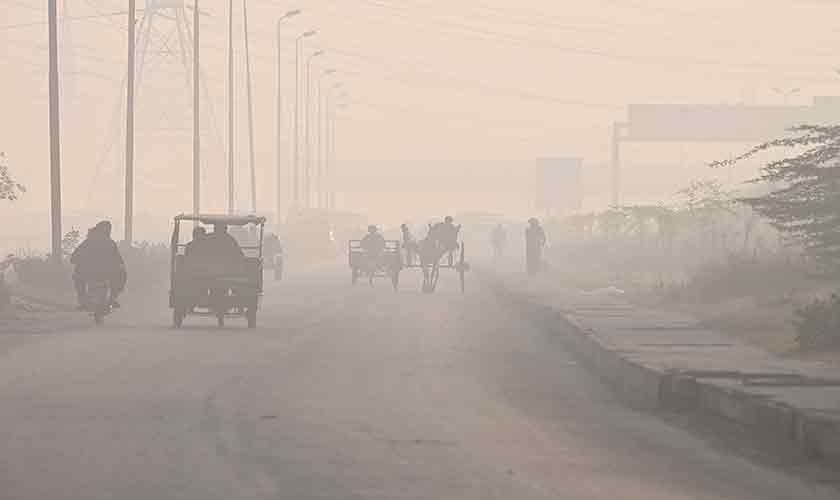
s the city chokes on thick, hazardous smog, making it the world’s most polluted, an electric appliance is becoming standard in offices and also in homes of the privileged: the air purifier.
Much like air conditioners offer refuge from summer heat, air purifiers are now being deployed as a necessary shield against toxic air.
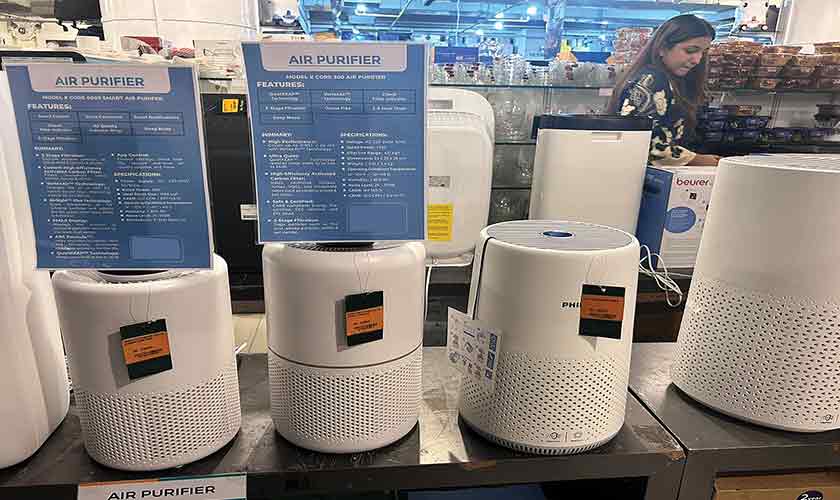
This increased reliance is reflected in market activity. Muhammad Nadeem, in charge of the electronics department at Al-Fatah on Mahmood Kasuri Road, confirms that sales have sharply grown over the last two years, peaking annually when the Air Quality Index crosses the “hazardous” level.
“Air purifiers are the new necessity in smog days,” says Dr Muzamil Hussain, an anaesthetist, who recently purchased 10 units for his home and clinic.
The use of these gadgets is not merely a public reaction; it is gaining official traction. A visit to the Environment Protection Agency website shows air purifiers listed among official health advisories, alongside staying indoors and using N95 masks when venturing out.
Dr Fareeha, Deputy Director (Lab) at EPA, notes that the department recommends the use of purifiers as part of a multi-pronged approach.
Environmental lawyer Ahmad Rafay Alam strongly supports the investment. “The city’s air is actively trying to kill its citizens,” he says. “The public needs to wear masks and invest in purifiers.”
| W |
While the devices offer a sought-after bubble of clean air, they are far from a comprehensive solution. Alam advises that purifiers are effective only when rooms are kept sealed, cautioning that this may lead to CO buildup, necessitating periodic, masked airing of the space.
Environmental lawyer Ahmad Rafay Alam strongly supports the investment. He advises that purifiers are effective only when rooms are kept sealed, cautioning that this may lead to CO buildup, necessitating periodic, masked airing of the space.
For Shamsa Mohsin, an asthma patient using a purifier since 2010, the technology brings significant caveats. “The installation of air purifiers is not a one-stop solution,” she warns, adding that a neglected machine can become a “dirty-fier,” with choked filters actively spreading contaminants rather than cleaning the air. She says that effectiveness requires diligent maintenance and ensuring the unit’s capacity matches the room size — a point echoed by retailers.
The most pressing issue, however, is affordability. Nadeem estimates that the cheapest models start around Rs 19,000, with good units easily costing Rs 40,000-50,000, in addition to recurring filter replacement costs. “This makes it a luxury item in a city of millions,” he admits, confirming that most buyers belong to the upper class.
| T |
The debate over purifiers highlights a troubling trend: citizens increasingly resorting to private solutions for a massive public problem. Alam points out the limited scope of relief: “The purifiers help those in the room and only while they are there. When you go outside, it will not protect you.”
Mohsin echoes this criticism. “Air is shared by everyone. For a public problem, a private solution like air purifiers cannot solve it,” she argues, concluding that while they help a specific high-risk group, they are not a solution to air pollution itself.
Yet, for those who can afford the defence, experts argue that doing something is better than nothing. Dr Hussain advocates for their use, especially on medical grounds. As sales continue to rise, these machines serve as a potent, albeit costly, symbol of citizens fending for themselves against an environmental enemy that remains largely unchecked.
Ahsan Raza is the editor of Minute Mirror. He can be reached at ahsanbudh @hotmail.com