


Print Story
X




Consistent contests against elite teams will not only enhance players’ skills but will also strengthen game awareness
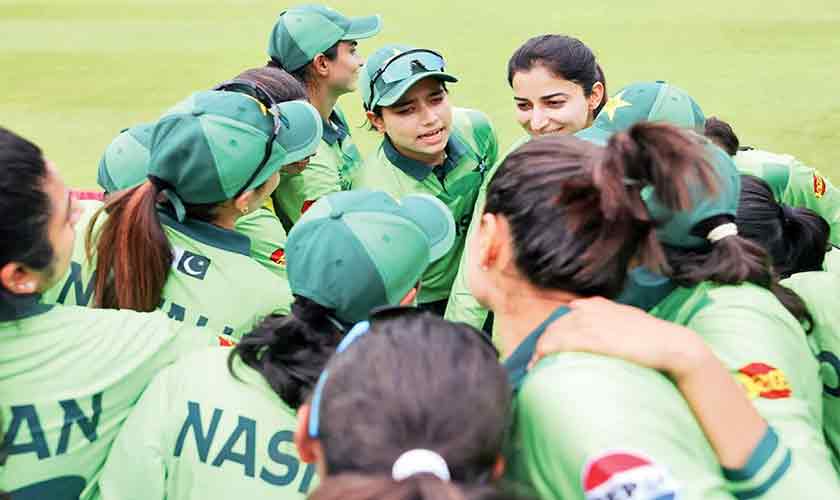
Today marks the culmination of the Women’s T20 World Cup 2025, being held in India. The Pakistan women’s cricket team concluded the tournament at the bottom, finishing without a victory in a tournament.
Throughout the tournament, Pakistan faced tough challenges, suffering losses to Bangladesh by 7 wickets, India by 88 runs, and heavy defeats against Australia and South Africa by 108 and 150 runs, respectively. Notably, three of their matches-against England, New Zealand and Sri Lanka-were washed out due to weather, which may have impacted their overall standing.
The performance of Pakistan’s women cricket team at the international stage has been a topic of concern and analysis for many cricket enthusiasts and analysts. Despite occasional flashes of brilliance, the team has consistently struggled to meet the standards set by their counterparts.
Inconsistent team selections, frequent coaching changes, and lack of stability have contributed to the inability to establish a core group of competent and experienced players.
Pakistan women team, despite playing international cricket for over one and a half decades, has never reached the top five positions. Pakistan women cricket team made its One-day international debut in 1997, but has never qualified for the World Cup semi-finals.
The Green-shirts have failed to win a single match against top three teams: England, Australia, and New Zealand so far. Even with other teams their record is not so impressive.
Against arch-rival India, Pakistan women cricket team has never won any One-day International in 12 matches played between the two teams.
Overall, Pakistan women team has played 220 One-day Internationals so far, won only 65 matches and lost 148. They are placed on the 8th position in the ICC ODI ranking while India are on the third position.
Pakistan women team did not get recognition in the international circuit because Pakistan Cricket Board (PCB) has not provided the same resources, funding, and institutional support for the women’s national team as it has for the men’s team. This includes inadequate training facilities, coaching, and exposure to high-level international competition.
Improving infrastructure, breaking down social barriers, providing more opportunities and ensuring consistent governance and support are essential steps in this direction.
With the right investments and cultural shift, Pakistan has the potential to develop a competitive women’s cricket team that can stand among the best in the world. However it will require a concerted effort from all stakeholders, including the PCB, the government and society to create an environment where women’s cricket can thrive.
The absence of dedicated cricket academies and proper grounds hampers the development of players from a young age, putting them at a disadvantage compared to their international teams.
The lack of professional opportunities and financial incentives further exacerbates the challenges faced by the Pakistan women’s cricket team. This lack of financial stability forces many talented players to abandon their cricketing careers in favour of more stable and lucrative professions. The absence of a robust domestic cricket structure also means fewer opportunities for players to gain competitive experience.
The PCB’s commitment to women’s cricket has been questioned at times, with limited investments in grassroots development, coaching, and player welfare. Without sustained and consistent support from the governing body, it is challenging for the team to compete at the highest level.
Australia, England, and India have invested heavily in their women teams, providing them state-of-the-art facilities, professional contracts and comprehensive domestic leagues. These investments have translated into improved performances and greater competitiveness on the international stage. For Pakistan to bridge the gap, a similar level of commitment and investment is required.
In contrast Pakistan women’s cricket team has faced numerous challenges that hinder its ability to compete on the same level.
Effective coaching is vital for the growth of any sports team. The Pakistan women’s cricket team has faced challenges in securing high-quality coaching staff and development programmes.
The absence of experienced coaches and structured development programmes in Pakistan limits the potential for player growth and skill enhancement. Without access to quality coaching, players struggle to develop their techniques and understanding of the game, which leads to inconsistent performances on the international stage.
Currently, Pakistan’s women cricketers play most of their matches in familiar sub-continental conditions, which limits their ability to adapt to fast pitches, bouncy tracks and challenging weather abroad. Without regular exposure to such environments, players struggle to adjust their game plans and techniques when facing stronger opponents in major tournaments.
Top teams like Australia, England and South Africa have well-structured domestic systems and frequent international tours that sharpen their players’ competitiveness. Pakistan’s women need similar opportunities to gain experience and resilience. The Pakistan Cricket Board (PCB) must prioritise arranging bilateral series and training camps overseas to bridge this gap.
Consistent competition against elite teams will not only enhance players’ skills but also strengthen their mental toughness and game awareness. Only through sustained international exposure can Pakistan’s women’s cricket truly evolve and emerge as a formidable force on the global stage.
One of the major reasons behind the underperformance of Pakistan’s women’s cricket team in international tournaments lies deeply rooted in the cultural fabric of our society. In many parts of Pakistan, women are still discouraged from participating in outdoor sports. Traditional attitudes often confine them to domestic roles, viewing athletic pursuits as inappropriate or unnecessary for women. As a result, young girls rarely find opportunities, encouragement or facilities to nurture their sporting talents from an early age.
Competing internationally requires not just skill, but also mental strength, cultural adaptability and regular participation in foreign tours. When female athletes grow up in an environment where mobility and autonomy are restricted, they face immense psychological and social barriers in performing under international pressure.
To truly uplift women’s cricket, Pakistan must challenge these societal norms. Families, educational institutions, and policymakers need to support and normalize women’s participation in sports. Only when equal opportunities are given from the grassroots level will Pakistan’s women cricketers be able to compete on equal footing with their international counterparts.
There have been efforts to promote women’s cricket in Pakistan, but significant strides are still needed to bridge the gap between the Pakistan team and its more successful counterparts like India, Australia, South Africa and England.
The Pakistan Cricket Board (PCB) should take women cricket seriously, start a young cricketers hunting programme and provide good facilities and infrastructure to develop the skills of women cricketers.
The performance of Pakistan’s women’s cricket team cannot improve significantly until they regularly play against top international sides such as Australia, England, South Africa and New
Zealand - particularly on their home grounds.
Competing against world-class teams in foreign conditions is essential for developing the technical skills, confidence, and temperament required at the highest level.
khurrams87@yahoo.com