

Print Story
X




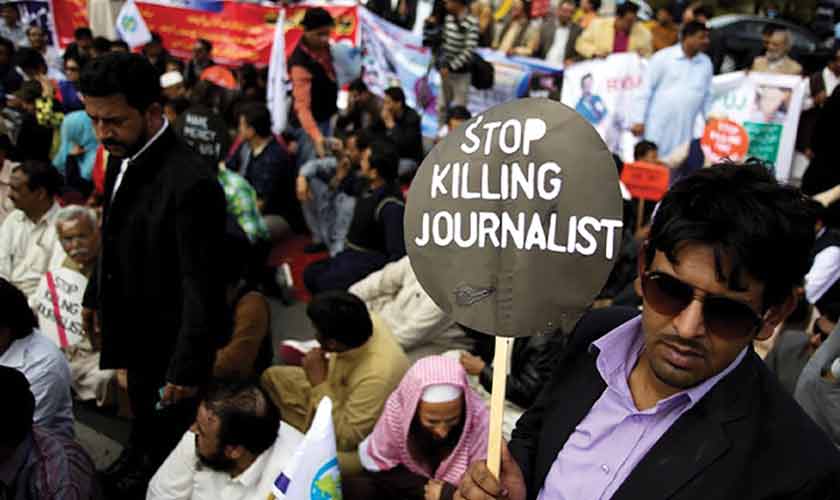
Over 150 journalists and media professionals have been killed in the past 25 years in Pakistan. Their families continue to fight for justice
| F |
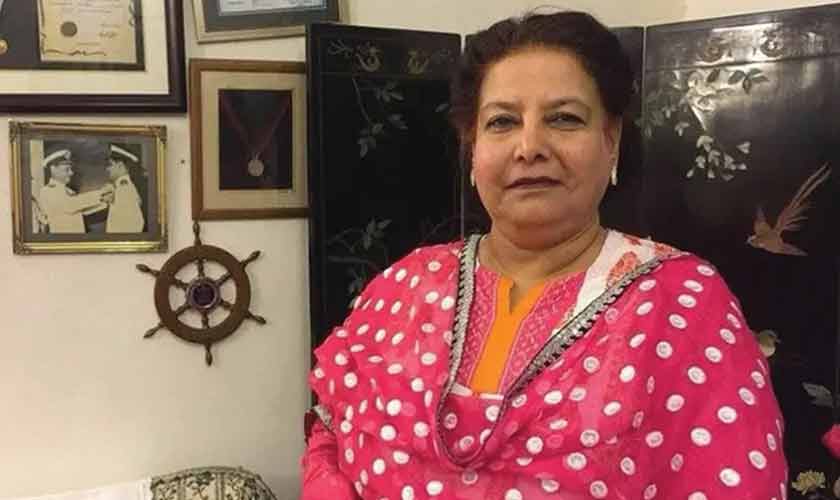
or three years, Riffat Ara Alvi, mother of slain journalist Arshad Sharif, had been looking for justice for her son’s killing in Kenya. She breathed her last on October 26, three days after her son’s third death anniversary. Alvi was not the only one seeking justice; mothers, fathers, widows, sons and daughters of over a hundred journalists who have been killed in Pakistan from 2002 to 2024 are in the same pursuit. That justice has not been dispensed in any of these cases except for Wali Khan Babar’s.
Arshad’s case came to the limelight because of his prominence. His assassination, blamed on Kenyan police, was investigated by multiple international teams. The Supreme Court of Pakistan also took serious note and last year sought daily reports. Now, all those efforts appear to have been in vain.

Hayatullah Khan, a reporter from North Waziristan, was abducted in 2005. His body was found six months later, handcuffed, with a bullet wound to the head. His wife, Mehrunnisa Hayat, took up the fight for justice but was killed in a mysterious explosion near her home in 2007, leaving their five children orphaned. The case remains unsolved.
According to a Freedom Network report released in 2024, Pakistan has witnessed over 150 killings of journalists and other media professionals in the past 25 years. The federal and Sindh governments have enacted laws to protect journalists and media professionals, to address international concerns and to support local human rights defenders. Under the two laws, the Federal Commission for the Protection of Journalists and Media Professionals and Sindh Commission for the Protection of Journalists and Other Media Practitioners have been constituted.
But these measures have not improved the situation.
On the one hand, governments enact laws and constitute bodies to protect journalists and media professionals, on the other, they enact draconian laws such as the Prevention of Electronic Crimes Act to empower the state to gag the media.
In the Punjab, provincial defamation laws were enacted in 2024, inviting strong criticism by journalist unions, rights groups and lawyers.
A recent report by the Freedom Network should be an eye-opener for officials as well as watchdog bodies. “There has been an alarming increase of around 60 percent in violations against the media in Pakistan in the year leading up to the International Day to End Impunity of Crimes against Journalists, falling on November 2, 2025, compared to the preceding year. “
On the one hand, governments enact laws and constitute bodies to protect journalists and other media professionals, on the other, they enact draconian laws to empower the state to gag the media.
The Annual Impunity Report 2025 of the Freedom Network, produced with the assistance of International Media Support, indicates a worsening environment of freedom of expression and safety of journalists in the country.
“At least 142 cases of violations were documented, marking a nearly 60 percent increase compared to the previous year. The hostile environment for the media, which intensified after the February 2024 general elections, has made almost every region in Pakistan unsafe for journalism, with incidents reported across provinces and territories,” the report said.
The report also documented at least 36 formal cases against 30 journalists and media practitioners under the controversial Prevention of Electronic Crimes Act during the first year of the current federal government. The Act was amended through the parliament in early 2025 to make its punitive provisions harsher.
Of these 36 cases, 22 cases were registered under the PECA and 14 under the Pakistan Penal Code, with some individuals facing multiple charges. Most PECA cases targeted practitioners in the Punjab. All the PPC cases were reported in the Punjab.
The Impunity Report 2025: Crime and Punishment in Pakistan’s Journalism World is Freedom Network’s annual flagship publication. It provides valuable insight into the world of impunity for crimes against journalists and efforts to combat the menace that undermines freedom to report freely and professionally. The report covers violations against journalists and media across Pakistan from November 2024 to September 2025.
“The use of legal framework to crack down on free expression is a tool the federal government is now using excessively, targeting critical voices. Pakistan cannot afford to silence critical media, which is equally important in a democratic dispensation,” Freedom Network’s executive director Iqbal Khattak said in response to the increasing legal cases against journalists under PECA and other laws.
The most targeted medium was television, followed by print and digital media, according to the report. One radio journalist was also reported to have been impacted.
Journalists and media practitioners in Pakistan continue to brave attacks and threats by state and non-state actors as well as legal cases drawn up under draconian laws. The state must realise that the victimisation of journalists erodes the credibility of its claims of democratic governance. History will remember those in power corridors as the creators of black laws and perpetrators of injustice.
The writer is a senior journalist, teacher of journalism, writer and analyst. He tweets at @BukhariMubasher.