

Print Story
X




Natalia Ginzburg’s fiction reveals how detachment can expose the deepest truths about love and loss
| S |
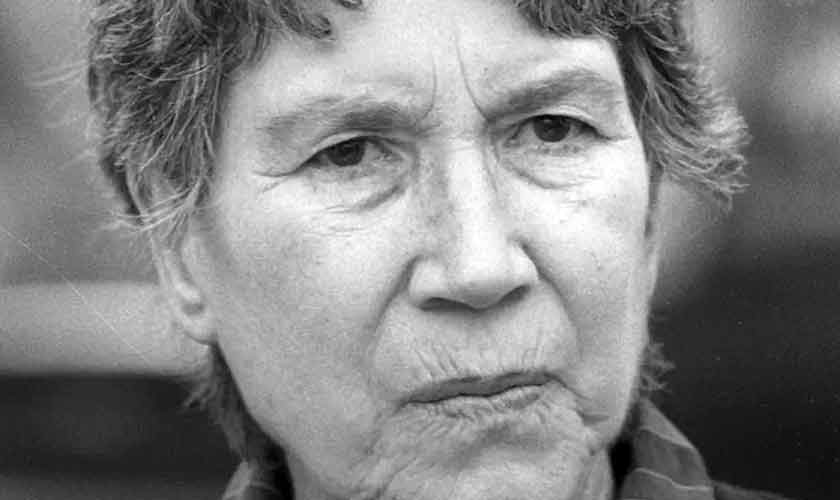
ince new editions of her translated works were released a few years ago, Italian novelist, essayist and playwright Natalia Ginzburg has experienced a striking resurgence in the English-speaking world. The renewed interest in Ginzburg’s oeuvre has introduced a new generation of readers to her original, contemporary voice.
Reading Ginzburg is akin to a warm embrace, stirring an immediate sense of recognition. Her writing carries a resonance that transcends context or circumstance. In an essay for Times Literary Supplement, titled Violent Vocation, British novelist and critic Rachel Cusk observes that readers may “come away [from Ginzburg’s work] feeling [they] know the author profoundly, without having very much idea of who she is.” Writer and cultural historian Lara Feigel compares this “swift readerly intimacy” with Ginzburg’s body of work with reading the work of Elena Ferrante – another Italian woman novelist revered worldwide. In her insightful piece for The Guardian, Feigel remarks that immersing oneself in Ferrante’s work “can seem like making a new friend [whereas] reading Ginzburg is more like finding a mentor.”
The strength of Italian novelist, essayist and playwright’s work lies in its refreshing simplicity. Ginzburg possesses a remarkable ability to filter her stories from the straw of everyday experience, thereby achieving a delicate balance of humour and tragedy. Her oeuvre draws attention to the turbulence and trivialities of family life. With its emphasis on the loss of time-honoured societal values, Ginzburg’s fiction decries the disintegration of the middle-class family. Her singular focus on ‘household concerns’ shouldn’t lead sceptics to regard the Italian novelist as merely a chronicler of domestic realities. As the Irish novelist Colm Tóibín notes in his introduction to Voices in the Evening, one of Ginzburg’s most popular novels, the emergence of Fascism and World War II cast a dark shadow over her imagination. “When the war was over, Ginzburg became interested in more mundane manifestations of conflict,” Tóibín writes. “[These included] conflicts within families, between men and women, between parents and children, between competing versions of reality [and] between competing narratives of the past.”
Family Lexicon, Ginzburg’s memoir, presents a heart-breaking account of how the war years altered the course of her own life. Her family vehemently opposed Fascism and paid a steep price for it. Her father and brothers were imprisoned for orchestrating anti-fascist activities. In addition, her first husband, Leone Ginzburg, who had lost his position at the University of Turin over his refusal to join the Fascist Party, was sent into exile to a remote village in Abruzzo. After Mussolini’s fall from power, Leone was captured by Nazis in Rome and tortured to death.
Though haunted by the upheavals of the World War, Ginzburg’s fiction channels these traumas through the lens of household and familial dynamics. This may seem rather unusual to some readers since the Italian novelist had an abiding interest in political activism and even served in parliament for many years.
In terms of literary craftsmanship, Ginzburg adopts a unique approach to storytelling. Most of her stories employ either the first-person or third-person narration to preserve the detached gaze of a clinical observer of key events.
Ginzburg’s first-person narrators are usually women. However, they are neither the archetypal protagonists nor pariahs we encounter in fictional narratives. Instead, they are on the fringes of the story, acting as seemingly inconsequential bystanders to events fuelled by other characters. More often than not, these narrators have a peripheral role in the families depicted in Ginzburg. At times, they emerge as witnesses to a collective experience, rather than an individual one. Even so, they are, like the reader, powerless in anticipating any unexpected twists and turns in the plot.
Their marginality becomes their strength. Even if they don’t take centre-stage, Ginzburg’s first-person narrators are able to observe what escapes the notice of the other characters. They remain the true custodians of the narratives and storytelling becomes a subtle means through which they can assert their authority within their families.
In Valentino, the narrator is Caterina, the youngest sister of the titular protagonist. Caterina’s impoverished parents harbour the misguided belief that Valentino is “destined for greatness.” With a dispassionate gaze upon her brother’s life, the narrator reveals how her parents’ ambition for their son culminates in disappointment. In Sagittarius, the narrator appears to be a disembodied presence, an unnamed daughter who observes vicariously as her widowed mother moves to the city and pursues her ambition to establish an art gallery.
Not all of Ginzburg’s first-person narrators are passive spectators of others’ lives. In some novels. Some of them assume the role of protagonists, but are pushed to the margins by forces beyond their control. The Road to the City, her debut novella, is filtered through the voice of Delia, a neglected seventeen-year-old who dreams of marrying a wealthy man and owning an apartment in the city. Her youthful idealism and misplaced belief in love ultimately become her undoing. Although she eventually marries the father of her child, Delia struggles to escape the undercurrent of disillusionment and grief that comes to define her life.
At first glance, the protagonist of The Dry Heart, a woman who shoots her husband after enduring many years of neglect and infidelity, seems to be carving out her own path. However, she continues to be haunted by the spectre of an unhappy marriage and a life squandered on a difficult spouse. As this explosive psychological thriller winds to a close, the protagonist begins writing in a notebook, her actions marked by an air of ambiguity. “I asked myself for whose benefit I was writing,” she says. “Not for Giovanna or Francesca, not even for my mother. For whom, then? It was too difficult to decide and I felt that the time of conventional and clear-cut answers had come for ever [sic] to a stop within me.”
Voices in the Evening features Elsa, a first-person narrator who comes across as an all-knowing busybody. By recounting the details of other people’s lives before delving into her own misfortunes, Elsa sets the stage for her doomed romance with the cravenly Tommassino. “I have the feeling,” her lover confides in her, “that they have already lived enough, those others before me; that they have already consumed all the reserves, all the vitality that there was for us.”
Ginzburg’s third-person narrators are omniscient presences who freely delve into the lives of characters, extracting backstories and trivial details with an almost reckless abandon. Even then, the Italian novelist doesn’t allow her third-person narrator to traverse without limits. Her two novellas, Family and Borghesia, employ sparse descriptions and clipped, factual sentences, which may prevent characters from leaping off the page and achieving a three-dimensional depth, a conscious decision that preserves Ginzburg’s characteristic air of detachment.
With their disarming directness, Ginzburg’s fictional landscapes build on experiences that are, by turns, familiar, tragic, unsettling and achingly human.
The writer is a freelance journalist and the author of No Funeral for Nazia