

Print Story
X




There has been a sharp uptick in incidents of violence against the Ahmadi community
| S |
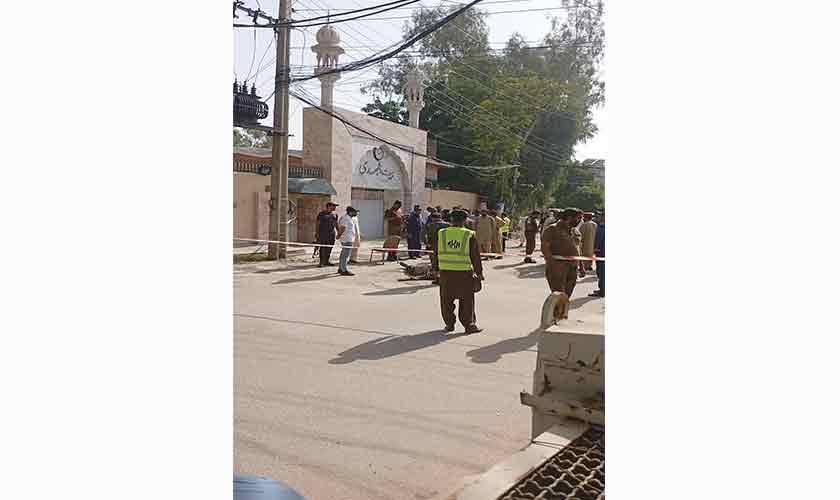
ecurity arrangements have been significantly tightened by the police and the Ahmadiyya Jamaat, after a gunfire attack on October 10, at Bait-ul-Mahdi, an Ahmadi place of worship in Chenab Nagar, Chiniot.
The shooting came after the Friday prayers. Aiming at the Ahmadi place of worship, the assailant managed to injure six volunteers.
Amir Shahzad*, a resident of the area and a member of the Ahmadi community, said that he was in the building with his seven-year-old son when the shooting started.
“As soon as the gunfire began, there was panic and confusion. I was petrified, afraid that the attacker might manage to enter the building. I had a child with me. More than myself, I was worried for his safety,” he said.
Shahzad* said that while most members of the Ahmadi community had been mentally prepared for such incidents, witnessing violence firsthand had shaken him and left his son with trauma.
“We have faced discrimination and certain restrictions since childhood. However, the intolerance is getting worse,” he said. “I don’t want my children to grow up like this. I want them to have a peaceful future,” he added.
The assailant was killed on the spot in retaliatory fire by police and security guards. The police later registered a case under Sections 324, 427, 353, 186 and 13-2(A) of the Pakistan Penal Code, along with Section 7 of the Anti-Terrorism Act, at the Faisalabad Counter-Terrorism Department police station.
District Police Officer Abdullah Ahmad told The News on Sunday that all those injured in the incident were stable had been discharged from the hospital. He added that early investigations had revealed that the attacker was not affiliated with any of the known extremist organisations, although an FIR had been previously registered against him in Lahore. Two complaints were lodged against him. One was for electricity theft and the other was 489 F (bogus cheque).
“He was apparently influenced by viral social media hate content. He acted alone,” the DPO said.
DPO Ahmad noted that the worship place was located in a busy commercial area near a major Ahmadi community welfare hospital that attracted patients from across the country. “It is a busy place,” he said, “always crowded.”
“In Chenab Nagar, there has always been a security alert. However, the community never reported any recent issues. After this incident, we’re bolstering our arrangemnts. More CCTV cameras are being installed and connected to the Safe City system to enhance surveillance,” he added.
Frequent suspects
Tehreek-i-Labbaik Pakistan has been named in most of the incidents targeting the Ahmadi community this year. One such case occurred on September 28 in Pero Chak village of Sialkot, where five members of the Ahmadi community were injured and several properties were set ablaze following a dispute over the burial of a deceased Ahmadi woman in the local graveyard. A case was registered at the Motra police station against ticket holder of TLP (now proscribed) Hafiz Rafaqat and 200 unidentified accomplices.
On August 15, police in Dijkot, Faisalabad, had registered a case under the Anti-Terrorism Act against more than 300 TLP workers for setting fire to two Ahmadi places of worship. In July, Sialkot police had registered a case against 142 TLP members for attacking an Ahmadi worship place in Daska.
Earlier, on August 16, 2023, hundreds of TLP activists and local leaders were charged with organising mob attacks and arson targeting churches and Christian homes in Jaranwala.
Maqsood*, a human rights defender in Chiniot, said that relations between Muslims and Ahmadis in Chiniot are mostly peaceful. However, tensions rise every year during a conference held in the last week of October where inflammatory speeches are often made against the Ahmadi community.”
“As soon as the gunfire began, there was panic and confusion. I was petrified, afraid that the attacker might manage to enter the building. I had a child with me. More than myself, I was worried for his safety.”
Commenting on the recent spike in violence against the Ahmadi community, he said: “Chiniot is not considered a TLP stronghold. TLP sympathisers are significantly more active in seminaries located in Sargodha and Faisalabad districts. This has contributed to a rise in violence against Ahmadis and other religious minorities.”
Approached for information on the measures taken by the district administration to prevent hate speech the conference, Deputy Commissioner Safiullah Gondal did not respond.
Journalist Aoun Sahi, who has covered religious extremism and intolerance since 2005, told TNS that targeting religious minorities, under the pretext of alleged blasphemy, is an old tactic. It is often followed by social pressure to shield the perpetrators from accountability.
“The TLP has refined this strategy and has been using it to pressure the state through social media,” he said.
Sahi warned that religious intolerance in Pakistan had increased over the recent years. “Religious intolerance has, in fact, also been redefined. There was time when only minority communities were targeted; now even members of the majority community feel constrained in expressing their views on religious issues”
Sahi said the state must have a firm policy against extremism and terrorism in the name of religion and it must enforce the law equally. “Only through consistent enforcement can such incidents be prevented in the future.”
He pointed out that, in cases of this nature, the prosecution is often slow and very few people are actually convicted. “Therefore, the government must also focus on enhancing the capacity and effectiveness of the relevant institutions.” He further said that efforts should also be made to raise public awareness in order to promote interfaith harmony in the society.
Restrictions on Ahmadis
Promulgated on April 26, 1984, Ordinance XX amended the Pakistan Penal Code to criminalise certain activities for Ahmadis. The ordinance made it a criminal offence for Ahmadis to identify themselves as Muslims, punishable under blasphemy laws,” states a 2024 report titled Situation Report: Monitoring the Plight of the Ahmadiyya Community released by the National Commission for Human Rights.
“Since then, Ahmadis have faced harassment and persecution despite the stated policy of the government to provide safeguards for realisation of the constitutional guarantees to all religious minorities. As such, there have been numerous reports showing that there is a hostile climate that contributes to mob violence, vigilantism and numerous accusations of blasphemy against the community.”
NCHR report further reveals that data on human rights violations provided by the community from 1984 to September 2023 shows that 280 Ahmadis have lost their lives due to targeted violence and an additional 415 have faced assaults because of their faith.
The assault on the religious identity of Ahmadis is evident in the demolition of 51 Ahmadi worship places and the sealing of 46 others by authorities. Furthermore, 39 worship places were set on fire or damaged and 18 forcibly occupied, revealing a systematic effort to eradicate spaces of worship integral to the community.
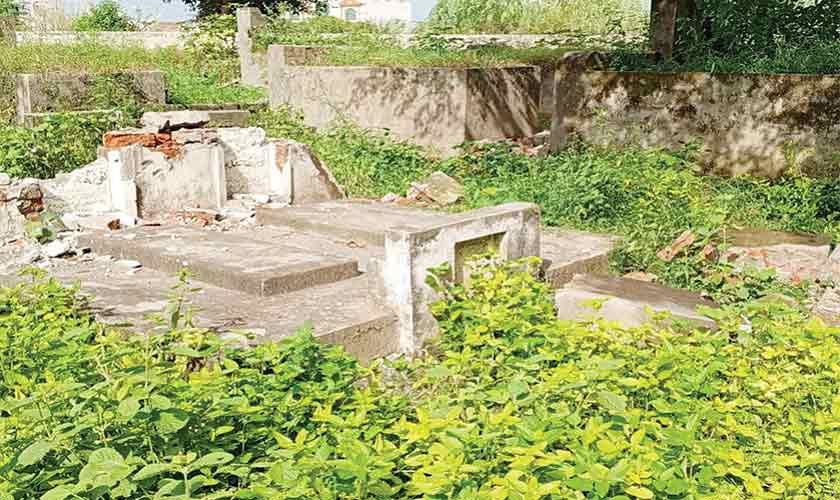
In some cases, the hostility has extended to the dead. 39 bodies of Ahmadis have been exhumed after burial; burial has been denied in a common cemetery for 96 individuals. 99 Ahmadi graves were desecrated in 2023.
Way forward
The NCHR has made comprehensive recommendations aimed at ensuring the full protection of human rights and religious freedom of Ahmadi community as well as other religious minorities. The Commission emphasised the strict implementation of Article 20 of the constitution, which guarantees freedom of religion and called for an oversight mechanism dedicated to safeguarding the rights and security of Ahmadis in coordination with relevant institutions and law enforcement agencies.
It urged the government to uphold its commitments under international human rights frameworks such as the ICCPR, ensuring equal protection for all citizens regardless of faith.
The NCHR also recommended firm action against extremist elements promoting hate speech and proposed a robust regulatory framework to curb the spread of religious intolerance in educational institutions.
The Education Departments were advised to address discrimination against Ahmadi students and to introduce curriculum reforms that promote tolerance and inclusivity.
The Commission called for impartial prosecution of those responsible for attacks and desecration of Ahmadi worship places and graveyards and capacity building through specialised training for police to protect minority worship sites.
Additionally, the NCHR suggested nationwide awareness campaigns to foster interfaith harmony and urged authorities to regulate hate speech against Ahmadis across mainstream and social media.
*Names have been changed to protect the sources
The writer has been associated with journalism for the past decade. He tweets @naeemahmad876