

Print Story
X




Iran announces official end to 10-year-old nuclear fuel agreement
| T |
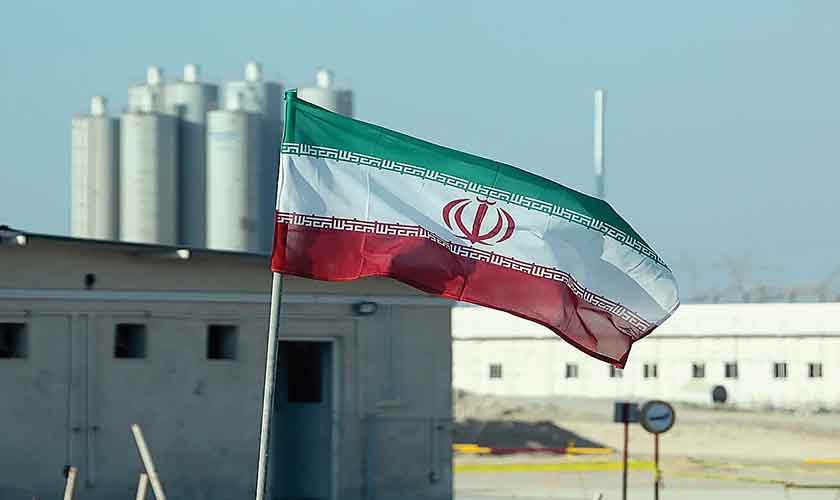
he Iran-Europenuclear deal, an effort spanning over two decades, came to an end on October 18, also known as the ‘termination day’ of the Joint Comprehensive Plan of Action), when Tehran announced the end of the decade-old nuclear agreement. The JCPOA, informally known as the Iran nuclear deal, was signed in Vienna in 2015. The signatories included Iran, the US, France, Germany, the UK, China and Russia. There was also participation in the negotiations by the European Union and the United Nations.
Iran’s Ministry of Foreign Affairs issued a statement, saying: “all of the provisions [of the 2015 deal], including the restrictions on the Iranian nuclear programme and the related mechanisms are considered terminated.” However, the statement also noted that “Iran firmly expresses its commitment to diplomacy.”
The JCPOA,also known as the Iran nuclear deal, came into effect following the adoption of United Nations Security Council Resolution 2231. The agreement required Iran to scale down its uranium-enrichment centrifuges, significantly cut its stockpile of enriched uranium and allow the International Atomic Energy Agency to inspect its nuclear sites — in return for a phased lifting of international sanctions.
However, the deal also included a snapback mechanism, under which all earlier sanctions imposed by the UN would be re-imposed if Iran failed to comply with its commitments. Until the snapback was in effect, Iran had a month to reconsider whether it wanted to resume talks with the US and cooperate with the IAEA; if it failed to do so, the deal would be terminated on October 18. A statement that Seyed Abbas Araghchi, Iran’s foreign minister shared on X, said: “We reaffirm that the attempt by E3 to trigger the so-called “snapback” is, by default, legally and procedurally flawed. The E3, having themselves ceased to perform their commitments under both the JCPOA and Resolution 2231 and also failing to exhaust the procedures of the Dispute Resolution Mechanism, lacks the standing to invoke its provisions.”
Iran is now back in the sanctions zone, but this isn’t the first time.
During his first term, US President Donald Trump had unilaterally withdrew from the JCPOA, re-imposing sanctions that were to be lifted as part of the JCPOA agreement. This exit was opposed by the UK, France and Germany. This led Iran to expand its nuclear programme, enriching uranium at levels close to weapons grade. However, his successor, Joe Biden, secured the US re-entry into the nuclear deal during his tenure.
US President Donald Trumpunilaterally withdrew from the JCPOA during his first term, re-imposing sanctions that were to be lifted as part of the agreement. This exit was opposed by the UK, France and Germany.
In his second term, in March 2025,President Trump offered the Iranian leadersto return to the negotiating table, giving them a 60-day deadline to decide. In June 2025, the world witnessed Israel’s large-scale strikes on Iran– strikes that “broke the taboo”, writes Ellie Geranmayeh,deputy head of MENA Programme, European Council on Foreign Relations, in Israel and Iran on the Brink – Preventing the Next War, a brief published by the European Union Institute for Security Studies.Writing about the 12-day war launched by Israel against Iran, Geranmayeh writes that this “exposes the fragility of past deterrence,” with Israel having “significantly weakening Iran’s so-called ‘axis of resistance’. It is after this 12-day war that Iran’s position on engaging with the Trump administration has grown increasingly rigid following Israel’s 12-day war against the Islamic Republic in June — a conflict the US briefly joined to strike key Iranian nuclear sites and enrichment facilities in Natanz, Fordow and another one in Isfahan.
Mentioning the factors that ‘emboldened Israel’, Geranmayeh notes that “after the Hamas attacks of October 7, 2023, Benjamin Netanyahu adopted a more aggressive ‘mow the grass’ strategy across the region. “Netanyahu’s ability to pressure Trump into bombing Iran and Israel’s continual bombing in Syria were jarring for regional leaders. This was exacerbated by Israel’s unprecedented bombing of Qatar in September – which failed in its stated aim of killing Hamas negotiators. This strike – by one US ally against another – has rattled the Gulf monarchies who can no longer depend on the US security umbrella to shield them from either Israel or Iran.”
Araghchistated that Tehran did “not see any reason to negotiate” with the E3 after the snapback mechanism.
As for Trump, he claimed that the strikes in June had “obliterated” its nuclear program, a claim that is disputed by some experts.
Rafael Grossi, the head of the UN’s nuclear watchdog, IAEA, who recently spoke to Le Temps,saidthe damage to the three main Iranian nuclear sites “was severe.” He added, “Iran still holds enriched uranium, including around 400 kilos enriched to 60 per cent, just short of weapons-grade level. If it went further, Iran would have enough material for roughly ten nuclear bombs. But we have no evidence that Tehran intends to build one.”
In a world increasingly defined by conflict, diplomacy remains the only viable path forward. The nuclear deal, therefore, must not be abandoned or relegated to history — its revival is crucial for any hope of regional and global stability.
The writer, a communications professional at IBA Karachi, holds a master’s degree in international relations. She can be reached on X: @mariaamkahn