Print Story
X




Have the IMF and World Bank upheld the UN’s vision of stability and shared prosperity or served their major shareholders?
| E |
ight decades into its creation, the United Nations still struggles to prove its relevance. Its founding mission was clear. The world, emerging from war and ruin, needed a system to preserve peace. Political stability would depend on economic stability. The International Monetary Fund and the World Bank, born at Bretton Woods in 1944, were designed to secure the economic foundations of that peace. They were not just financial institutions but part of a collective promise to build a fair and stable global economy.
That promise now feels frayed.
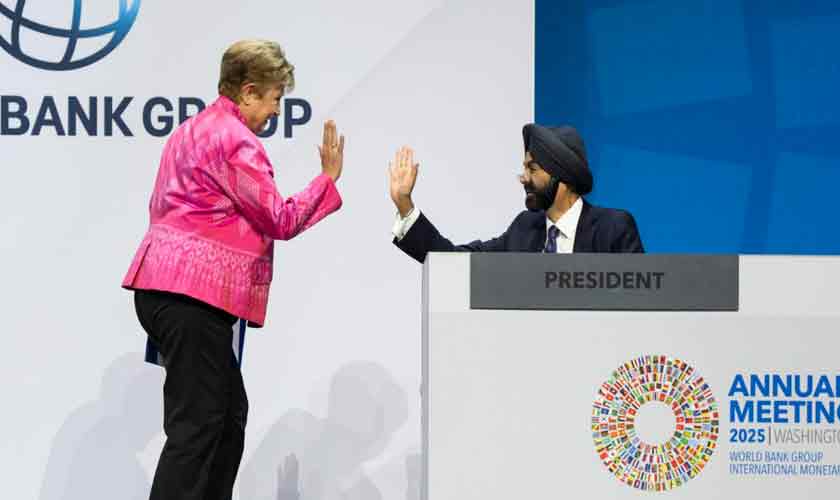
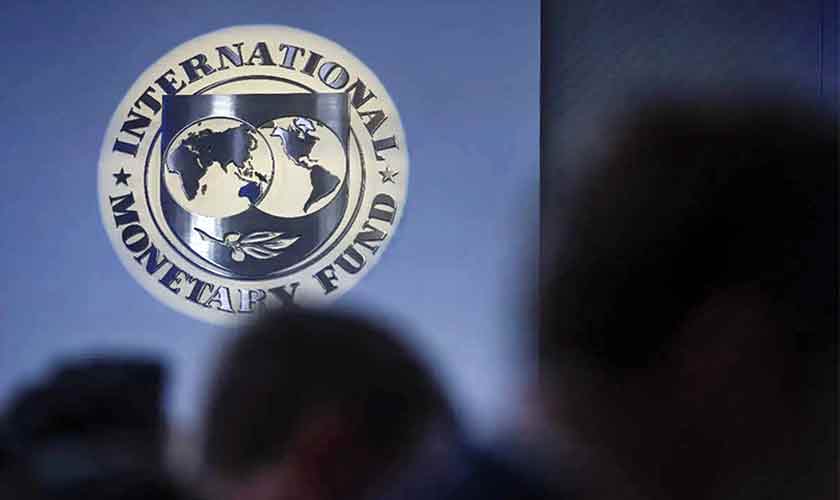
The IMF and World Bank remain pillars of the global financial system, yet their record and credibility face renewed scrutiny. Have they upheld the UN’s vision of stability and shared prosperity or have they become tools of control serving their major shareholders?
The IMF’s task was straightforward. It was to promote exchange-rate stability, prevent competitive devaluations and assist countries facing balance-of-payments stress. The World Bank’s role was to rebuild economies devastated by war and later, to finance long-term development. Both became specialised UN agencies but were given wide autonomy. In practice, that independence often aligned them more closely with the interests of their largest shareholders, particularly the United States, which holds about 16 percent of the voting shares in each.
Public expectations diverged from institutional behaviour. The IMF, created as a safety net, came to be seen as a stern disciplinarian. The World Bank, meant to be a partner in development, acquired a reputation for bureaucracy and conditionality. In the popular imagination, they became custodians of a financial order that benefited some more than others. The UN Charter spoke of equality among nations. Whereas, the Bretton Woods twins evolved into clubs where power depends on the size of a nation’s wallet.
It is not that everything went wrong with the IMF and the WB. The two institutions have had real successes. They have rescued economies from collapse, funded social programmes and supported recovery in times of crisis. During the pandemic, the IMF issued $650 billion in Special Drawing Rights to help countries stabilise their finances. The World Bank financed vaccines, school re-openings and social protection schemes. Both have created tools for climate adaptation and digital inclusion. We should also acknowledge the irresponsible behaviour of some borrowing countries, who often failed to bring their house in order to be able to effectively use the loans from the IMF and the WB.
Yet, the overall impact of both organisations remains mixed. The Global South has lived through debt crises since the 1980s, often following IMF programmes. In Latin America, fiscal tightening restored macro-balance but caused deep social pain. In Asia, IMF conditions during the 1997 crisis led to factory closures and mass layoffs. In Africa, structural adjustment reduced spending on health and education. The human cost was immense.
The World Bank helped expand energy access and build infrastructure, but its growth-first model often ignored local governance realities. Growth without jobs bred frustration. The IMF-imposed fiscal restraint sometimes clashed with UN development goals focused on poverty reduction and inclusion.
The world in which these institutions operate has changed beyond recognition. In 1945, financial stability meant avoiding currency crises. Today, it also means managing debt, containing inequality, addressing climate risks and coping with digital disruption.
New powers and regional lenders have eroded the IMF-World Bank monopoly. The Asian Infrastructure Investment Bank, the BRICS New Development Bank and regional arrangements such as the Chiang Mai Initiative provide alternatives. Developing countries no longer accept one-size-fits-all prescriptions.
The IMF and the World Bank have tried to adapt. The Fund’s Resilience and Sustainability Trust links lending to climate adaptation. The Bank’s Climate Action Plan integrates emission reduction and resilience into its portfolio. Yet, ambition still exceeds delivery. Bureaucratic caution, political constraints and shareholder dominance slow reform.
For many struggling economies, the IMF and the World Bank programmes provide temporary relief but not lasting recovery. Pakistan, Egypt, Ghana and Argentina illustrate the dilemma. IMF programmes restore fiscal order on paper but growth stalls and inflation rises. Spending cuts shrink investment and employment. Ordinary people bear the cost of adjustment while elites remain protected.
The World Bank’s shift to climate and social inclusion is welcome but uneven. Many projects remain donor-driven and mostly focused on measurable outputs. Disbursements move slowly. For countries already burdened by debt and climate shocks, the system designed to prevent crisis now risks perpetuating it.
The UN’s Sustainable Development Goals call for shared prosperity, protection and ecological balance. The IMF and World Bank policies, centred on fiscal prudence, often move in the opposite direction. Austerity may steady exchange rates but can tear at the social fabric. Financial stability without human security is an empty victory.
The IMF and the World Bank remain the only institutions with the reach and expertise to manage global finance. They can once again become instruments of inclusion if they change how they operate.
First, governance must reflect today’s realities. The Global South deserves a stronger voice in decision-making. The current quota system, designed in a very different era, over-represents rich economies whose combined share of world output has shrunk.
Second, conditionality should evolve. Fiscal discipline cannot come at the expense of social stability. Programmes must safeguard spending on health, education and climate resilience. The IMF’s new climate-linked lending instruments are a step forward but need clear protection for social spending.
Third, debt restructuring requires a fair, transparent framework under UN guidance. Many debt-distressed countries now owe as much to private creditors and China as to traditional Paris Club members. Without coordination, relief remains slow and politicised.
The UN’s founders understood that peace could last only if economies were stable and societies were fair. That principle still holds. Financial stability is not about bond markets or exchange rates alone. It is also about people’s ability to live with dignity and security.
The IMF and the World Bank helped build the post-war economic architecture. They now need to help rebuild its moral foundation. On the UN’s 80th anniversary, a renewed commitment to fairness, representation and shared responsibility can be the best tribute to the spirit of 1945. Stability without solidarity cannot endure.
The writer heads the Sustainable Development Policy Institute and is a member of the Asian Development Bank Institute’s Advisory Board. His LinkedIn handle is Abidsuleri.