Print Story
X




The Diwali celebrations in Karachi stir memories of a shared cultural past
| T |
he Diwali celebrations held at the Governor’s House in Karachi this year were more than a festival of lamps. For many, they symbolised something deeper, a quiet acknowledgement that Pakistan’s Hindu citizens are not outsiders, but part of the same fabric. It was a small moment, yet a significant one, shimmering faintly against a backdrop of amnesia.
The ceremony, modest but graceful, felt like a reclamation of belonging. It also brought to mind an older world, when the story of Ram and Sita, told through songs, poetry and theatre, echoed across the plains of the Punjab. Before Partition, Lahore, too, would come alive each year to mark Ramlila, that great dramatic retelling of the Ramayana which combined art, faith and festivity.
Ramlila is not merely a play. It is a living pageant - part theatre, part devotion - tracing Ram’s exile, his battle with Ravan, and his return to Ayodhya. Its deeper message, of reconciliation and the uniting of north and south India, remains timeless.
Most cities and towns once had their Ramlila grounds. In Lahore, it stood near the Fort, where crowds gathered in the crisp evenings of autumn to watch the drama unfold under open skies. There, actors in bright robes enacted scenes from the epic while the air filled with the sound of drums and chants. Children watched wide-eyed; elders recited verses from memory.
After the Partition, that ground became Ali Park. The name changed after poet Josh Malihabadi recited his famous poem Humaray Hain Hussain there. This was a poem for another faith, but carrying the same longing for moral victory over injustice. The transformation of the Ramlila Ground into Ali Park marked more than the renaming of a site; it reflected the re-shaping of a city’s identity.
The decline of Ramlila and other such celebrations did not happen overnight. Pakistan’s Hindu population, once visible in parts of the Punjab, Sindh and Balochistan, shrank dramatically after the bloody migrations of 1947. In the west, Hindus were often blamed for political and social unrest; in the east, Muslims were profiled as the “other.”
Today, open displays of Hindu ritual in Pakistan are rare. Even symbolic gestures, a Diwali lamp lit in a public institution, can invite suspicion. At times, both the public and the authorities have reacted uneasily to such “large-heartedness,” accusing organisers of diluting Muslim cultural values or pandering to “foreign” faiths. The unease is revealing: it suggests that what we call tolerance still struggles to find steady ground.
Before borders hardened, Lahore’s skyline held both mosque minarets and mandirs. Its people walked easily between them.
Yet there are small, luminous moments of acceptance. The Diwali celebration at the Governor’s House, Karachi, was one such instance. Quietly, without banners or slogans, it signalled a gentler truth, that faith need not be a border, and that Pakistan’s history, if told honestly, includes more than one light.
Like all quasi-religious forms of theatre, Ramlila was deeply participatory. The story unfolded as a procession, with scenes enacted along the way, the exile, the abduction of Sita, the battle with Ravan and the return home. The audience was part of the movement, singing, laughing and, sometimes, weeping. It was, as anthropologists might say, a kind of collective catharsis.
The structure of Ramlila has always mirrored the rhythm of other South Asian faith rituals. Muslim commemorations such as Muharram processions follow a similar path through streets and memory, merging performance with prayer. Both culminate in symbolic gestures, the immersion of effigies or the offering of tributes at riverbanks, acts that surrender the human to the divine.
The story of Ram is a web of legend, myth and philosophy. At its heart lies a tension between love and duty, exile and homecoming. Sita’s abduction by Ravan, her captivity and later separation from Ram are told again and again, not as simple morality tales, but as meditations on endurance and faith.
In the Punjab, a lesser-known local legend ties the Ramayana to the soil of Lahore. It is said that when Sita was separated from Ram, she found refuge in an ashram somewhere between Lahore and Amritsar, where she gave birth to two sons, Lava and Kusha. According to folklore, the two went on to found the twin cities of Lahore and Kasur. In Lahore Fort, the Temple of Loh still stands, though closed to the public, a faint trace of that old belief, now half-forgotten amid the city’s newer stone.
Stories like these remind us that the land once held a more layered imagination of belonging. Faith was porous, art was shared and cultural memory did not need passports. The mosques of Multan, the temples of Sindh, the shrines of Sehwan, all spoke a language of continuity.
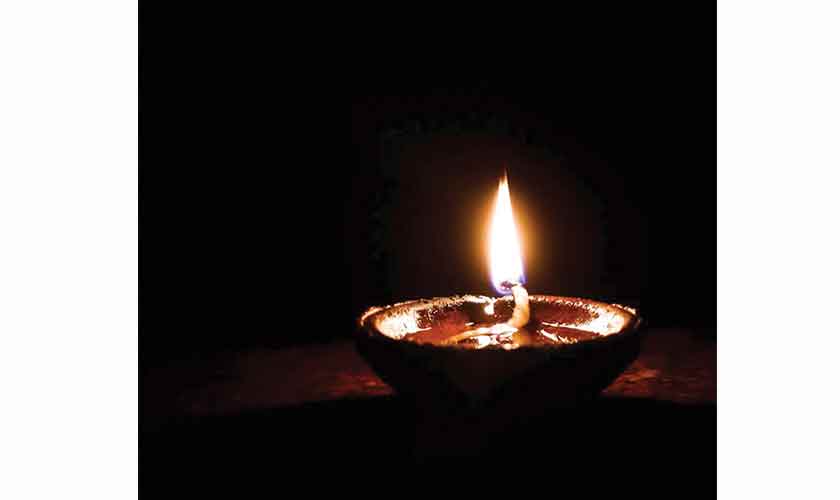
What remains now are fragments: a park renamed, a temple sealed, a performance no longer staged. Yet, every now and then, when a Diwali diya is lit in Karachi or Umarkot, it feels as though the past leans forward a little, to whisper that we were once capable of greater generosity.
Before borders hardened, Lahore’s skyline held both mosque minarets and mandirs. Its people walked easily between them. Remembering that is not nostalgia. It is a kind of truth, one that still flickers, quietly, in the glow of forgotten lights.
The writer is a culture critic based in Lahore