Print Story
X




From psychological thrillers to political expressions, this season’s literary releases arrive with sharp voices and layered ideas. Across continents and genres, they ask who we are, what we’ve lost and how we could rebuild. Let’s see what you remember or think you know.
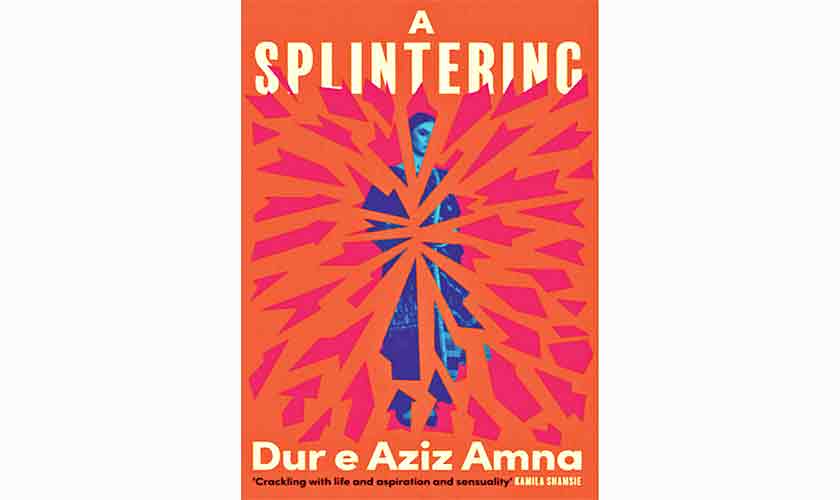
1. Dur-e-Aziz Amna’s A Splintering explores which of the following central themes?
a) A family saga set across multiple generations of a Karachi dynasty
b) A romance between two artists separated by war
c) The aftermath of Partition and intergenerational trauma
d) A woman’s struggle with ambition, morality and class in modern Pakistan

3. E. Lockhart’s return with the third and final instalment of her acclaimed series We Were Liars closes on which note?
a) A prequel set decades before the first book
b) A new psychological mystery connecting old and new characters across generations
c) A fantasy retelling with supernatural elements
d) A non-fiction reflection on the making of her previous novels

2. Shehzad Ghias’s Pakistan Lost: Ideas on the Idea of Pakistan challenges the nation’s foundational thinking. What distinguishes his approach from earlier political writings?
a) It avoids humour entirely to maintain an academic tone
b) It is a purely historical analysis with no personal reflection
c) It combines satire, research and commentary drawn from his online presence and live talks
d) It centres on poetry and fictional narratives rather than essays

4. In Fawning: Why the Need to Please Makes Us Lose Ourselves and How to Find Our Way Back, psychologist Ingrid Clayton examines a lesser-known trauma response. Which best captures the book’s premise?
a) It argues that people-pleasing is a survival mechanism rooted in trauma, offering a framework for healing
b) It focuses exclusively on narcissistic abuse in romantic relationships
c) It presents fawning as a personality disorder needing medication
d) It dismisses people-pleasing as a cultural fad without psychological basis

5. Shari Lapena’s She Didn’t See It Coming continues her streak of high-stakes domestic thrillers. What sets this particular release apart from her earlier works?
a) It’s written in diary form from a single perspective
b) It abandons suspense for pure romance
c) It revolves around a tight-knit suburban community unravelled by one fatal secret
d) It’s set entirely in a courtroom
Answers
1. The correct answer is d.
Dur-e-Aziz Amna’s A Splintering centres on Tara, a woman determined to escape rural poverty and enter Karachi’s world of polished facades. Her husband, an accountant, offers stability but not fulfillment and what begins as quiet discontent soon hardens into obsession. She enters Karachi’s elite circles, chasing wealth and social recognition, each step costing her more. Amna shows how ambition when shaped by class and patriarchy, traps women in cycles of compromise. The novel’s clear and steady prose builds empathy without sentimentality. Reviewers call it her most unflinching and psychologically layered work to date. It leaves you wondering what survival ultimately means when it demands the loss of self and how inequity can turn corrosive.
2. The correct answer is c.
In Pakistan Lost: Ideas on the Idea of Pakistan, Shehzad Ghias mixes humour, research and personal insight. Ghias writes with precision and wit, using satire as a tool to question power structures. Drawing from his work as a comedian, writer and podcaster, he brings rhythm and urgency to political commentary. His tone makes the essays feel like dialogue rather than lecture. Moving from colonial history to modern politics, he examines where the country’s original promise faltered. Ghias includes anecdotes as well as pop culture references and asks readers to think about identity and ultimately confront the uneasy distance between Pakistan’s promises and its realities.
3. The correct answer is b.
E. Lockhart’s We Fell Apart expands the emotional and psychological scope of We Were Liars, linking themes of privilege, loss and fractured memory to a new generation. The story follows Matilda, a young woman returning to a coastal estate marked by tragedy. Lockhart employs her signature narration to blur the boundary between truth and perception, present in every situation to create a sense of dichotomy. The story explores how guilt and inheritance shapes identity. The prose is light yet exact, each detail carrying weight. The book examines privilege and moral blindness through small decisions rather than grand speeches. Critics describe it as her most mature work.
4. The correct answer is a.
Ingrid Clayton’s Fawning explains one of the least recognised trauma responses, the compulsion to please others to avoid rejection or conflict. Combining clinical expertise with her own experience, she shows how people-pleasing becomes a survival habit. The book outlines how these patterns form and how readers can begin to change it. Clayton offers steps for identifying over-accommodation and rebuilding personal boundaries. Her writing remains structured and practical, supported by both psychological theory and self-reflection. Critics note how effectively she turns complex research into a conversation on self-worth and agency. The book functions as a diagnosis and a process of healing for readers looking to opt out of an unhealthy existence.
5. The correct answer is c.
Shari Lapena’s She Didn’t See It Coming delivers her signature domestic suspense writing with greater psychological nuance. Set in a quiet suburban neighbourhood, it shows how a single event exposes hidden tensions and long-buried resentments. Every character has something to hide and every secret alters the balance of power. Lapena dissects fear, guilt and motive as a reflection of how far people will go to protect their lives and reputations. The story builds tension through smallest details, showing that even a seemingly ordinary life can collapse under scrutiny. Critics call it one of Lapena’s most tightly constructed works, where emotional suspense rivals the physical. It examines privacy, suspicion and the illusion of safety in modern life.